How to Drive Safely in Rainy Weather
Did you know that nearly three-quarters of all weather-related accidents happen on wet pavement? According to the U.S. Department of Transportation, 73-75% of crashes caused by weather conditions occur when roads are slick with moisture.
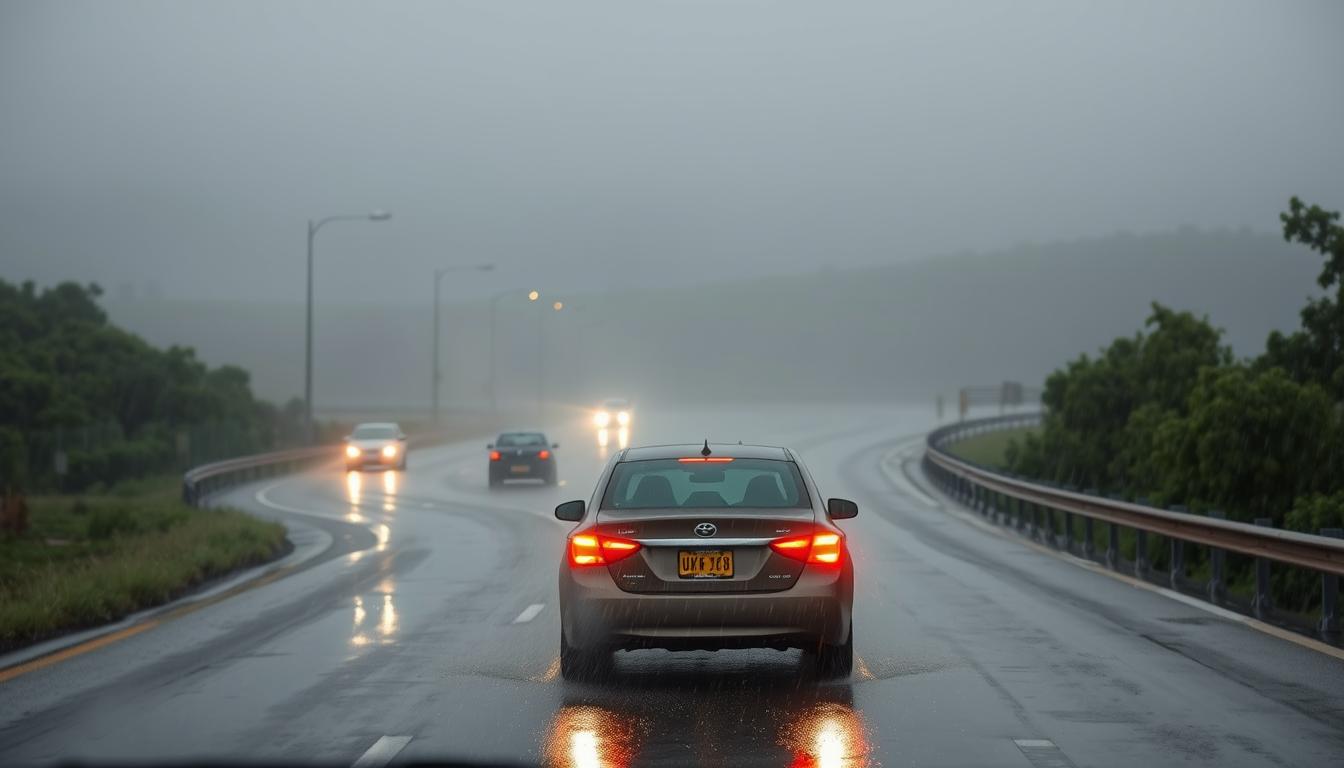
When precipitation starts falling, it creates multiple challenges for motorists simultaneously. Visibility drops dramatically as rain obscures windshields. Stopping distances increase significantly on slick surfaces. The risk of hydroplaning becomes very real.
The first ten minutes after rainfall begins are especially hazardous. Engine oil and grease buildup on road surfaces rises to the top, creating extremely slippery conditions before the rain can wash these substances away.
With over half-a-million people injured annually in wet pavement crashes, understanding proper techniques for navigating these conditions isn’t just helpful—it’s potentially life-saving for everyone on the road.
This comprehensive guide will walk you through everything from pre-trip vehicle checks to expert strategies for handling challenging situations. While wet weather creates real challenges, following proven safety practices can significantly reduce your risk.
Key Takeaways
- Wet pavement accounts for nearly 75% of all weather-related vehicle accidents
- Rain reduces visibility and dramatically increases stopping distances
- The first 10 minutes of rainfall create the most slippery road conditions
- Over 500,000 people are injured yearly in wet pavement crashes
- Proper preparation and technique can significantly reduce accident risks
- Hydroplaning becomes a serious threat during heavy downpours
- Adapting your driving approach is essential for rainy conditions
Preparation and Vehicle Readiness for Rain

Getting your car ready before the clouds gather is your best strategy. A few minutes of proactive care can prevent a world of trouble on slick roads.
Checking Tires and Tread Depth
Your tires are the critical link between your vehicle and the wet pavement. The grooves in the tire tread push water away to maintain grip.
Once the tread depth wears below 2/32 of an inch, wet traction drops dangerously. You can check this easily with the penny test.
No tire can provide good wet traction once the tread is worn below 2/32 of an inch.
Also, keep your tires properly inflated. Correct air pressure helps the tire perform as designed, giving you better control.
Inspecting Lights, Wipers, and Brakes
Clear vision is non-negotiable. Check your windshield wiper blades for streaks or cracks and replace them if needed. A clean windshield makes a huge difference.
Ensure all your lights work—headlights, taillights, and brake lights. This helps other drivers see you when visibility is poor.
Finally, have a professional check your brakes. Effective stopping power is your ultimate safety net on a slippery surface.
Expert Strategies to Drive Safely in Rainy Weather

Once you’re navigating slick roads, your driving technique becomes your primary defense against hazardous conditions. Adjusting your behavior is the most important way to stay secure.
These expert tips can dramatically cut your accident risk. They focus on smooth control and increased awareness.
Reducing Speed and Extending Following Distance
Slowing down is your first and best move. Reduce speed to improve stopping power and lower hydroplaning risk.
Staying at or below 35 MPH makes losing traction much less likely. It gives you more time to react.
Also, increase your following distance. Add at least two extra seconds behind the car in front of you.
Use the three-second rule. Pick a fixed object. Count the seconds after the vehicle ahead passes it. In heavy rain, make it four or five seconds.
Smooth Maneuvering and Braking Techniques
All your actions should be gentle. Avoid jerky movements when turning or braking.
Sudden steering or hard pedal pushes can break traction on wet pavement. This leads to a loss of control.
For curves, slow down and brake lightly before you start the turn. This is a safer way to handle corners in the rain.
Utilizing Headlights and Vehicle Controls
Always turn on your headlights during precipitation. It’s the law in most states.
This step boosts your visibility to other vehicles. It helps them see you through the spray.
Never use cruise control in a storm. If you hydroplane, the system may cause wheels to spin faster.
Your vehicle could fishtail dangerously. For the best control, keep both hands on the wheel and stay in your lane when possible.
Advanced Techniques and Emergency Response in Rain

When unexpected situations arise on slick roads, knowing how to react can make all the difference. Understanding these advanced techniques helps you stay calm and maintain control of your vehicle.
Handling Hydroplaning and Skid Control
Hydroplaning occurs when your tires lose contact with the road and glide on a layer of water. You might feel the car float or veer sideways.
If this happens, the most important step is to take your foot off the accelerator. Do not brake or steer sharply. Let the car slow down naturally to regain traction.
Flowing water across the pavement is extremely dangerous. Even a shallow stream can sweep your vehicle away. Always find an alternate route.
Managing Strong Winds and Unpredictable Road Hazards
Stormy weather often brings strong gusts. Keep both hands firmly on the steering wheel, especially near overpasses or open areas.
Be extra careful around large trucks and RVs. High winds can easily push these cars out of their lanes. Give them plenty of space.
Emergency Response Guide
| Situation | Immediate Action | What to Avoid |
|---|---|---|
| Hydroplaning | Ease off the accelerator | Braking or sharp steering |
| Standing Water | Slow down before entering | Driving through deep puddles |
| Strong Winds | Firm grip on the wheel | Using cruise control |
If driving becomes too hazardous, the safest choice is to pull over. Wait for the heavy rain and wind to pass before continuing your journey.
Conclusion
By taking the time to understand these safety tips, you’re investing in protection for yourself and others. Your commitment to learning proper techniques for wet weather shows responsible driving habits.
Remember the key preparation steps: checking your tires for adequate tread depth, ensuring wipers work well, and verifying lights and brakes function properly. These simple checks make a huge difference when rain arrives.
During stormy conditions, reduce your speed and increase following distance. Always use your headlights and avoid cruise control. Smooth, gradual movements help maintain vehicle control on slick roads.
If hydroplaning occurs, ease off the accelerator and stay calm. Sometimes the smartest decision is to delay your trip until weather improves. Your safety is worth the extra time.
Keep these strategies in mind, and you’ll navigate challenging roads with confidence. Proper preparation and careful driving can help ensure safe arrivals, no matter what the weather brings.
FAQ
How often should I check my tire tread depth for wet pavement?
What’s the best way to use my brakes on a slick road?
What should I do if my car starts to hydroplane?
Why should I turn on my headlights in the rain, even during the day?
Is using cruise control safe in heavy rain?

Adam Peter is a finance, travel, and automotive writer with over a decade of experience. He creates clear, practical content to help readers manage their money, explore the world with confidence, and make informed decisions about cars and travel gear. His work blends expert insight with real-world usefulness.