Best Sunglasses for Your Face Shape: Expert Advice
Did you know that over 130 aspects of your DNA influence the unique structure of your face? This incredible diversity is why finding eyewear that feels like it was made just for you can be a challenge.
A great pair does more than complete an outfit. They are a crucial shield against harmful UV rays, protecting your eye health. But when they also complement your features, your confidence soars.
Many people share the same frustration: “I can never find a pair that looks good on me.” This comprehensive guide is here to change that. We will simplify the process, turning a potentially overwhelming task into an exciting style discovery.
We cover everything from identifying your face shape and selecting the perfect frame to considering color, lens technology, and fit. Our goal is to equip you with expert knowledge so you can shop with certainty.
Finding your ideal match might take a little experimentation, but this advice will narrow your options significantly. Get ready to discover frames that celebrate your individuality.
Key Takeaways
- Your unique facial structure is influenced by many genetic factors.
- The right eyewear provides essential sun protection while boosting your style.
- This guide simplifies the process of identifying your face shape and matching it with frames.
- We cover frame selection, color coordination, lens options, and fit considerations.
- Finding the perfect pair is an achievable goal with the right information.
- You will gain the confidence to choose sunglasses that enhance your natural features.
Understanding Your Face Shape & Its Impact on Sunglasses
Why do some frames look stunning on a friend but awkward on you? The answer almost always lies in your underlying facial geometry. Choosing eyewear that complements your specific structure is the secret to a look that feels custom-made.
Measuring Your Face Accurately
Getting the right fit starts with precise measurements. You only need a flexible tape measure, a pencil, and paper. Having a friend assist can make it even easier.
- Forehead: Measure across the widest part.
- Cheekbones: Find the broadest point across your face.
- Jawline: Measure from one jaw corner to the other.
- Face Length: Record the distance from your hairline to your chin.
Jot down each number. Comparing them reveals your face’s dominant proportions.
Overview of Common Face Shapes
Most people’s features align with a few primary categories. Experts often list five or six, like square, round, oval, heart, and diamond.
It’s important to remember that these are helpful guides, not strict rules. Over 130 genetic factors influence your unique look. Your face might blend characteristics from different groups.
If measuring isn’t your style, try tracing your reflection on a mirror with a dry-erase marker. Stepping back often makes the overall shape clear. This first step is all about discovery, setting you up for success.
Identifying Your Specific Face Shape
Each face shape has distinct characteristics that guide your eyewear selection process. Now we’ll explore the key traits that define the most common types.
Square, Round, Oval, and Diamond Characteristics
Square faces show nearly equal length and width. They feature strong jawlines with sharp angles rather than curves.
Round faces appear as wide as they are long. They have softer curves with full cheeks and a gently rounded chin.
An oval face is longer than wide, often called “egg-shaped.” The forehead is slightly wider than the jawline.
Diamond shapes stand out with wide cheekbones. They combine a narrow forehead with a tapered chin.
Practical Tools and Tips for Self-Assessment
Try the mirror tracing method. Use a dry-erase marker to outline your reflection. Step back to see the overall shape clearly.
Compare your measurements to the characteristic descriptions. Look for the closest match among the common shapes.
Remember, many people blend characteristics from different categories. Finding your dominant features is what matters most.
Choosing the Right Frame Shape for Your Face
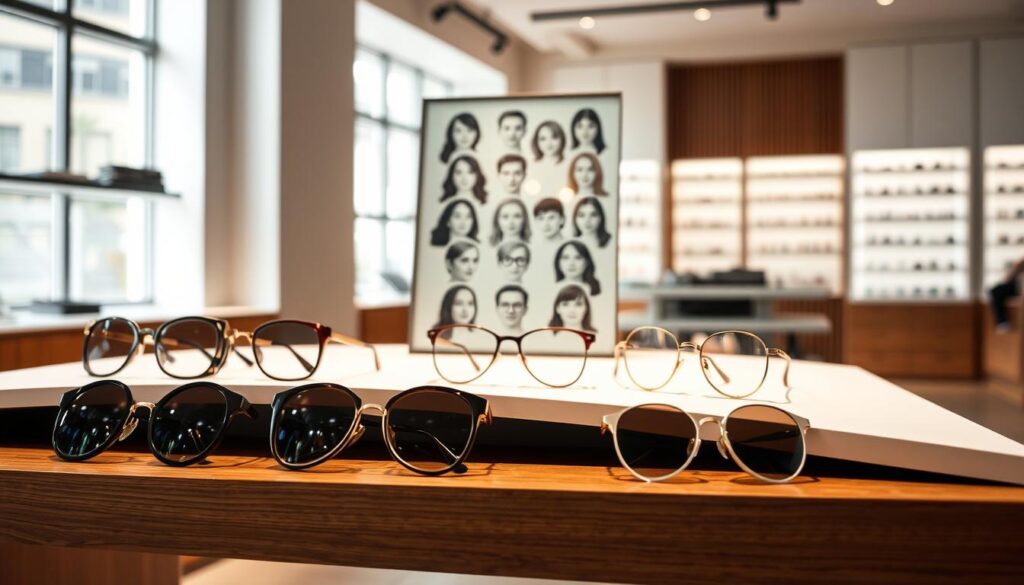
Selecting frames that complement your features is like finding the perfect architectural design for a unique building. The right choice creates visual harmony rather than competition between your natural contours and the eyewear design.
This principle of contrast and balance guides all successful frame selections. Angular faces typically benefit from curved designs, while rounded features often shine with geometric frames.
Tips for Square & Angular Faces
If you have strong jawlines and prominent angles, rounded frames work wonders. Oval and circular designs soften sharp features beautifully.
Aviator styles and cat-eye frames offer bold statements while maintaining gentle curves. These options provide excellent contrast to angular facial structure.
Rimless and semi-rimless choices minimize visual weight while adding subtle interest. They create a softer overall appearance that complements masculine features.
“Rounder styles contrast and complement the broad jawline, providing balance to uniform angular shapes.”
Avoid square or rectangular frames that amplify existing angles. These can make features appear harsher rather than balanced.
Softening Features with Rounded Frames
Curved frames introduce flowing lines that contrast with rigid facial structure. They work particularly well for square and diamond face shapes.
For round faces, the opposite approach applies. Geometric frames like rectangles add definition and create length.
| Face Shape | Recommended Frames | Avoid These | Visual Effect |
|---|---|---|---|
| Square | Oval, Round, Aviator | Square, Rectangular | Softens angles |
| Round | Rectangular, Square | Circular, Oval | Adds definition |
| Oval | Most shapes work | Overly large frames | Maintains balance |
The goal is always complementary design. Your eyewear should enhance rather than compete with your natural features.
Best Sunglasses for Your Face Shape
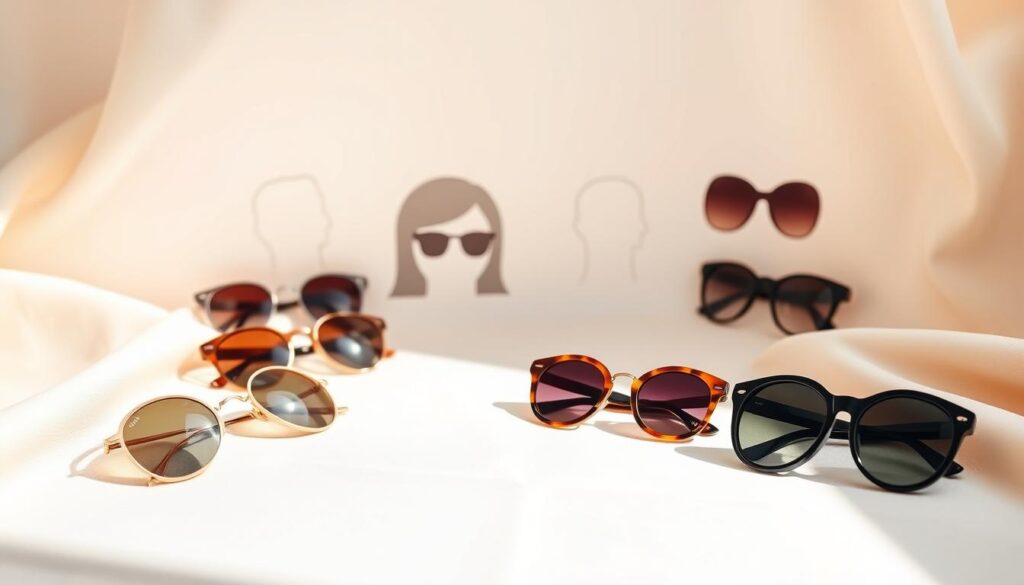
Now that you’ve identified your unique facial structure, it’s time to explore the ideal frame styles that will highlight your best features. This part of the guide offers specific suggestions tailored to different face types.
Remember, these are expert guidelines to create visual balance. Your personal confidence is the most important factor in choosing a great pair.
Tailored Suggestions for Each Profile
If you have an oval face, you have fantastic versatility. Virtually any frame shape works, from cat-eye to aviator styles. Consider oversized frames or designs wider around the eyes for a perfect balance.
For a heart-shaped face, cat-eye or square glasses are excellent. They balance a wider forehead with a more pointed chin, creating harmony.
Round faces benefit from angular definition. Rectangular frames, square styles, and geometric designs like hexagons add structure. Specific options include wayfarers and browline styles.
Those with a diamond shape should look towards browline, round, or oval frames. These styles complement high cheekbones by drawing attention downward.
If your profile is square, softer lines are key. Oval, round, and aviator frames soften strong jawlines beautifully.
For an oblong face, larger frames with sharp angles and thickness work well. Aviators and wayfarers add width and structure effectively.
| Face Type | Recommended Styles | Key Effect |
|---|---|---|
| Oval | Cat-eye, Aviator, Square, Round | Maintains natural balance |
| Heart | Cat-eye, Square | Balances forehead and chin |
| Round | Rectangle, Geometric, Browline | Adds definition and angles |
| Diamond | Browline, Round, Oval | Softens cheekbone prominence |
| Square | Oval, Round, Aviator | Softens angular features |
| Oblong | Large Aviators, Wayfarers | Adds width and structure |
Use this table as a quick reference when you shop for your next pair. The right frame shape can make all the difference.
Selecting Colors & Styles That Complement Your Look
Finding the perfect frame shape is only half the battle – the right color and style complete your signature look. The perfect pair should enhance your natural features rather than compete with them.
Start by identifying your skin’s undertone. Check the veins on your forearm. Blue or green veins indicate cool undertones. Neutral or hard-to-see veins suggest warm undertones.
Matching Frame Colors to Your Skin Tone
Light skin with warm undertones shines in bourbon brown, burgundy, and warm gold. Cool undertones look fantastic in pastels, silver, and blues.
Medium skin with warm undertones pairs beautifully with amber, rich browns, and tortoiseshell. Cool undertones pop in tropical blues, deep purples, and cool black frames.
Dark skin with warm undertones can embrace metal frames, cognacs, and warm spectrum colors. Cool undertones look striking in darkest blacks, gunmetal, and cool jewel tones.
Consider your hair color too. Lighter hair benefits from darker frames for contrast. Redheads look amazing in greens and burgundies. Tortoiseshell works universally across all skin tones.
Exploring Trendy Styles and Materials
Current trends include acetate frames for bold color statements and lightweight metal for minimalist appeal. Wood frames offer unique texture and eco-friendly appeal.
Your choice of material affects both comfort and style. Acetate provides durability and color variety. Metal offers sleek sophistication. Each material creates a different vibe for your overall look.
Exploring Lens Options & Essential UV Protection
While frame style gets most of the attention, the technology behind your lenses plays an equally important role in both protection and performance. The right combination can transform your eyewear from a simple accessory into sophisticated vision equipment.
Benefits of Polarized and Mirrored Lenses
Polarized lenses filter horizontal light waves that cause distracting glare. This makes them ideal for driving, water activities, and bright conditions. They provide crucial protection from harmful UV rays while enhancing visual comfort.
Mirrored lenses reflect light and glare away from your eyes rather than absorbing it. This extra layer of protection is valuable for high-intensity activities like skiing or beach sports. Both technologies safeguard your eye health from long-term damage.
Choosing the Right Tint for Optimal Clarity
Lens color serves functional purposes beyond aesthetics. Gray and black tints offer neutral color perception for general use. They reduce eye fatigue by blocking excess light effectively.
Green tints reduce glare without compromising visibility during outdoor activities. Amber and brown lenses enhance contrast and block blue light effectively. Yellow tints aid low-light visibility while blue lenses improve perception in hazy conditions.
Specialty options include reading sunglasses with magnification. These combine sun protection with vision correction for a complete look that serves multiple purposes. Your lens choice should match both your activities and personal style.
Ensuring the Perfect Fit for Long-Lasting Comfort

The true test of any eyewear comes not from how it looks in a mirror, but how it feels after hours of wear. Even the most stylish frames become unwearable if they slip, pinch, or cause pressure points.
When you shop for your next pair, pay close attention to how the frames rest on your nose bridge. They should sit comfortably without pinching or sliding down. The temples should rest gently against your head without squeezing.
Proper width is crucial for both comfort and appearance. Eyewear that’s too wide will slide around, while narrow frames create unflattering lines on your face.
| Common Fit Issue | What to Look For | Solution Features |
|---|---|---|
| Slipping Down Nose | Adjustable silicone nose pads | Customizable grip for individual nose shapes |
| Temple Pressure | Acetate tips and lightweight materials | Even weight distribution, gentle contact |
| Cheek Contact | Proper frame curvature and size | Clearance between frames and facial features |
As Kraywoods advises:
“Try the sunglasses in person if you can. Although you may fancy them in pictures, you can never really know for sure if a pair of shades will be flattering.”
Lightweight materials like titanium and quality acetate provide all-day comfort. Heavier frames can cause fatigue over time.
Take time during your shopping experience to wear prospective eyewear for several minutes. Move your head around to test security and comfort. The ideal fit balances style with practical wearability for your unique face.
Lifestyle Considerations & Budget-Friendly Sunglasses Options
Your ideal eyewear should match not just your face but also your daily routine and budget. Finding a great pair is about balancing smart shopping with your personal style needs.
Whether you lead an active life or need a classic look for work, the right options are out there. Let’s explore how to shop wisely.
Shop Online vs. In-Store: What to Consider
Each shopping method offers distinct advantages. Trying glasses in person lets you feel the fit immediately. You get instant feedback on how different styles suit you.
As experts at Kraywoods note, “Try the sunglasses in person if you can. You can never really know for sure if a pair of shades will be flattering.” This hands-on approach saves time and uncertainty.
Online shopping provides a wider selection and often better prices. Retailers like Foster Grant offer free shipping and returns, making it a low-risk option. Virtual try-on tools are also improving.
Always check the return policy before buying sunglasses online. A generous policy is key to a stress-free experience.
| Where to Shop | Key Advantages | Important Considerations |
|---|---|---|
| In-Store | Instant fit feedback, walk out with purchase | Limited local selection, potentially higher prices |
| Online | Vast selection, competitive pricing, convenience | Must check return policy, rely on photos/reviews |
Maximizing Value Without Sacrificing Style
Great sunglasses don’t require a huge investment. Look for brands that offer full UV protection and durable frames at accessible prices.
Consider your activities. An active person needs a secure-fitting, durable pair. A professional might prefer versatile, classic glasses.
Building a small collection can be smarter than relying on one pair. Different occasions call for different options, allowing you to express your style fully.
Conclusion
You’ve now unlocked the secrets to selecting eyewear that truly celebrates your individuality. This guide has walked you through measuring your features, identifying your unique profile, and choosing frames that create perfect harmony.
Remember the core principle: angular shapes often shine with soft curves, while rounder faces gain definition from geometric frames. Your ideal pair offers more than a great look; it provides essential protection for your eyes from harsh sun rays.
While expert advice is a fantastic starting point, your personal comfort and confidence are the final judges. Don’t hesitate to experiment with different styles.
You are now equipped to shop with certainty. The perfect glasses are out there, ready to make you look and feel fantastic. Your journey to finding them starts now.
FAQ
How do I accurately measure my face to determine its shape?
What are the best frame styles for a round face?
How can I match my eyewear color to my skin tone?
What is the benefit of polarized lenses?
Should I shop for glasses online or in a physical store?
What should I look for to ensure a comfortable fit?

Adam Peter is a finance, travel, and automotive writer with over a decade of experience. He creates clear, practical content to help readers manage their money, explore the world with confidence, and make informed decisions about cars and travel gear. His work blends expert insight with real-world usefulness.