
Best Sustainable Fabrics for Clothing: Eco-Friendly Choices
Did you know the fashion industry creates more carbon emissions than all international flights and maritime shipping combined? That’s right—your clothing choices have a massive environmental footprint that many people don’t realize.
The world of fashion is changing rapidly. More brands and shoppers now understand that what we wear affects our planet’s health. This awareness has sparked a movement toward materials that respect both people and the environment.
Clothing production contributes significantly to global pollution. This makes finding better options crucial for our future. The good news is that innovative alternatives are emerging everywhere.
This guide will help you navigate the often-confusing landscape of eco-friendly materials. We’ll separate genuine solutions from misleading marketing claims. You’ll discover plant-based fibers and recycled textiles that are transforming how clothes get made.
Understanding these materials empowers you to make smarter purchases. You can build a wardrobe that aligns with your values while supporting positive change in the fashion industry.
Key Takeaways
- The fashion industry has a substantial environmental impact that many consumers overlook
- Eco-conscious materials are becoming more accessible and innovative
- Understanding different fabric options helps you make informed purchasing decisions
- Plant-based and recycled textiles offer viable alternatives to conventional materials
- Your clothing choices can support brands committed to positive environmental change
- Building a sustainable wardrobe starts with understanding material origins and impacts
- Greenwashing claims can be identified by learning about genuine eco-friendly certifications
Understanding Sustainable Fabrics
So, what does it really mean for a material to be eco-conscious? It’s more than just a trendy label. True sustainability looks at the entire journey of a garment.
Defining Sustainability in Fashion
In the world of apparel, sustainability means choosing materials that use fewer resources. They should have a minimal impact on people and the planet. This consideration extends from how they are grown or made to how you wash and eventually discard them.
The fashion industry often debates what truly qualifies. A plant-based origin doesn’t automatically make a fabric good. Likewise, a synthetic one isn’t always bad. It’s about the full picture.
Environmental Impact and Benefits
The environmental impact of our clothes is a comprehensive story. It includes water use, chemical pollution, and carbon emissions during production. It also covers the effects of care and disposal.
Choosing better materials offers clear benefits. You support reduced water consumption and lower chemical use. You also help cut carbon emissions and encourage ethical labor practices.
Innovation in this space is challenging. New fabrics, like Circulose made from textile waste, show great promise. Yet, companies can struggle to scale production and prove long-term viability, as Renewcell’s closure demonstrated. The landscape of lower-impact materials is always evolving.
Key Sustainability Criteria for Fashion Materials

Evaluating the eco-credentials of a textile involves looking at a few core pillars that define its true footprint. These factors help us see past marketing and understand the real story behind our clothes.
Let’s break down the most important things to consider.
Water Usage and Chemical Safety
The amount of water needed to create a fabric is a huge deal. Some textiles require thousands of liters for a single item, while others need very little.
Chemical safety is equally critical. The chemicals used in the production process can harm workers and pollute local water sources. True safety means managing these substances responsibly from start to finish.
Life Cycle Assessment of Fabrics
A Life Cycle Assessment (LCA) is like a biography for a material. It reviews the product’s journey from raw materials to disposal.
“An LCA doesn’t just look at one stage; it assesses the total impact across the entire lifespan of a product.”
This holistic view helps identify the true environmental cost, including energy and land use. It’s the best way to compare different options fairly.
Here’s a quick look at how water needs can vary:
| Material Type | Relative Water Usage | Key Consideration |
|---|---|---|
| Conventional Cotton | Very High | Heavy irrigation required |
| Recycled Polyester | Low | Saves water by using existing materials |
| Linen | Moderate | Often relies on rainwater |
Understanding these criteria empowers you to make choices that support a healthier planet. You can identify which materials genuinely minimize harm.
Plant-Based Sustainable Fabrics
Nature offers some remarkable solutions for creating clothing with minimal environmental impact. Many plants provide fibers that grow efficiently with little human intervention.
These natural materials often require fewer resources than conventional options. They represent a return to traditional, earth-friendly textile production.
Organic Cotton and Its Benefits
Organic cotton represents a significant improvement over conventional cotton cultivation. It eliminates synthetic pesticides and harmful chemicals from the production process.
This approach protects both farmers and surrounding ecosystems. When choosing organic cotton, look for proper certifications to ensure genuine organic production methods.
Exploring Hemp and Linen
Hemp stands out as an exceptionally efficient plant-based fiber. It requires very little water and needs no pesticides to thrive.
Remarkably, hemp naturally fertilizes the soil it grows in. The resulting fabric is durable and becomes softer with each wash.
Linen, derived from the flax plant, demonstrates similar resource efficiency. It grows well in poor quality soil with minimal water requirements.
The entire flax plant gets utilized with zero waste. Linen fabric is strong, naturally moth-resistant, and fully biodegradable when untreated.
Innovative Recycled and Alternative Materials
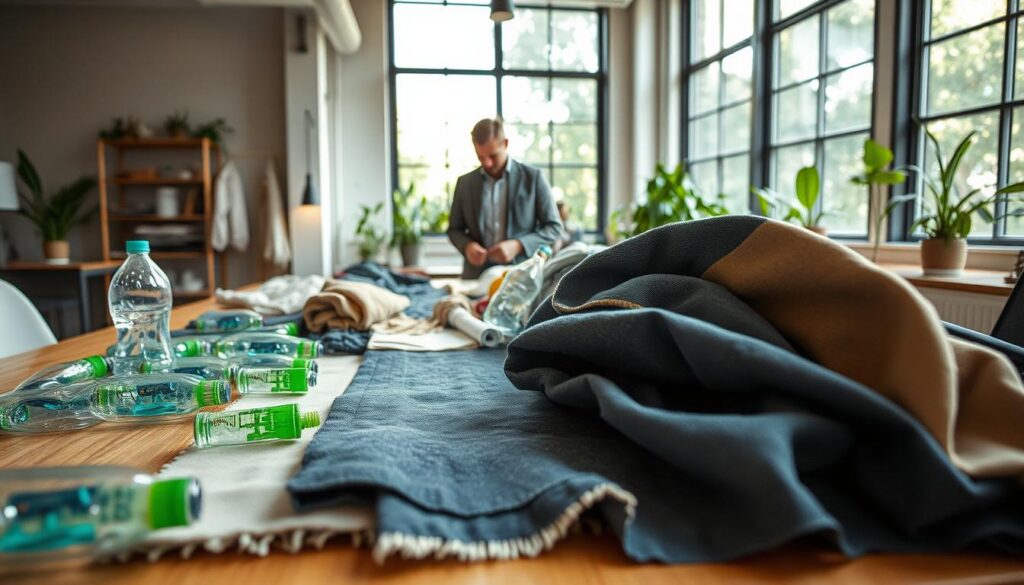
What if your favorite jacket could be made from recycled fishing nets? Today’s most exciting textile innovations are turning waste into wearable fashion. These materials represent a circular approach that keeps resources in use.
Recycled cotton gives new life to fabric scraps that would normally head to landfills. This material comes from both manufacturing leftovers and worn-out clothes. The recycling process significantly cuts water and energy use compared to growing new cotton.
Recycled Cotton and ECONYL
Italian company Aquafil created ECONYL, a remarkable nylon made from discarded plastic. This includes industrial waste, old fabric, and fishing nets recovered from oceans. The manufacturing process transforms this waste into high-quality yarn.
ECONYL production uses less water and creates less waste than conventional nylon. The material undergoes a detailed process where waste gets cleaned, shredded, and chemically broken down. It then gets rebuilt into new fiber that matches virgin nylon’s quality.
One consideration with ECONYL is microfiber release during washing. This makes it ideal for items like outerwear or shoes that need less frequent cleaning. For garments requiring regular washing, a Guppy Bag can capture microfibers.
These innovative materials show how creative thinking can transform environmental challenges into solutions. They demonstrate that fashion can be both stylish and responsible.
How to Choose the Best Sustainable Fabrics for Clothing
With so many ‘green’ options available today, distinguishing genuine sustainability from marketing hype is essential. Smart shopping begins with understanding how to evaluate what you’re really buying.
Evaluating Material Claims and Certifications
When selecting eco-conscious materials, start by thoroughly researching the brand. Look for transparency about their supply chain and production methods. Many companies make environmental claims that aren’t backed by genuine practices.
Certifications provide a helpful starting point, though they’re not perfect solutions. The Global Organic Textile Standard (GOTS) requires textile products to contain at least 70% organic materials. It also ensures that dyes and chemicals meet strict environmental criteria.
When buying hemp or other plant-based fabric, verify it’s organic. Ask specific questions about water usage, chemical processing, and worker conditions. The most responsible choice considers the entire production process, not just the raw material.
Remember that sustainable fabrics represent just one part of the equation. A brand‘s overall commitment to transparency matters equally. Look for detailed information about sourcing and manufacturing locations when choosing your clothing.
Comparing Natural Fibers with Synthetic Options

Natural and synthetic textiles each bring unique properties to our wardrobes, but their environmental stories couldn’t be more different. Understanding this comparison helps you make informed choices that align with your values.
Plant-based fibers like cotton, hemp, and linen offer excellent breathability and comfort. These natural fabrics are biodegradable and recyclable, creating a circular life cycle that benefits the planet.
In contrast, polyester and similar synthetics originate from petroleum. The oil industry’s production process emits millions of metric tons of methane annually. This synthetic material can linger in landfills for centuries without breaking down.
Each washing cycle releases microplastic fibers into waterways. Studies show over 700,000 tiny plastic particles may escape per load. This pollution harms aquatic life and enters our food chain.
Recycled polyester offers a middle ground by repurposing plastic waste. While it still sheds microfibers, it reduces demand for new petroleum-based fabrics. For items washed infrequently, this can be a reasonable compromise.
The choice depends on your needs. Natural cotton and similar fibers work well for everyday wear. Durable synthetics might suit outerwear that requires less cleaning.
The Impact of Production Processes on Fabric Sustainability

While many focus on the raw materials, the actual manufacturing process often determines a fabric’s true environmental footprint. The methods used to transform raw components into wearable textiles can make a significant difference in overall sustainability.
Innovative companies are developing smarter approaches to textile creation. These methods prioritize resource conservation and waste reduction throughout the entire production cycle.
Closed-Loop Manufacturing Systems
TENCEL™ Lyocell exemplifies advanced closed-loop manufacturing. This material begins with wood pulp dissolved using solvents that get recycled repeatedly. The system recovers over 99% of water and chemicals used.
This approach dramatically reduces dangerous waste compared to conventional methods. The production of TENCEL uses just one-third of the water needed for rayon manufacturing.
Minimizing Waste and Resource Consumption
Even recycled materials benefit from improved manufacturing processes. Recycled polyester production uses 35% less water than virgin polyester. However, the dyeing process typically remains the most water-intensive stage.
Companies committed to sustainable manufacturing invest in technologies that reduce energy consumption and capture emissions. They ensure chemicals used never enter local waterways. This comprehensive approach to waste minimization creates genuinely eco-conscious textiles.
Certifications and Labels to Look For in Sustainable Fashion
Certification labels act as your personal guides through the complex world of eco-fashion claims. These trusted seals help you identify which brands truly meet high standards for environmental and social responsibility.
The fashion industry uses many sustainability terms that can be confusing. Independent certifications provide the verification needed to make confident choices.
GOTS and Fairtrade Explained
When selecting organic cotton clothing, look for the Global Organic Textile Standard (GOTS) label. This certification ensures the product contains at least 70% organic materials.
GOTS also sets strict limits on chemical dyes and requires transparency about water and energy use. Brands must show they’re working to reduce resource consumption over time.
Fairtrade certification focuses on the people behind your clothing. It guarantees fair wages and safe conditions for workers throughout the supply chain. This approach supports both environmental and social responsibility.
For tree-based materials like TENCEL™, the Forest Stewardship Council (FSC) label indicates sustainable forestry practices. These certifications work together to create a more ethical fashion industry.
While no system is perfect, these labels represent significant progress. They help consumers identify brands committed to genuine improvement rather than empty marketing claims.
Addressing Environmental Concerns: Water, Waste, and Chemicals
The production of everyday cotton garments carries a hidden cost to our planet’s resources. The journey of conventional cotton from field to fabric is one of the most resource-intensive processes in the fashion industry.
Consider the water needed for a simple t-shirt and jeans. It takes a staggering 1,931 liters of irrigation water and 6,003 liters of rainwater. This immense water consumption places a heavy strain on local supplies.
The chemical impact is equally alarming. Conventional cotton farming uses 16.1% of the world’s insecticides and 5.7% of all pesticides. These chemicals do more than kill pests.
They degrade soil health and poison water supplies. The human cost is severe, with farmers facing direct health risks from exposure. The environmental impact extends far beyond the field.
The Aral Sea basin was sucked dry by 2014, a tragic example of the extreme water demands of cotton production.
Chemical runoff from fields pollutes rivers. Factories often dump dye-contaminated waste water to cut costs. This creates a cycle of pollution affecting entire ecosystems.
Choosing organic or recycled cotton offers a clear solution. These alternatives eliminate harmful pesticides and slash water use. Your buying power can support cleaner production methods.
Beyond material choice, reducing waste is crucial. Buy less, choose durable items, and recycle clothing properly. This minimizes your wardrobe’s overall environmental impact.
Avoiding Greenwashing in Sustainable Clothing Choices
Navigating the world of eco-friendly fashion requires a sharp eye for distinguishing genuine environmental efforts from clever marketing. Many materials get promoted as planet-friendly when their full story tells a different tale.
This practice, known as greenwashing, is common across the fashion industry. It preys on our desire to make better choices.
Spotting True Eco-Friendly Practices
Bamboo is a classic case. The plant grows quickly and needs little water, making it seem ideal. However, most bamboo fabrics are made using a chemical-heavy process similar to rayon.
This method uses significant water and harsh chemicals. For this reason, GOTS does not certify bamboo, highlighting how manufacturing can undermine a raw material’s benefits.
Recycled polyester presents another complex issue. Turning plastic bottles into fabric sounds positive. Yet, these garments still shed microplastics with every wash, creating a new pollution problem.
True sustainability means looking at the entire lifecycle. A responsible brand will be transparent about challenges, not just the positives.
Be skeptical of vague terms like “green” or “natural” without specific backing. Look for detailed information about supply chains and manufacturing. Genuinely eco-conscious brands welcome this scrutiny.
Conclusion
Your journey toward a more conscious wardrobe begins with understanding the materials that shape your daily wear. From innovative options like Piñatex made from pineapple leaves to classic plant-based choices like hemp and linen, you have powerful alternatives.
Remember that animal-derived materials like silk and wool require careful ethical consideration. Meanwhile, semi-synthetics such as lyocell from wood pulp offer closed-loop benefits.
The most impactful step is choosing quality garments that last for many years. Always check for GOTS certification and research brand practices. Your informed choices create positive ripple effects throughout the fashion world.
Ultimately, the most eco-friendly clothing is what you already own and continue to wear. Build your wardrobe thoughtfully, piece by piece, supporting innovations that respect both people and planet.
FAQ
What makes a fabric truly sustainable?
How does organic cotton differ from conventional cotton?
Are recycled fabrics like ECONYL a good choice?
What is a closed-loop system in fabric manufacturing?
Which certifications should I look for when shopping?
How do plant-based fibers like linen compare to synthetic polyester?
What are some innovative alternative materials?

Eduard Kingly is a travel and lifestyle content creator with a focus on personal development and education. He combines firsthand travel experiences with research-driven insights to guide readers in discovering new places, building better habits, and pursuing meaningful learning.