Flattering Outfits for Petite Women
“Style is a way to say who you are without having to speak.” – Rachel Zoe. This powerful idea is at the heart of building a wardrobe that truly works for you. If you are a woman of smaller stature, finding clothes that fit and feel amazing can be a unique journey.
This guide is your starting point. We focus on celebrating your frame, not fighting it. Understanding your proportions is the first step to creating a look that feels authentic and effortless.
Being petite, typically 5’4″ or under, opens up a world of specific styling opportunities. It’s not about following strict rules. It’s about discovering what enhances your natural shape and boosts your confidence.
We will explore everything from identifying your body shape to using modern tools for personalized advice. Our goal is to provide practical solutions that make getting dressed a joy.
Key Takeaways
- Understanding your body’s proportions is the foundation of great style.
- Petite stature offers unique opportunities for creative expression.
- The focus is on enhancing your natural shape, not hiding it.
- This guide provides actionable solutions for common shopping frustrations.
- Modern tools, including AI, can offer personalized styling advice.
- Confidence comes from wearing what makes you feel your best.
Understanding Petite Proportions and Body Shapes
Let’s get one thing straight: being petite is all about your height, not your weight. The term specifically refers to women who are 5’4″ or under. This is a key distinction, as shorter women can have any body type, from pear and apple to hourglass.
Your petite frame has unique proportions. Think about a shorter torso or a different leg-to-body ratio. Mainstream clothing is designed for a taller frame. This is why sleeves are often too long and waistlines hit in the wrong place.
The table below shows how standard patterns differ from those designed for a petite body.
| Garment Feature | Standard Sizing | Petite Sizing |
|---|---|---|
| Waistline Placement | Lower on the torso | Cut higher for balance |
| Armhole Depth | Deeper cut | Shallower for better fit |
| Sleeve Length | Longer measurement | Shorter to match arms |
Recognizing Unique Petite Features
Common features include a shorter inseam and narrower shoulders. These small details have a big impact on how clothes hang on your body. Knowing this helps you identify why something “just doesn’t fit right” off the rack.
Adapting Outfits to Different Body Types
Your height is one part of the puzzle. Your body shape is the other. A rectangle shape has different needs than an apple type. Understanding your specific proportions is the first step to choosing pieces that feel made for you.
Flattering Outfits for Petite Women
The journey to finding clothes that fit perfectly begins with mastering some fundamental styling concepts. These principles work together to create visual harmony.
Key Elements to Enhance Your Silhouette
Certain design features consistently work well for smaller frames. They create balance and elongation.
Understanding these elements helps you build a cohesive wardrobe. Each piece should contribute to your overall look.
| Styling Element | Primary Purpose | Visual Effect |
|---|---|---|
| Waist Definition | Create proportional balance | Defines your natural shape |
| Vertical Lines | Elongate the frame | Adds height illusion |
| Proper Hemlines | Maintain clean lines | Prevents visual breaks |
| Scale-Appropriate Details | Match your proportions | Ensures harmonious fit |
Expert Tips for Proportionate Styling
Creating visual flow is essential for a polished outfit. The eye should move smoothly from head to toe.
Before purchasing, assess how garments will work with your frame. Look for pieces that maintain clean, uninterrupted lines.
These foundational tips open up endless styling possibilities. They help you build confidence in your fashion choices.
The Power of Vertical Lines in Styling
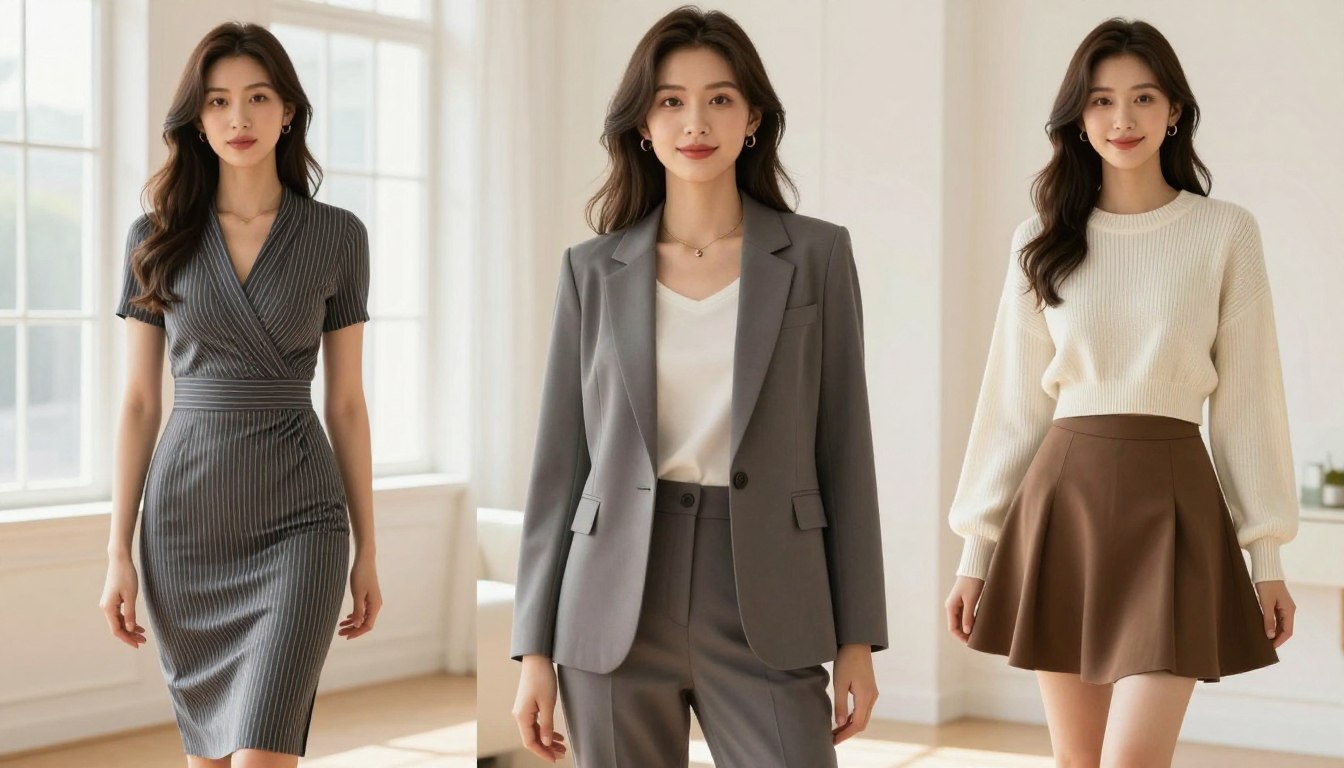
One of the most effective visual tricks in fashion involves simple directional lines. When these lines run vertically, they work magic for creating the illusion of height. This technique draws the eye upward, making you appear taller instantly.
Creating the Illusion of Height
The science behind this effect is straightforward. Vertical lines guide the viewer’s gaze in a lengthening direction. This creates a streamlined silhouette that appears taller and more balanced.
Thinner stripes generally work better than wide ones. Wide patterns can sometimes broaden the frame instead of elongating it. The goal is to create clean, uninterrupted lines from top to bottom.
This table shows how different vertical elements can enhance your look:
| Vertical Element | Application | Visual Effect |
|---|---|---|
| Pinstripes | Suits and trousers | Strong elongation |
| Princess seams | Dresses and tops | Subtle streamlining |
| Long cardigans | Worn open | Continuous line |
| Center zippers | Jackets and dresses | Focal lengthening |
Examples of Vertical Details in Outfits
Look for dresses with vertical seams running down the front or back. These subtle details create elongation without obvious patterning. A vertically striped blouse paired with solid pants also works wonders.
Accessories can contribute too. Long necklaces and scarves worn lengthwise extend the vertical line. Even a center hair part creates a subtle upward guide for the eye.
These elements help in making appear taller while maintaining comfort. They’re your secret weapon for a confident, proportionate look.
Hemming Techniques That Enhance Your Look
One of the most transformative styling secrets lies in getting your hemlines just right. Where your garments end creates powerful visual effects that can either shorten or lengthen your appearance.
The right length shows more of your legs, creating that sought-after elongation. This simple adjustment makes a world of difference in your overall proportions.
Choosing the Perfect Skirt and Dress Lengths
For skirts and dresses, aim for a hemline just above the knee. This specific length maximizes leg visibility while maintaining elegance.
A-line skirts and wrap dresses work exceptionally well. They provide gentle volume without overwhelming a smaller frame.
Be mindful of midi lengths that hit at the calf’s widest point. Instead, choose styles ending just below the knee or pair them with heels.
For pants, ankle-grazing cuts create the illusion of longer legs. Match your shoes to your pants or skin tone for seamless extension.
Finding your ideal hemline transforms how clothes fit and feel. It’s worth investing in alterations to achieve that perfect custom look.
Elevating Your Style with High-Waisted Pieces
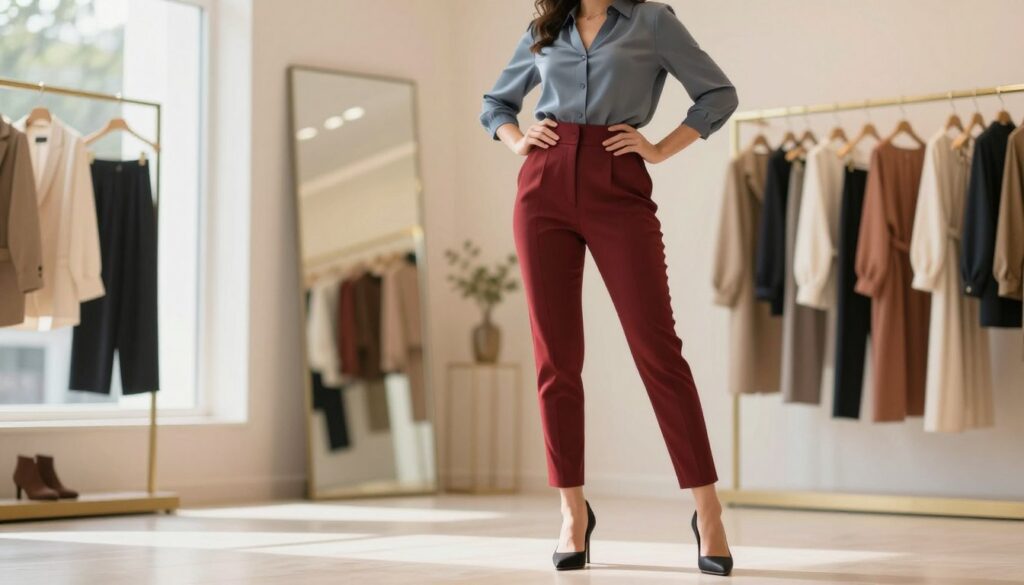
High-waisted pieces offer a powerful solution for creating balanced proportions. These bottoms work magic by shifting the visual focus upward.
Benefits of a High Waist for Elongated Legs
Raising your waistline creates the illusion longer legs instantly. This simple trick makes your lower body appear more stretched.
The right fit is crucial. Bottoms that sit comfortably at your natural waist create clean lines. Avoid pieces that are too tight or loose around the midsection.
Pairing High-Waisted Outfits with Fitted Tops
Tucking in your top helps define waist clearly. This combination sharpens your entire silhouette.
Fitted tops prevent extra fabric from adding bulk. They work beautifully with high-waisted jeans, skirts, and trousers.
This approach works for both casual and dressy occasions. It’s a versatile strategy that enhances any petite frame.
Mastering Monochrome Magic for a Sleek Look
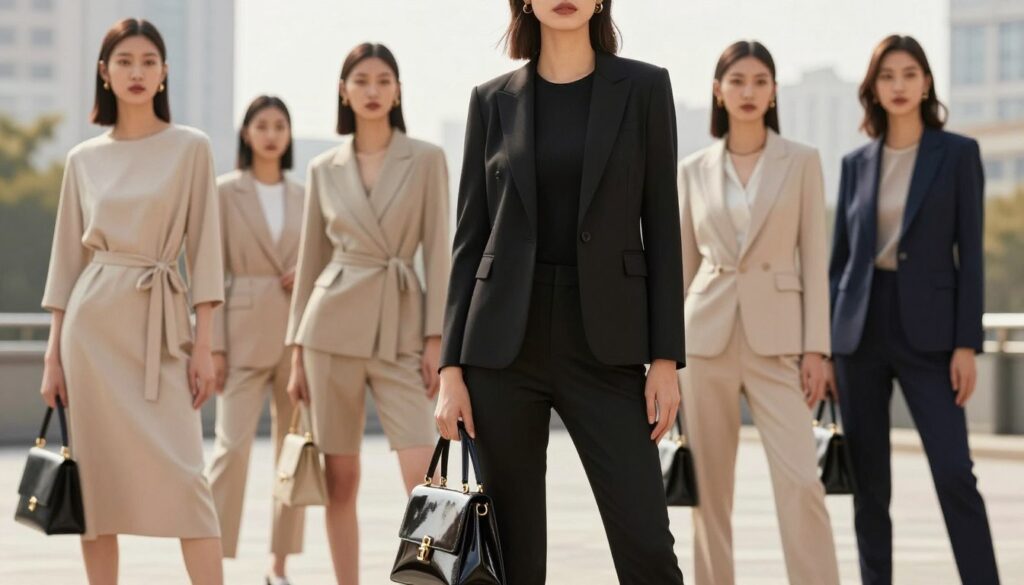
Monochromatic dressing offers one of fashion’s most powerful optical illusions for smaller frames. Wearing a single color from head to toe creates an unbroken vertical line that seamlessly elongates your entire silhouette. This approach eliminates visual breaks that can shorten your appearance.
How a Single Color Creates a Cohesive Effect
A unified color scheme allows the eye to travel smoothly up and down your body. This continuous flow helps create illusion longer lines naturally. The effect works with any color palette you choose.
Start with neutral tones if you’re new to this style. Black, navy, or beige outfits provide a slimming effect that feels comfortable. These colors create sophisticated looks that transition easily from day to night.
| Monochrome Approach | Color Examples | Best For |
|---|---|---|
| Exact Match | All-black ensemble | Maximum elongation |
| Tonal Variation | Light to dark blue | Adding dimension |
| Texture Mix | Navy silk and wool | Visual interest |
Incorporating Texture to Add Depth
Mix fabrics within the same color family to prevent a flat appearance. Combine smooth silk with textured knits or crisp cotton. These variations add richness without disrupting the vertical line.
This technique keeps your outfit visually engaging while maintaining its lengthening effect. Experiment with different combinations to find what works for your personal style.
Selecting Accessories That Compliment a Petite Frame
When it comes to completing your look, accessories play a crucial role in either enhancing or disrupting your carefully crafted silhouette. This often-overlooked part of styling deserves special attention for those with smaller frames.
The right accessories can become your style’s best friend, while the wrong choices can overwhelm your entire appearance. Scale matters significantly when selecting pieces that harmonize with your unique body.
Choosing Proportional Bags and Jewelry
Oversized handbags and chunky jewelry tend to dominate a smaller frame. Instead, opt for crossbody bags that hit at hip level and delicate necklaces that complement rather than compete.
Consider the scale of each accessory carefully. Smaller sizes and finer details work beautifully with a petite frame. Even statement pieces can work if they’re balanced with simpler elements elsewhere.
Eyewear and hats also require thoughtful selection. Choose frames proportionate to your face and hats with smaller brims. These subtle details ensure your accessories enhance your overall fit and proportions.
Remember that proportional doesn’t mean boring. Many women find that properly scaled accessories actually allow for more creative expression. They complete your look without overwhelming your natural silhouette.
The Importance of Tailoring and a Perfect Fit
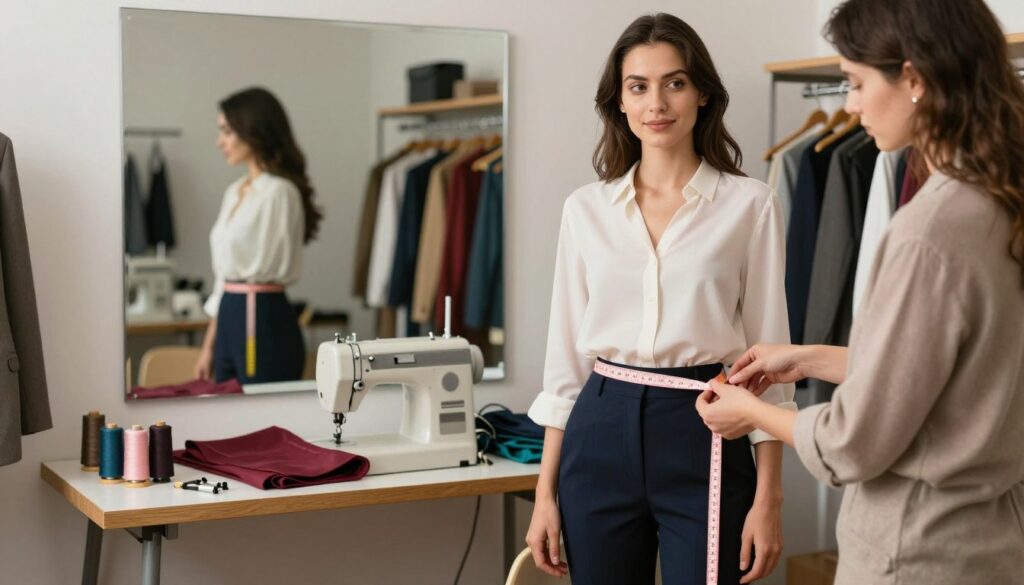
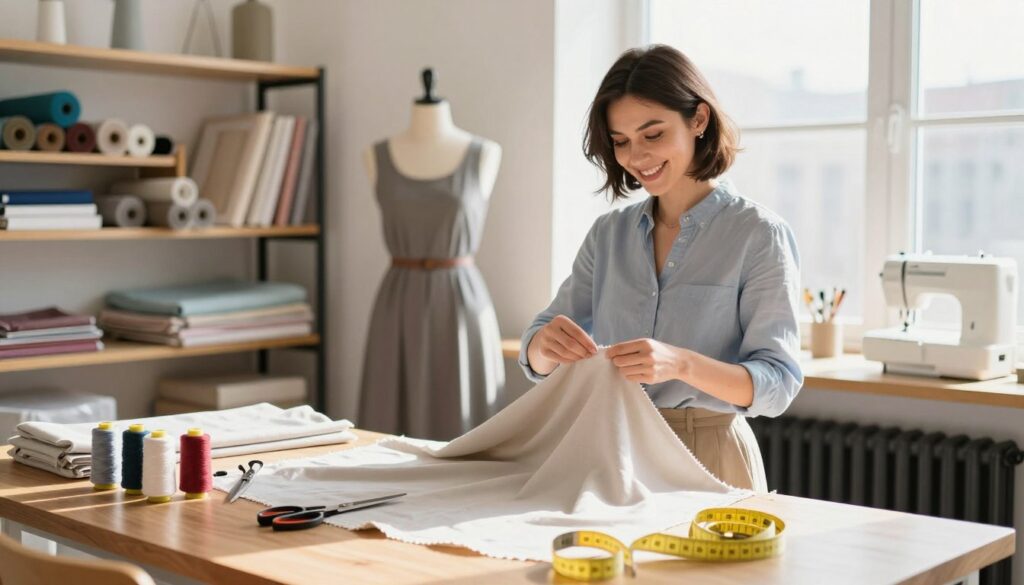
Many fashion frustrations for smaller frames can be solved with one simple solution. Professional tailoring transforms ordinary clothes into pieces that celebrate your unique shape. This investment pays dividends in confidence and style.
Off-the-rack garments rarely accommodate petite proportions correctly. They’re designed for average heights, resulting in sleeves that are too long and waistlines that sit awkwardly. These ill-fitting clothes can make you appear shorter than you actually are.
Benefits of Custom Alterations for Petite Women
Simple adjustments create dramatic improvements. Hemming pants to the perfect length instantly elongates your legs. Taking in sleeves and shoulders ensures tops drape beautifully on your body.
Even basic pieces like t-shirts benefit from tailoring. A slight adjustment to sleeve length or taking in the sides creates a custom fit. This approach works for any type of garment in your wardrobe.
View alterations as an investment rather than an expense. Well-fitting clothes look more expensive regardless of their original price. For petite women, the perfect fit is the foundation of truly flattering style.
Exploring Prints and Patterns Without Overwhelming Your Silhouette
Prints and patterns often spark questions for those with smaller frames about what works best. The good news is that patterns absolutely belong in your wardrobe. The secret lies in selecting designs that complement your proportions rather than dominate them.
Choosing the Right Scale of Prints
Scale matters significantly when working with patterns. Large, bold prints can overwhelm a compact silhouette. Instead, focus on smaller-scale options.
Micro-florals, delicate polka dots, and fine geometric patterns work beautifully. These details add interest without competing with your frame. When you want to wear bolder prints, balance them with solid colors elsewhere in your outfit.
Using Patterns to Enhance Your Vertical Lines
Certain patterns can actually help create elongation. Vertical stripes are the most obvious choice for this effect. They naturally draw the eye upward, making you appear taller.
Thin vertical stripes work particularly well. You can incorporate them in dresses, tops, or even accessories. The key is maintaining clean, uninterrupted lines that support your overall style.
Other patterns with vertical movement also work. Think about subtle checks or abstract designs that guide the eye upward. Strategic placement keeps the focus on creating a streamlined look.
Layering Successfully Without Adding Bulk
Layering clothes presents an exciting opportunity to build dimension in your wardrobe. For those with a smaller frame, the key is strategic choices that enhance your shape rather than hiding it. The goal is to create interest without overwhelming your proportions.
Techniques for Proportionate Layering
Start with a fitted base layer, like a thin turtleneck or a simple tank top. This creates a smooth foundation. Then, add structured pieces such as a tailored blazer.
These items define your shape without extra volume. A long, open cardigan that ends above the knee is another great option. It adds a vertical line that helps elongate your body.
Be mindful of where each layer ends. Conflicting hemlines can create horizontal breaks that disrupt your look. Keeping lines clean is an essential part of the process.
Fabric choice is crucial for petite women. Heavy materials can easily add volume and make you appear broader. Instead, opt for lightweight knits, silk, or fine cotton.
These materials drape beautifully without bulk. Even a lightweight scarf draped vertically can serve as a layer. It adds interest without the weight of extra fabric.
Remember, successful layering is about balance. Fewer, well-chosen layers will always create a more polished and proportionate silhouette.
Styling for Different Petite Body Types
Your height is just the beginning of your style story. Within the category of smaller frames, there exists a beautiful diversity of body shapes. Understanding your specific body type allows you to fine-tune styling principles for a truly personalized and confident look.
This table outlines the primary styling focus for each common silhouette:
| Body Type | Primary Styling Goal | Key Garment Feature |
|---|---|---|
| Pear Shape | Create upper-body balance | A-line skirts and dresses |
| Apple Shape | Elongate and define the midsection | V-necklines and flowy tops |
| Hourglass Shape | Accentuate the natural waist | Wrap dresses and belted pieces |
| Rectangle Shape | Create the illusion of curves | Ruching and peplum details |
Tips for Apple, Pear, Hourglass, and Rectangle Shapes
If your hips and thighs are wider than your shoulders (a pear shape), balance is key. Draw attention upward with eye-catching tops. Pair them with A-line skirts that skim your lower body gracefully.
For an apple body type with a fuller midsection, the goal is elongation. Flowy tops that drape over the waist, combined with high-rise bottoms, can help define waist. V-necklines are exceptionally flattering.
Celebrate an hourglass figure by highlighting your curves. Wrap dresses are a perfect choice as they naturally follow your proportions. Belted jumpsuits and high-waisted pants also showcase your balanced shape beautifully.
A rectangle body type aims to create curves. Look for dresses with ruching or peplum tops that add volume. Strategic belting can give the illusion of a more defined waist, enhancing your silhouette.
Incorporating Cropped Jackets and Blazers
Cropped outerwear represents a secret weapon in creating balanced proportions for smaller frames. These pieces end at or just below your natural waist, preventing the leg-shortening effect that longer jackets can create.
Why Cropped Styles Are Ideal for Petite Women
The magic of cropped jackets lies in their ability to define your waist clearly. This creates a clean division between your upper and lower body. More of your legs remain visible, helping them appear longer.
This versatile style works across many settings. A tailored blazer suits professional environments perfectly. A cropped denim jacket creates casual weekend charm. Each option maintains proportional harmony.
Pairing with High-Waisted Bottoms
The most powerful combination pairs cropped jackets with high-waisted bottoms. This duo maximizes the elongating effect by creating the longest possible leg line. Think cropped blazer with high-waisted trousers for work.
For weekends, try a cropped denim jacket with high-waisted jeans. Evening looks shine with a cropped leather jacket over a high-waisted skirt. Each outfit benefits from this proportional pairing.
Ensure your cropped pieces fit snugly rather than boxy. Oversized cuts can overwhelm a petite frame. Consider tailoring longer jackets to achieve this flattering length.
Embracing Modern Tools and AI in Petite Styling
Technology is reshaping how we approach fashion, offering new solutions for those with smaller frames. Traditional shopping often fails to account for unique proportional needs. Generic size charts cannot capture the specific challenges of a compact silhouette.
Personalized Outfit Suggestions Through AI
Advanced tools like Glance AI create custom recommendations based on your actual measurements. They analyze your height, torso-to-leg ratio, and frame width. This data builds a digital profile that understands your true body type.
The system develops an “AI Twin” – a virtual representation of your unique body. This digital model accounts for petite-specific traits like shorter torsos and narrower shoulders. It helps visualize how different outfits will look on your specific frame.
Using Digital Tools to Enhance Your Style
These intelligent platforms learn from your preferences and shopping behavior. They suggest outfits that match both your personal taste and proportional needs. The technology continuously improves its suggestions based on your feedback.
Digital tools help avoid common styling mistakes before making purchases. They recommend brands and pieces that work well with smaller proportions. This approach transforms trial-and-error shopping into confident decision-making.
Embracing these modern resources can revolutionize your personal style journey. They provide guidance that understands the unique needs of a petite frame. For many women, this technology becomes an invaluable styling companion.
Conclusion
Your fashion journey culminates in a wardrobe that feels authentically you. These styling tips empower shorter women to celebrate their unique proportions with confidence.
Remember the key principles: vertical lines and monochrome outfits create illusion longer lines, helping you appear taller. High-waisted pieces become your best friend for balanced proportions. Proper hemlines and tailoring ensure perfect fit.
Wrap dresses and thoughtful design choices enhance your natural shape. Avoid overly complicated approaches that might add volume. Focus on clean silhouettes that work with your frame.
Your personal style should reflect who you are. Experiment with different looks and trust your instincts. The right outfit makes you feel confident and comfortable in your own skin.
FAQ
What is the most important styling rule for a petite frame?
What length should skirts and dresses be for shorter women?
Are there any specific types of clothes petite women should avoid?
How can I use accessories without overwhelming my small body type?
Why is tailoring so important for petite sizes?
Can petite women wear prints and patterns?

Eduard Kingly is a travel and lifestyle content creator with a focus on personal development and education. He combines firsthand travel experiences with research-driven insights to guide readers in discovering new places, building better habits, and pursuing meaningful learning.