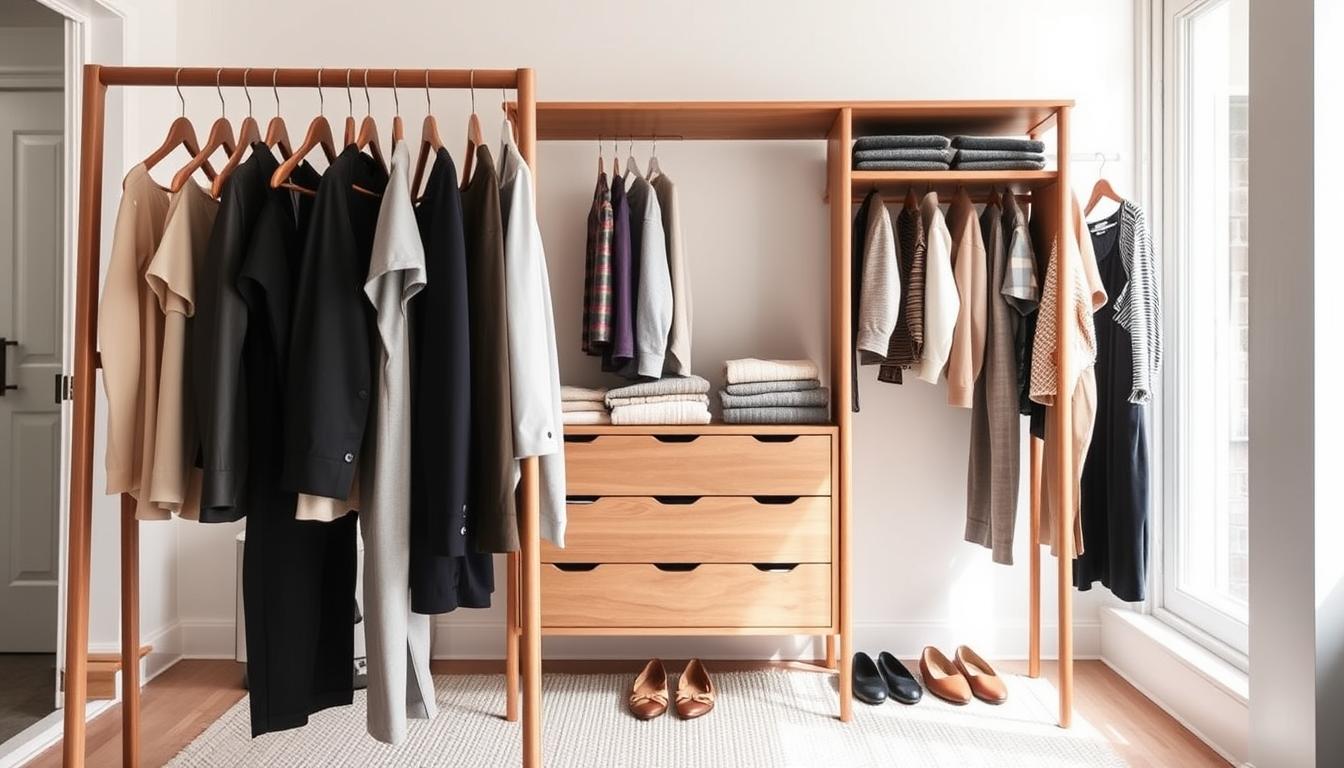
How to Build a Capsule Wardrobe: A Step-by-Step Guide
Did you know the average person wears only 20% of their clothes 80% of the time? That means a huge portion of your closet is just taking up space. Imagine opening your closet door and feeling calm instead of stressed.
This guide is your friendly roadmap to that reality. Forget the idea that a capsule wardrobe means owning ten boring items. It’s the opposite. It’s about creating a personal collection where every piece reflects your unique style and fits your daily life.
We will walk you through the entire process. You’ll learn to identify your core style, edit your current closet, and build a versatile collection. The goal is to make your mornings easier and save you precious time.
The best part? You likely already own the foundation for your first capsule wardrobe. This isn’t about starting over or spending a fortune. It’s about working smarter with what you have to build a wardrobe you truly love.
Key Takeaways
- A capsule wardrobe focuses on versatile, loved items you wear often.
- The goal is to simplify your routine, not restrict your personal style.
- You can start building with clothes you already own in your closet.
- This process saves time, reduces stress, and can help you save money.
- A well-planned wardrobe boosts confidence and makes getting dressed easy.
Introduction to Capsule Wardrobes
Far from being a modern trend, the idea of a curated clothing collection has been evolving since the 1970s. This approach to dressing smartly has stood the test of time.
What Is a Capsule Wardrobe?
A capsule wardrobe is a carefully selected set of clothes designed to work together seamlessly. Think of it as your personal uniform system.
Each item complements the others, creating endless outfits from a limited number of pieces. The goal is maximum versatility with minimum clutter.
The concept dates back over fifty years. London boutique owner Susie Faux first introduced the idea in the 1970s. She believed in timeless essentials supplemented by seasonal items.
Designer Donna Karan popularized the approach in 1985 with her “Seven Easy Pieces” collection. This innovative line showed how a few well-chosen items could take you from day to night effortlessly.
Why Embrace Minimalism in Your Closet?
Adopting a minimalist approach to your wardrobe isn’t about deprivation. It’s about intentionality and freedom.
“The secret to happiness is not in having more, but in wanting less.”
This philosophy applies perfectly to your closet. When every piece serves a purpose, getting dressed becomes joyful rather than stressful.
| Traditional Wardrobe | Capsule Approach | Key Difference |
|---|---|---|
| Many rarely worn items | Only frequently used pieces | Usage frequency |
| Items don’t coordinate well | Everything mixes and matches | Versatility |
| Seasonal shopping sprees | Intentional additions | Purchasing mindset |
The modern resurgence of capsule wardrobes connects to sustainable fashion movements. People seek quality over quantity in their clothing choices.
The Benefits of Downsizing Your Wardrobe
Imagine reclaiming hours each week simply by changing the way you view your closet. A smaller, more intentional collection of clothes offers rewards that touch every part of your life.
Less Decision Fatigue and Increased Time
Fewer options in your closet mean less mental energy spent each morning. You can get dressed quickly and confidently when every piece fits well and makes you feel great.
Think of all the time saved. This includes less shopping, fewer returns, and minimal outfit indecision. That freed-up time can be spent on what truly matters to you.
Savings and Environmental Impact
This approach is kind to your wallet. You’ll shop less often and with more purpose, saving significant money by avoiding impulse buys.
Purchasing fewer items also reduces your environmental footprint. It means less textile waste in landfills and a smaller carbon footprint overall.
| Aspect of Life | Before Downsizing | After a Capsule Wardrobe |
|---|---|---|
| Morning Routine | Stressful, time-consuming | Quick, confident, enjoyable |
| Financial Health | Frequent, unplanned spending | Intentional purchases, more savings |
| Environmental Impact | High consumption, more waste | Reduced consumption, less waste |
This method allows you to invest in higher-quality pieces that last for years. Your entire wardrobe becomes a collection of favorites you genuinely love.
Understanding the Capsule Wardrobe Concept
Ever feel like your closet is full but you have nothing that actually goes together? This common frustration is exactly what the capsule wardrobe concept solves. It’s a small, tightly edited collection of clothing designed for maximum versatility.
Think of shopping for clothes like grocery shopping without a list. You grab random items that look good individually—like apples, fish, and donuts. But they don’t combine to make a satisfying meal. Your closet ends up the same way.
Building a capsule wardrobe is like shopping with a precise grocery list. You select pieces that all work together harmoniously. Imagine a travel wardrobe that covers casual coffee and important meetings effortlessly.
This approach focuses on intentional curation. Every item serves a purpose and coordinates with multiple others. You move from a closet of isolated pieces to a cohesive collection where everything has a place.
Understanding this fundamental idea is key. It’s about strategic selection, not arbitrary minimalism. Your clothing becomes a unified system rather than a pile of disjointed items.
Key Principles for a Successful Capsule Wardrobe
Two core concepts will guide your selections and guarantee a cohesive, easy-to-use collection of clothing. Mastering these ideas is the secret to a closet that feels both personal and incredibly practical.
Timeless, Versatile Pieces
Focus on items that are classic, functional, and adaptable. Timeless pieces, like a crisp white shirt or a well-tailored blazer, never go out of style.
These form the backbone of a lasting collection. Choose pieces that suit your daily life, considering fabric, comfort, and ease of care.
Versatility is key. You should be able to wear each item in multiple ways for different occasions. This maximizes your outfit variety without needing more clothes.
Neutral Color Palette and Accent Colors
Start with a foundation of neutral tones. A core color palette of black, navy, gray, and cream makes mixing effortless.
These colors are flattering and work together automatically. They create a perfect backdrop.
Then, add one or two accent colors you love. This pop of color adds personality and interest while still pairing beautifully with your neutrals.
| Principle | Focus | Example Items |
|---|---|---|
| Timeless & Versatile | Long-term style, multiple uses | Classic blazer, straight-leg jeans |
| Neutral Foundation | Easy coordination, flexibility | Black trousers, white t-shirt, navy sweater |
| Accent Colors | Personal expression, visual interest | Scarlet scarf, emerald green top |
This strategic approach ensures every item in your capsule works hard for you. It’s about smart choices, not a lack of options.
Step-by-Step: How to Build a Capsule Wardrobe
The foundation of any successful clothing collection begins with honest self-reflection about your lifestyle and preferences. This initial phase prevents costly mistakes and ensures your final selection truly serves your unique needs.
Defining Your Style and Needs
Start by identifying your core motivation. What drives this change? Is it simplicity, reduced decision fatigue, or confidence in your personal expression? Your “why” provides the motivation to stick with the process.
Consider your daily routine. Do you work from home or in an office? Attend formal events or enjoy casual outings? Understanding your activities helps determine the right mix of pieces for your life.
Define your aesthetic preferences. Are you minimalist, bohemian, classic, or trend-focused? Choose colors you love and feel comfortable wearing. A neutral foundation with accent shades creates maximum versatility.
Practical factors matter too. Your local climate and laundry frequency directly influence the number of items needed. Someone washing weekly requires fewer pieces than someone doing laundry every two weeks.
| Consideration | Key Questions | Impact on Your Wardrobe |
|---|---|---|
| Lifestyle | Work environment, social activities | Determines casual vs. professional mix |
| Personal Style | Aesthetic preferences, comfort level | Guides color choices and silhouettes |
| Practical Factors | Climate, laundry frequency | Affects quantity and fabric selection |
Remember that everyone’s ideal collection looks different. Your wardrobe should reflect your unique way of living and personal taste.
Wardrobe Audit and Purging Strategies

Ready to see your closet in a whole new light? This hands-on step transforms your space from cluttered to curated. It’s about making smart choices with the clothes you already own.
Identifying Favorites and Functional Items
Start by pulling out the items you truly love and wear regularly. These favorite pieces will form the heart of your collection. Seeing them together helps you spot your preferred shapes and colors.
This simple act clarifies your personal style. You’ll notice which things make you feel confident every day.
Sorting by Category and Season
Next, sort the remaining clothes into clear categories. Group your jeans, pants, tops, and dresses separately. This makes it easy to see what you have too much of—or not enough.
Move off-season items to a different part of your closet. This reduces visual noise and lets you focus on what’s wearable now.
| Item Status | Action to Take | Result |
|---|---|---|
| Loved & frequently worn | Keep for your capsule | Core collection foundation |
| Unworn or disliked | Donate or sell | Immediate space clearing |
| Damaged or stained | Recycle responsibly | Eliminate clutter permanently |
Letting go becomes easier with clear rules. Release things that no longer fit your life or style. This step creates both physical and mental space for a wardrobe that works.
Selecting Core Pieces for Your Capsule
Now comes the exciting part – transforming your curated favorites into a cohesive collection that works together seamlessly. Begin with the loved items you identified during your wardrobe audit. These will serve as your foundation.
Work through your clothing categories one at a time. If you adore a specific pair of black jeans, consider adding one or two similar pieces in different washes. This systematic approach ensures each category feels complete.
Ask key questions for every potential addition. Is it comfortable for daily life? Does it pair easily with other items? Can it be styled multiple ways? Focus on quality over quantity throughout this process.
| Category | Starting Point | Expansion Strategy |
|---|---|---|
| Bottoms | Favorite jeans or pants | Add complementary styles/colors |
| Tops | Most-worn shirts | Include versatile layering pieces |
| Outerwear | Go-to jacket | Consider seasonal variations |
Identifying gaps is completely normal and actually helpful. It creates a targeted shopping list rather than impulse purchases. Your final capsule should consist of pieces you genuinely love wearing every day.
Creating a Balanced Capsule Wardrobe List
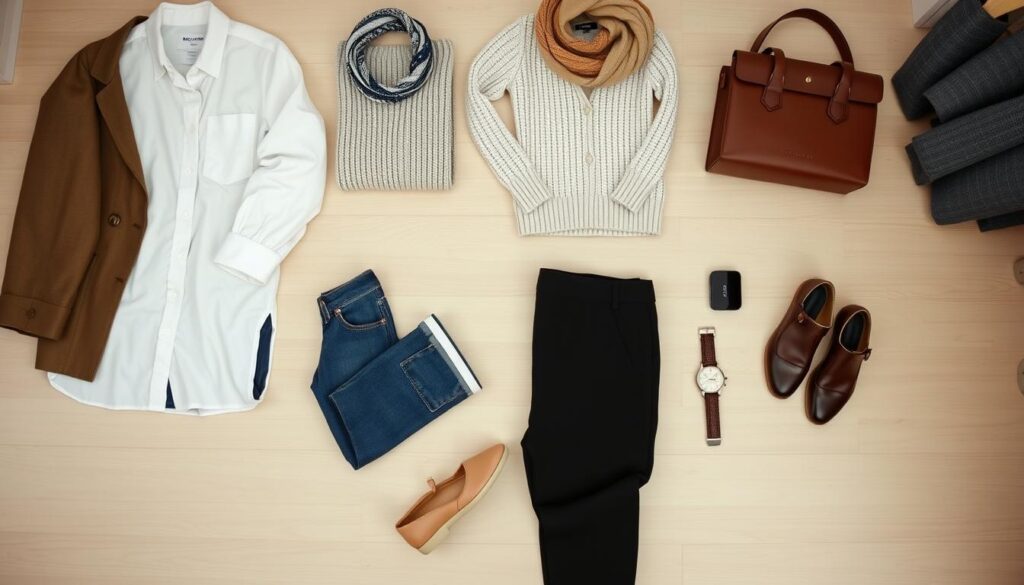
One of the biggest questions people have is about the perfect quantity of items for their collection. The truth is, there are no strict rules.
Your ideal number depends on your season, location, and daily life. The goal is a list that feels complete for you, not one that fits a rigid formula.
Adjusting the Number of Items to Your Lifestyle
A basic framework can range from 28 to 42 pieces. This gives you a helpful starting point without being restrictive.
Think of it as a flexible guide. Someone who does laundry weekly might need fewer items than someone who washes clothes every two weeks.
| Category | Suggested Range |
|---|---|
| Jeans & Pants | 4-6 pieces |
| Tops & Blouses | 8-11 pieces |
| Sweaters | 3-4 pieces |
| Shoes | 3-5 pairs |
For extreme simplicity, a 10-item capsule wardrobe might work. Another balanced approach could include 12 tops, 11 bottoms, and 4 pairs of shoes.
Create a written list to track your choices. Your first collection is a draft that will evolve as you discover what you love to wear most.
Give yourself the flexibility to choose the right number of each type of clothing. This ensures a well-rounded wardrobe you genuinely enjoy.
Building a Versatile Color and Style Mix
The magic of a truly functional closet lies in its strategic color harmony. A thoughtful color palette ensures everything works together beautifully.
For a balanced collection of 26 pieces, start with approximately 17 neutral items. These include black, white, brown, gray, and beige. Neutrals form your foundation because they coordinate effortlessly.
Add about 3 pops of color like aqua, burgundy, or yellow. Choose shades that complement your skin tone and work with multiple neutrals. This adds personality without overwhelming your capsule.
Include roughly 6 printed pieces with stripes, florals, or patterns. Ensure these prints contain colors from your chosen palette. This maximizes mixing potential.
These numbers aren’t rigid rules but helpful guidelines. Your personal style might prefer more or less of certain colors.
Test combinations by laying pieces together before finalizing your collection. A well-planned color scheme prevents that “I have nothing to wear” feeling. Everything harmonizes beautifully.
Remember that a cohesive style doesn’t require a lot of items. It requires smart color relationships that create endless outfit possibilities.
Outfit Planning and Lifestyle-Based Styling
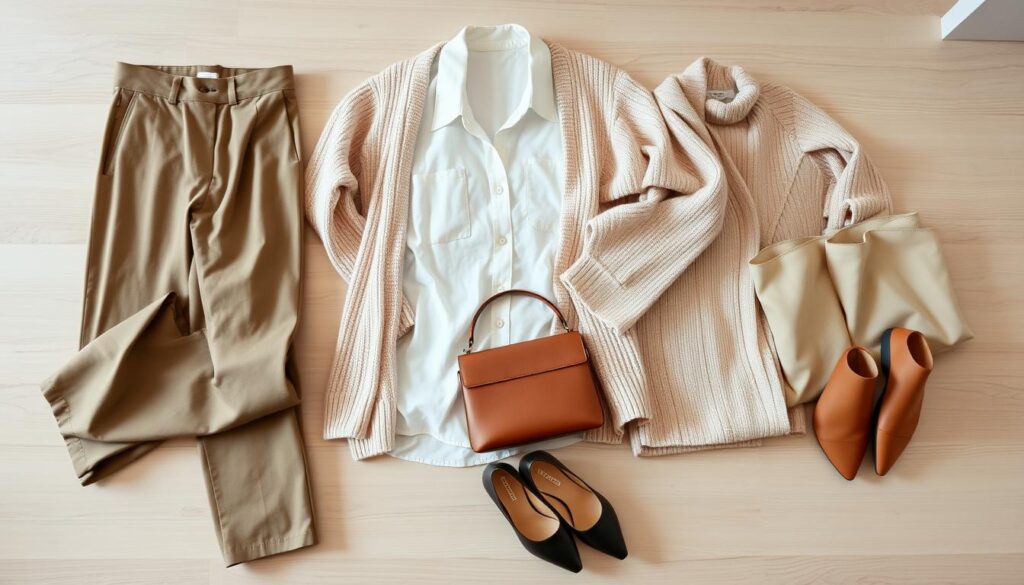
With your core collection selected, the real fun begins—styling those pieces into a full rotation of go-to outfits. Pre-planning 7-10 everyday combinations saves a lot of mental energy. It makes your smaller capsule wardrobe feel expansive and effortless to use.
This step transforms individual items into a functional system. You’ll discover new ways to wear your favorite clothes.
Developing Outfit Formulas
Start by getting inspired. Platforms like Pinterest are fantastic for finding outfit ideas you can recreate with your own clothes.
A great strategy is to build around a single item. See how many different looks you can create with one pair of jeans or a top. This way of working maximizes versatility.
Pay attention to proportions for a balanced look. Pair wide-leg trousers with a fitted top. Use the rule of thirds by tucking tops into high-waisted bottoms.
Layering is key. A simple outfit gains interest with a cardigan, belt, or statement jewelry. These small touches make a big difference.
Using Photos to Document Your Looks
When you create an outfit you love, take a photo with your phone. Create a dedicated folder in your photos app for these inspiration shots.
This visual catalog is a lifesaver on busy mornings. You can get dressed in seconds by choosing a pre-approved look.
This process also helps you spot gaps or weak links. If a piece only works one way, it might not be a hardworking part of your collection. Note what’s missing for future intentional shopping.
Organizing Your Closet for Maximum Efficiency
Your carefully curated collection deserves a home that reflects its simplicity and purpose. Designate a specific area in your closet just for your core capsule pieces. This makes them easy to see and grab every morning.
If you have space, move all other clothes to a different storage spot. Keeping them out of sight reduces clutter and helps you focus on your new system. It’s a powerful visual reminder of your intentional choices.
Resist the temptation to pull items back in right away. Give yourself a few weeks to truly experience the benefits of a smaller, more focused wardrobe. You might be surprised by how little you miss the extra stuff.
If you discover a genuine need for something from storage, challenge yourself. Only reintroduce pieces you absolutely love and that can work in at least five different outfits. This ensures every addition is versatile and valuable.
Organize your capsule by category—group all tops together, then bottoms, and so on. Using matching hangers creates a clean, calm look. It makes your entire wardrobe feel cohesive and effortless to use.
Place your most-worn items at eye level for easy access. An organized closet isn’t just pretty. It functionally supports your goal of getting dressed quickly and happily every single day.
Maintaining and Evolving Your Capsule Wardrobe
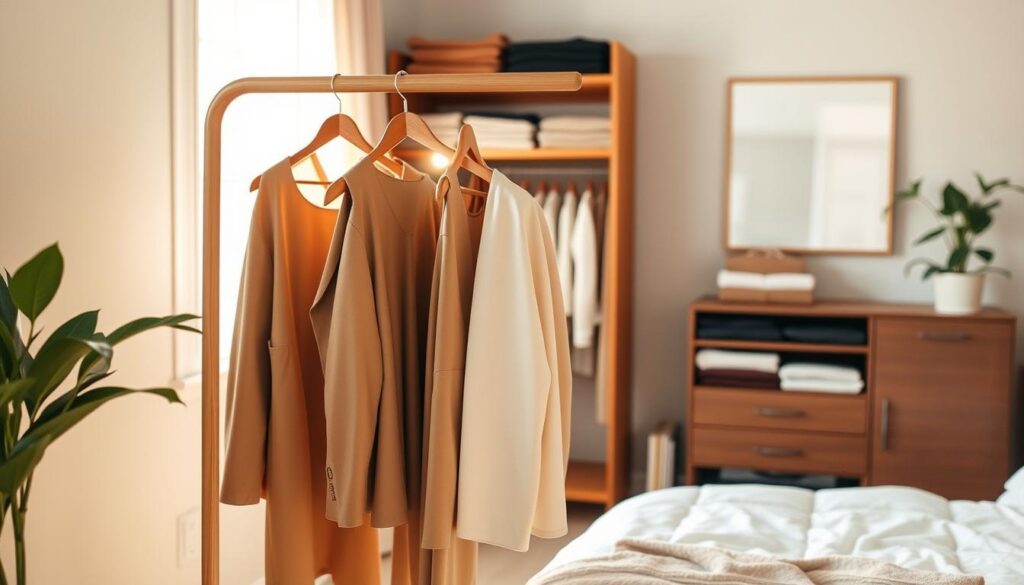
Your first capsule collection is meant to evolve, not remain static. Think of it as Version 1—a rough draft that will naturally improve over time. As you wear these things daily, you’ll discover which pieces truly work for your lifestyle.
After 30 days, revisit your stored clothing. You’ll likely feel ready to let go of items you couldn’t part with initially. This second decluttering often reveals how little you miss those extra things.
Schedule regular maintenance checks each season. Assess what’s still serving you well and what needs replacing. Keep a running list of gaps you notice through regular wear.
Consider the “one in, one out” rule for maintaining your capsule wardrobe size. When adding a new piece, remove something similar to prevent closet creep. This practice becomes more intuitive with time.
Your wardrobe should adapt as your life changes—new jobs, different climates, or lifestyle shifts. Stay flexible rather than rigidly adhering to an outdated system. This ongoing attention ensures your capsule always serves you well.
Troubleshooting Common Capsule Wardrobe Pitfalls>
Many people find themselves trapped in what I call the ‘Cluttered Closet Cycle’—a frustrating loop of wardrobe chaos. You face a packed closet every morning but feel you have nothing to wear. This leads to impulsive shopping that never solves the real problem.
A common mistake is creating a collection that is too restrictive. If your capsule wardrobe doesn’t match your real life, you’ll feel deprived. You might constantly reach for other clothes, defeating the purpose.
Another pitfall is chasing trends over timeless things. Trendy pieces date quickly, forcing frequent replacements. This is an expensive and unsustainable way to maintain your capsule.
Never sacrifice fit for style. An item might look perfect on a hanger. But if it’s uncomfortable, you simply won’t wear it, no matter how versatile it seems.
Choose colors you love, not ones you think you should wear. Confidence comes from wearing shades that make you feel great. Your personal palette is key to a successful system.
Avoid buying a lot of new things all at once. This is costly and wasteful. Most people can build a strong foundation from clothes they already own and love.
Finally, give your new system time to work. Some people abandon the concept after a few days. The real benefits of a simplified wardrobe become clear after a few weeks of adjustment.
| Common Pitfall | Simple Solution | Expected Outcome |
|---|---|---|
| Feeling restricted | Add 2-3 flexible “wild card” items | A collection that feels personal and spontaneous |
| Focusing on fast fashion | Prioritize quality fabrics and classic cuts | Long-lasting pieces that remain stylish |
| Ignoring true fit | Only keep items that feel comfortable all day | You’ll actually wear every piece you own |
| Impatience with the process | Commit to a 30-day trial period | Time to experience the real benefits of simplicity |
Regularly reassess your choices. Be honest about what you’re actually wearing. Your capsule wardrobe should serve you, not the other way around. Adjust it until it fits your life perfectly.
Inspiration from Real-Life Capsule Wardrobe Successes
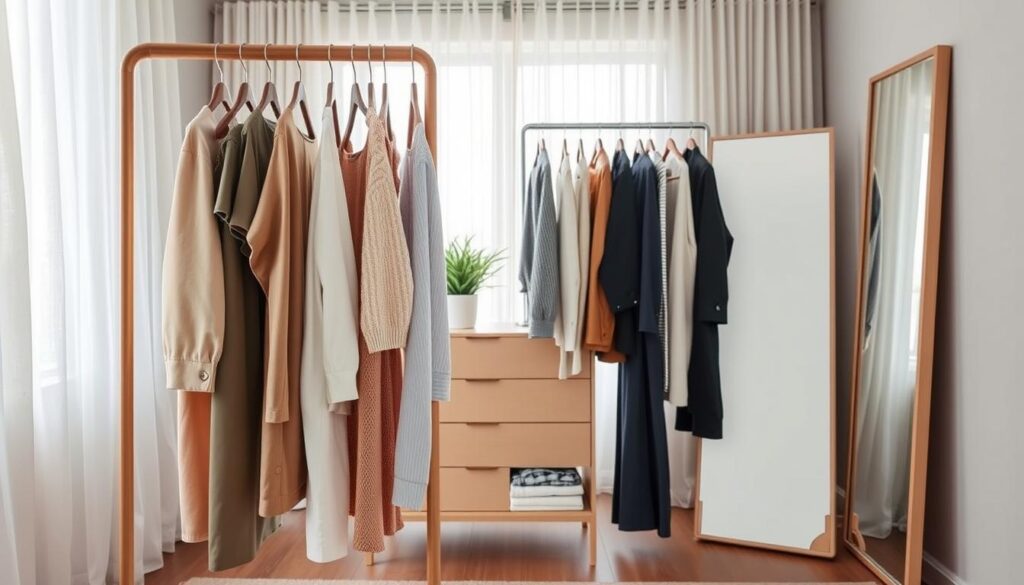
Seeing real people succeed with capsule wardrobes can be the final push you need to start your own journey. These stories prove the system works across different lifestyles and budgets.
Consider the full-time traveler who lives from a carry-on bag. For years, they’ve maintained a collection smaller than 30 pieces. This minimalist approach shows how adaptable these wardrobes can be.
Case Studies and Personal Stories
One creator built their first capsule wardrobe five years ago using existing clothes. During a three-month stay, they discovered the magic of versatility. Just 30 pieces created over 100 different outfits.
People report life-changing benefits from this approach. They experience less stress and more confidence in their daily life. Mornings become quicker and more enjoyable.
Different approaches work for different people:
- Business professionals focus on work-appropriate pieces
- Parents prioritize comfort and easy care
- Creative individuals express their personal style
These success stories span all ages, body types, and budgets. Many started skeptical but became enthusiastic converts. The right look for you is waiting to be discovered.
Seasonal Adjustments and Lifestyle Reflections
Seasonal transitions offer the perfect opportunity to reflect on what’s working in your wardrobe system. Focus only on pieces you can wear right now during the current season.
Your local climate heavily influences your clothing choices. Someone in a warm area needs different items than someone experiencing distinct seasonal changes.
For places with varied weather, consider creating separate collections for warm and cool months. May through October might work for one system, while November to April requires another approach.
Use seasonal switches as natural checkpoints. Before storing off-season items, assess what you actually wore. If something sat unused all season, it might not deserve space next year.
| Climate Type | Seasonal Approach | Key Considerations |
|---|---|---|
| Consistent Warm | Year-round capsule | Light fabrics, sun protection |
| Distinct Seasons | Separate warm/cool collections | Layering pieces, transitional items |
| Variable Weather | Core + seasonal additions | Versatile layers, adaptable pieces |
Keep a simple inventory of stored items. This prevents duplicate purchases when seasons change. Your system will become more intuitive over time as you learn what works best for each part of the year.
Life changes throughout the seasons might affect your needs. Holiday gatherings, outdoor activities, or work events can influence your ideal collection. Stay flexible and adjust accordingly.
Conclusion
Your path to a simplified, intentional wardrobe is now clear and achievable. You’ve gained the knowledge to build capsule collections that save time each day and reduce decision fatigue.
Remember this is a journey, not a destination. Your first version will naturally evolve to better serve your life. Start with one simple step – even a basic audit of your current closet creates meaningful progress.
Your personal style should guide every choice. This approach isn’t about deprivation but intentional curation that makes getting dressed enjoyable. Keep a running list for mindful shopping as your needs change.
You now have everything needed to create a capsule wardrobe that works for you. It will make feel confident and put together, transforming your relationship with clothing for the better.
FAQ
What exactly is a capsule wardrobe?
How many pieces of clothing are in a typical capsule?
Do I have to stick to only neutral colors?
What if my lifestyle requires different types of outfits?
How often should I update or change my capsule?
I love shopping and new trends. Will a capsule wardrobe feel boring?
What’s the first step to building a capsule wardrobe?

Sharon Molly is a content creator in lifestyle, fashion, and travel, delivering style-savvy advice and destination insights to inspire confident living. With a background in digital media, she combines aesthetics with practical guidance for modern women on the go.