How to Create a Vintage Aesthetic
As fashion icon Iris Apfel once said, “More is more and less is a bore.” This bold philosophy captures the spirit of embracing styles from the past. It’s about finding joy in the unique character that time imparts.
This guide is your friendly companion for bringing that charm into your life. We explore fashion, home decor, and lifestyle choices. The goal is to help you weave the beauty of bygone eras into your modern world.
This look has exploded in popularity, especially on social media. Countless interpretations and styles have emerged. It’s a celebration of designs that are at least 20 years old but not yet antique.
You don’t need a huge budget or years of experience. It’s an accessible journey for everyone. The focus is on personal expression and blending old with new.
We will cover everything from understanding core principles to practical tips. Get ready to explore decade-specific trends and sustainable benefits. This is about making the past your own.
Key Takeaways
- Vintage refers to items and styles that are between 20 and 100 years old.
- The aesthetic is highly popular and personal, with many interpretations.
- This style is accessible to everyone, regardless of budget or skill level.
- It involves blending historical charm with contemporary living.
- The guide covers practical applications in fashion, decor, and lifestyle.
- Embracing this look can be a sustainable and unique choice.
Introduction
Social media has transformed how we discover and embrace different aesthetics, making vintage inspiration more accessible than ever. Platforms showcase millions of retro-inspired looks and spaces. This digital revolution fuels the trend’s current dominance.
Unlike previous generations who often committed to one specific look, today’s approach is wonderfully fluid. People freely mix elements from different eras. This personal blending creates unique expressions that feel authentic.
The emotional pull of bygone times provides comfort in our fast-paced world. These styles connect us to simpler periods and evoke cherished memories. This nostalgic appeal makes the vintage aesthetic deeply meaningful.
| Vintage Style | Key Characteristics | Popular Decades |
|---|---|---|
| Mid-Century Modern | Clean lines, organic forms | 1950s-1960s |
| Bohemian | Eclectic patterns, natural materials | 1970s |
| Retro Futurism | Space-age shapes, bold colors | 1960s-1980s |
Whether drawn to bold 70s colors or romantic cottagecore elements, there’s a style that speaks to you. This journey isn’t about perfect historical replication. It’s about finding inspiration from past decades and making it work for your contemporary life.
The vintage aesthetic serves as both creative outlet and personal statement. It allows authentic self-expression that feels genuinely meaningful. This approach celebrates individuality while honoring timeless beauty.
What is Vintage Aesthetic?
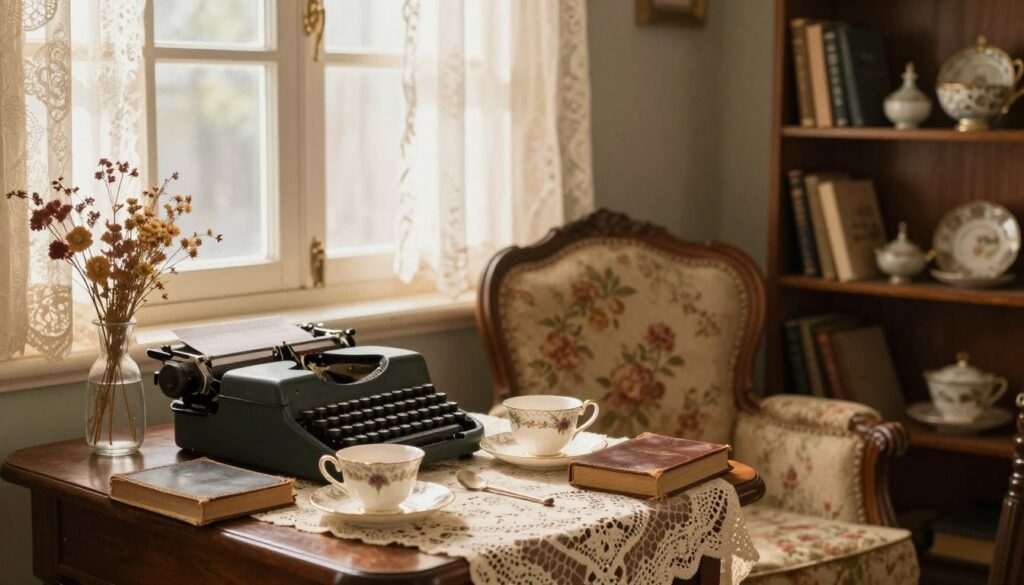
Let’s break down this popular phrase. The term vintage specifically describes items that have stood the test of time. They are not new, typically being at least 15-20 years old, but they are not yet considered antiques, which are over a century old.
Now, for the second part. The word aesthetic has deep roots, coming from the Greek word for perception and feeling.
Aesthetics is a branch of philosophy that deals with the nature of beauty and taste.
It’s all about what we find visually pleasing. When combined, vintage aesthetic means appreciating the beauty ideals from past decades.
This concept is a broad umbrella. It covers many distinct styles, from the glamour of the 1920s to the bold Y2K trends. It’s a celebration of diverse historical charm.
A wonderful aspect is that an item doesn’t need to be old to have a vintage feel. Modern pieces can capture the spirit through design, materials, and styling. It’s about incorporating those beloved principles into your contemporary life.
How to Create a Vintage Aesthetic
Getting started with vintage styling is surprisingly straightforward and accessible to everyone. The best approach begins with exploration rather than strict rules.
First, identify which eras resonate with your personal taste. Browse different decades to discover what speaks to you. This discovery process is part of the fun.
| Research Method | Best For | Key Benefits |
|---|---|---|
| Pinterest Boards | Visual inspiration | Easy organization |
| Vintage Magazines | Authentic references | Historical context |
| Thrift Store Visits | Hands-on discovery | Immediate finds |
| Online Marketplaces | Specific searches | Wide selection |
Visit local thrift stores and charity shops for authentic pieces. These places offer unique items with genuine history. You’ll find treasures that mass retailers cannot replicate.
Online vintage shops provide excellent styling inspiration. Observe how they combine pieces for different looks. Borrow ideas that align with your personal way of expression.
Start with small accessories or single furniture pieces. Gradually build your collection as you develop confidence. This method prevents overwhelming choices and costly mistakes.
Remember, quality vintage items have already proven their durability. They offer better value than many contemporary alternatives. Your personal style will naturally evolve through this enjoyable process.
Dressing With a Vintage Flair
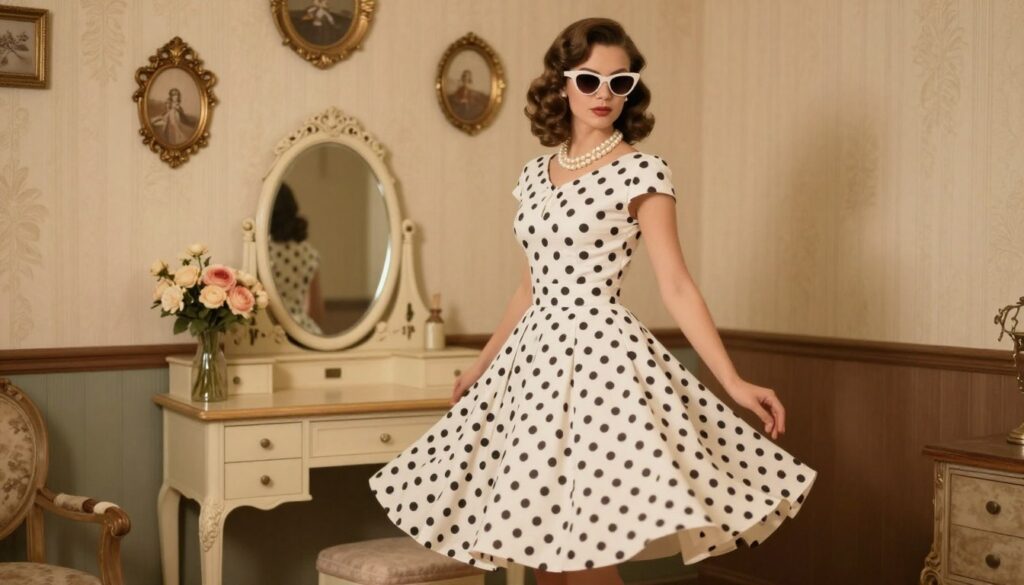
The journey into retro fashion starts with knowing where to hunt for authentic treasures. Building a wardrobe with character requires both smart shopping and creative styling.
Shopping for Authentic Pieces
Local thrift stores and charity shops are goldmines for genuine finds. Estate sales and specialized boutiques offer curated selections with rich history.
Online platforms like Etsy and Depop provide access to rare items from anywhere. Always check labels and examine construction quality before purchasing.
Quality vintage pieces have survived decades, proving their durability. They offer better value than many contemporary alternatives.
Styling Tips and Outfit Inspirations
Mix statement pieces with modern basics to avoid a costume-like appearance. A retro blazer pairs perfectly with contemporary jeans for balanced appeal.
Study how professional shops style their items for daily wear inspiration. Vintage accessories can transform simple modern outfits with unique charm.
This approach creates a personal look that feels authentic rather than themed. Your individual style will naturally evolve through experimentation.
Decade-by-Decade Vintage Trends
Each decade leaves its unique fingerprint on fashion and design. Understanding these distinct trends helps you identify which era resonates with your personal taste.
2000s Y2K Aesthetic
The early 2000s look has made a surprising comeback. Think pleated skirts, plush sweatpants, and low-rise jeans with rhinestone belts.
Butterfly motifs and ultra-thin eyebrows complete this maximalist style. It embraces the colorful, sometimes kitschy spirit that defined the millennium’s turn.
90s Grunge and 80s Retro Styles
The 1990s offered contrasting styles. Kurt Cobain-inspired grunge featured lumberjack shirts and ripped mom jeans. This was the last decade before the internet changed everything.
Thanks to shows like Stranger Things, 80s fashion is cool again. Bold geometric patterns, oversized blazers, and puffy sleeves define this retro revival.
70s Hippie and 60s Mod Trends
70s hippie fashion appears stronger than ever today. Crocheted items, blazer-cut leather jackets, and flare trousers have replaced skinny jeans.
The 1960s presented two distinct looks. Early decades featured clean mod designs by Mary Quant. The late 70s shifted to psychedelic flower-power with chaotic patterns.
These vintage trends from various 70s influences offer endless inspiration for creating your unique vintage expression.
Distinct Vintage Aesthetics: Fairycore, Cottagecore, and Antique
Beyond specific decades, some of the most enchanting vintage-inspired aesthetics draw from romantic ideals and fantasy realms. These styles blend historical elements with imaginative storytelling.
Fairycore emerged alongside fantasy media like Lord of the Rings. It features elf ears, butterfly wings, and ethereal fabrics. What was once niche geek culture has become mainstream fashion.
Cottagecore embraces a return to simpler rural life. Frills, laces, and peasant blouses create romantic pastoral imagery. This look heavily draws from 70s vintage fashion sensibilities.
The antique aesthetic reaches back to fin de siècle styling. It features elaborate frills and Victorian-inspired details. Unlike fairycore, it avoids fantasy elements like butterfly wings.
These distinct vintage aesthetic approaches allow creative mixing of patterns and textures. They demonstrate how historical inspiration can blend with personal imagination.
The Role of Vintage Fashion in Sustainable Living
In today’s world, true style goes beyond appearance and embraces environmental responsibility. Choosing pre-loved items is a powerful way to make a positive impact. This approach aligns personal expression with planetary care.
Every vintage purchase is a vote against waste. These pieces already exist, requiring no new resources for production. You save water, energy, and raw materials with each find.
Individual actions might seem small against corporate scale. But collective choices create significant change. As more people embrace secondhand shopping, it pressures brands to improve practices.
“The most sustainable garment is the one that already exists.”
This mindset turns shopping into conscious consumerism. It rejects the throwaway culture of fast fashion. You extend the life of well-made things that deserve appreciation.
| Purchase Type | Water Used | Carbon Footprint | Landfill Impact |
|---|---|---|---|
| New Fast Fashion Item | High (2,700+ liters) | Significant | Contributes to waste |
| Vintage/Secondhand Item | Nearly Zero | Minimal | Prevents waste |
This post encourages seeing your style as part of a larger solution. Embracing vintage is both a beautiful and practical choice. It’s a meaningful step toward sustainable living that anyone can take today.
Fast Fashion vs. True Vintage Style
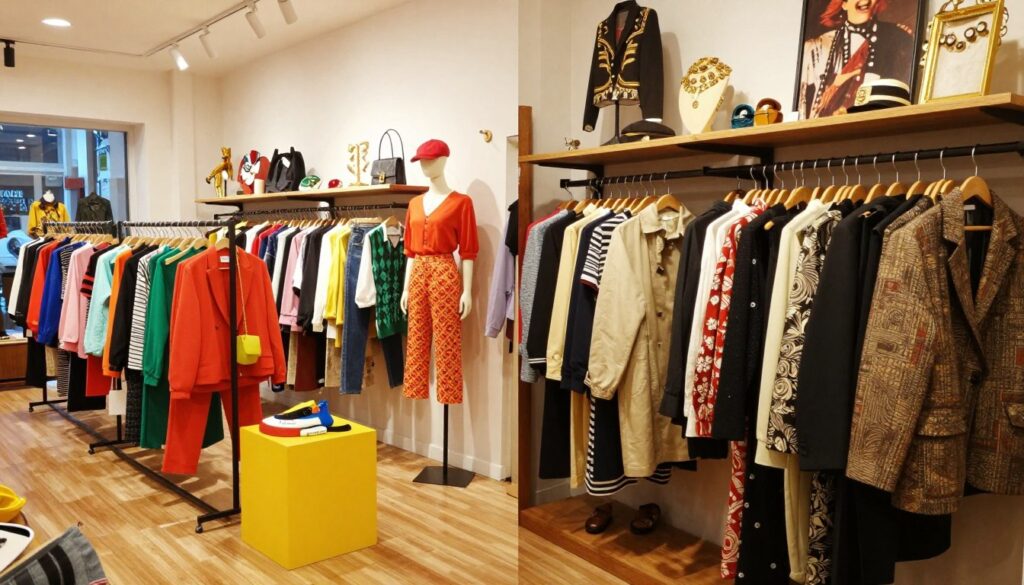
Fast fashion’s recent obsession with vintage-inspired collections reveals a fundamental misunderstanding of what makes this style special. These brands produce new items designed to look old, creating a contradiction that defeats the entire purpose.
Authentic pieces carry history, craftsmanship, and proven durability. Mass-produced imitations cannot replicate these qualities. They offer only surface-level design without the substance.
The genuine aesthetic comes from items with real stories. Fast fashion versions copy visual elements but lack sustainable values. They miss the meaningful connection to the past.
| Feature | Fast Fashion “Vintage” | Authentic Vintage Style |
|---|---|---|
| Materials & Construction | Cheap, mass-produced | Quality craftsmanship |
| Environmental Impact | High waste, new resources | Sustainable, existing items |
| Longevity | Short-lived, disposable | Proven durability |
| Value Retention | Loses value quickly | Often appreciates |
True vintage doesn’t need manufacturing. It already exists in abundance waiting for discovery. The focus should be on finding and restoring these treasures.
Choosing authentic pieces supports small businesses and sustainable practices. It creates a personal look with genuine character. This approach honors the real spirit of vintage appreciation.
Vintage Home Decor and Design Inspiration
Your living space becomes a canvas for personal history when you embrace vintage home decor. Each piece carries stories from previous owners and eras, adding depth to your environment. This approach transforms ordinary rooms into character-filled spaces with genuine charm.
True vintage items bring more than aesthetic appeal. They connect you to the past in meaningful ways. A sideboard might recall family gatherings, while a lamp could illuminate memories of different times.
Iconic Furniture and Accessories
Seek out statement pieces that define their eras. Mid-Century Modern offers clean-lined walnut furniture. Art Deco features geometric mirrored pieces with bold character.
Accessories complete the look with authentic touches. Vintage glassware, ceramic collections, and period lighting fixtures add finishing details. These elements work together to create a cohesive design.
| Design Era | Signature Furniture | Characteristic Materials |
|---|---|---|
| Art Deco (1920s-30s) | Mirrored consoles | Chrome, glass, lacquer |
| Mid-Century Modern (1940s-60s) | Teak sideboards | Walnut, metal accents |
| Hollywood Regency (1930s-40s) | Oversized statement pieces | Metallics, luxurious textiles |
| Bohemian (1960s-70s) | Rattan chairs | Mixed patterns, natural fibers |
Art and Décor Elements from the Past
Wall decor anchors your space’s aesthetic beautifully. Exhibition posters, vintage photographs, and abstract prints tell visual stories. Display them in curated groupings rather than scattered arrangements.
Small decorative elements make big impacts. Art Deco sunburst motifs add drama. Disco mirror balls create playful light effects. Each choice contributes to your home’s unique personality and design narrative.
Blending Vintage with Modern Elements
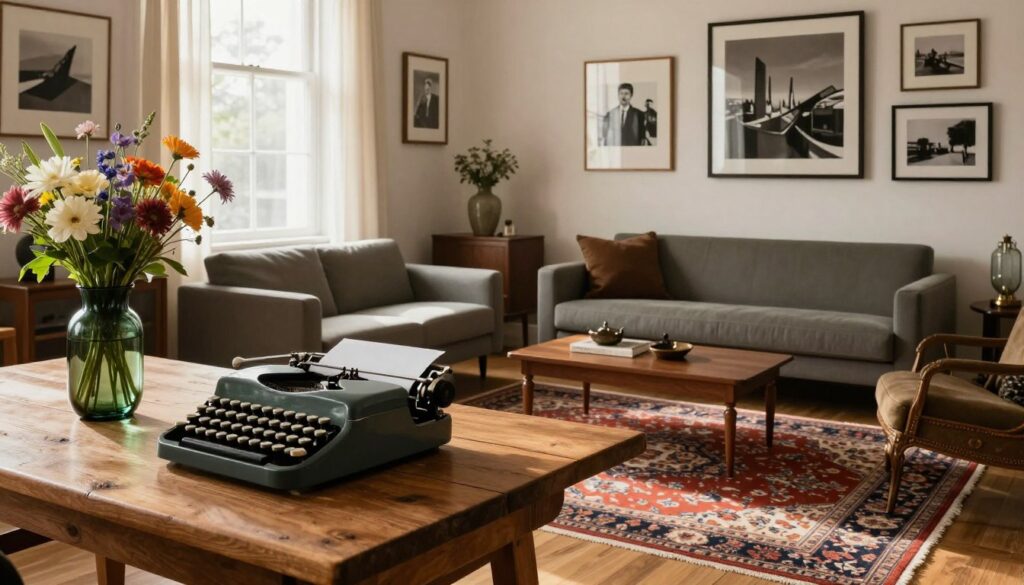
Rather than recreating a specific era, the most successful interiors blend elements from different periods to create something uniquely personal. This approach prevents your home from feeling like a themed museum. Instead, it becomes a comfortable space that reflects your individual taste.
The key lies in strategic placement and thoughtful combinations. Pair a Mid-Century Modern credenza with contemporary seating for instant balance. Use vintage textiles against minimalist backdrops to make them stand out.
Consider scale and color palette when mixing pieces. A large antique armoire works beautifully in a room with clean, modern lines. Let one or two standout vintage items anchor your design without overwhelming the entire room.
This blending creates an eclectic look that feels collected over time. Your personal style shines through when old and new coexist. Trust your instincts and experiment with different combinations.
The best design choices reflect your personality rather than strict rules. This approach makes your home feel timeless and genuinely yours.
DIY Projects to Enhance Your Vintage Aesthetic
Your hands hold the power to craft unique pieces that capture the essence of bygone eras. DIY projects let you build a personal collection without breaking the bank. This hands-on approach adds authentic character that mass-produced items cannot replicate.
Upcycling and Crafting Tips
Transform thrifted finds into treasures with simple techniques. Painting, distressing, and reupholstering can revive tired pieces. Start with small projects like refreshing picture frames or making decorative pillows.
Basic supplies make all the difference. Chalk paint creates that lovely matte finish. Fabric dye can restore faded textiles. These simple things help you achieve professional-looking results.
| Technique | Best For | Key Benefits | Required Supplies |
|---|---|---|---|
| Chalk Painting | Wood furniture refresh | Easy application, no sanding needed | Chalk paint, brushes, wax |
| Fabric Dyeing | Reviving faded textiles | Color restoration, pattern enhancement | Fabric dye, salt, containers |
| Distressing | Creating aged appearance | Adds authentic character quickly | Sandpaper, stain, sealant |
| Reupholstering | Chair and cushion updates | Complete style transformation | Fabric, staple gun, padding |
Creating Mood Boards and Style Guides
Define your personal aesthetic before starting projects. Mood boards help visualize your ideal look. They prevent impulse purchases that don’t fit your vision.
Gather inspiration from various sources. Pinterest boards organize visual ideas beautifully. Vintage magazines offer authentic patterns and color combinations.
Your style guide becomes a shopping companion. It ensures new items complement your existing collection. This organized way of working saves time and money.
Tips for Personalizing Your Vintage Look
The real magic happens when you move beyond imitation and make the style your own. This final step is about infusing your personality into the retro elements you’ve gathered. It transforms a collection into a cohesive and unique personal statement.
Working with these elements streamlines your process without limiting creativity. This approach provides a wonderful focus, guiding your way to a grounded and authentic result.
Accessorizing with Unique Vintage Items
Carefully chosen accessories can completely transform an outfit or space. They are the most affordable entry point into this world. This allows for experimentation with different eras without a major commitment.
Look for unique jewelry, handbags, scarves, and belts. Small decorative objects add authentic charm. Spot these treasures at thrift stores and estate sales.
Incorporate these finds into both modern and retro-heavy outfits. A single statement piece can become the focal point. This method adds character and individuality with ease.
Mixing Colors and Patterns for a Custom Touch
Gain confidence to experiment with the bold colors and eclectic patterns that define many retro styles. Successful mixing feels intentional, not chaotic.
Combine different patterns like florals with geometrics or stripes with paisleys. Use era-appropriate color palettes as a starting point. Then, adapt them to your personal preferences.
| Pattern Combination | Effect | Best Use |
|---|---|---|
| Floral + Geometric | Balances organic and structured | Wallpaper, upholstery |
| Stripes + Paisley | Creates dynamic visual interest | Scarves, accent pillows |
| Polka Dots + Plaid | Playful and nostalgic | Fashion, table linens |
This creates a vintage look with a custom, contemporary appeal. Trust your instincts and have fun with the process. Your unique blend will be what makes your style special.
Conclusion
The journey into embracing the past is ultimately a deeply personal one. It blends a love for history with your own modern creativity. This approach to design offers a unique charm that new items simply cannot replicate.
Whether your inspiration comes from the sleek lines of Mid-Century Modern or the glamour of a bygone era, the appeal is timeless. Choosing pre-loved pieces for your home is also a powerful sustainable choice. You give beautiful things a new life and reduce waste.
This vintage aesthetic creates a meaningful connection to memory and time. It makes your living space feel more authentic and emotionally rich. Start with a single accessory or a statement furniture find.
There is no wrong way to explore this style. The best part is that true vintage design, rooted in quality and story, will never go out of fashion.
FAQ
What exactly defines a vintage aesthetic?
How can I start building a vintage style without it looking like a costume?
Is vintage style the same as sustainable fashion?
What are some popular vintage decades to explore for inspiration?
Can I create a vintage aesthetic in my home on a budget?
How do I care for delicate vintage items and pieces?

Adam Peter is a finance, travel, and automotive writer with over a decade of experience. He creates clear, practical content to help readers manage their money, explore the world with confidence, and make informed decisions about cars and travel gear. His work blends expert insight with real-world usefulness.