
Mastering Style: How to Style a Suit Like a Pro
Did you know that 92% of professionals believe wearing a suit creates an immediate positive impression? Even more compelling, over 70% of working individuals report feeling significantly more confident when dressed in proper business attire. These numbers reveal a powerful truth about professional dressing.
Putting on a jacket and trousers is just the beginning. True mastery involves understanding the subtle details that transform an ordinary outfit into a statement of confidence and competence. People naturally perceive well-dressed individuals as more respectable, intelligent, and trustworthy.
This comprehensive guide will walk you through the essential elements of suit mastery. We’ll cover everything from achieving the perfect fit to selecting the right fabrics and coordinating accessories. You’ll learn how small adjustments can dramatically change your entire appearance.
Whether you’re new to suit wearing or looking to refine your existing skills, these techniques will elevate your professional presence. A well-styled suit reflects sophistication and respect for both yourself and those around you.
Key Takeaways
- Over 90% of professionals believe suits create positive first impressions
- Proper suit styling significantly boosts personal confidence
- Well-dressed individuals are perceived as more competent and trustworthy
- Mastering suit styling involves attention to fit, fabric, and accessories
- Small details make the difference between average and exceptional styling
- These skills are learnable regardless of current experience level
- A well-worn suit communicates respect and professionalism
Setting the Foundation with a Perfectly Fitted Suit
Nearly 80% of suit styling success comes down to one critical element: the fit. This foundation determines whether your ensemble appears polished or problematic. A proper fit enhances both comfort and silhouette, creating that sharp, professional look everyone notices.
Begin your journey with the shoulders. The jacket should rest smoothly across your natural shoulder line without wrinkles or extension. Since shoulder alterations are notoriously difficult, prioritize this area when selecting your suit.
Understanding Shoulder Fit and Jacket Construction
Move your arms naturally to test the shoulder fit. There should be no tightness or restriction. The sleeve length is equally important—it should end just above your wrist bone.
This positioning reveals about half an inch of shirt cuff, adding that refined detail. Your jacket hem should reach the middle of your thumb when your arms rest comfortably at your sides.
For trousers, the goal is a clean line. Pants should gently touch your shoe tops without excess fabric pooling. You can choose between a light break or slight break depending on your preference for folding.
Tailoring Tips for a Custom Look
Most off-the-rack suits require adjustments. Investing in a skilled tailor transforms average clothing into exceptional wear. They can perfect sleeve length, waist suppression, and trouser measurements.
Perform simple fit checks yourself. Walk naturally to test movement. Give yourself a hug to verify shoulder width. The jacket should feel snug but never restrictive when putting on or removing it.
Remember: modern suit styling favors trimmer cuts over baggy silhouettes. A properly fitted jacket might feel different than you expect, but if you can move comfortably, you’ve found your perfect fit.
How to Style a Suit Like a Pro: From Basics to Accessories
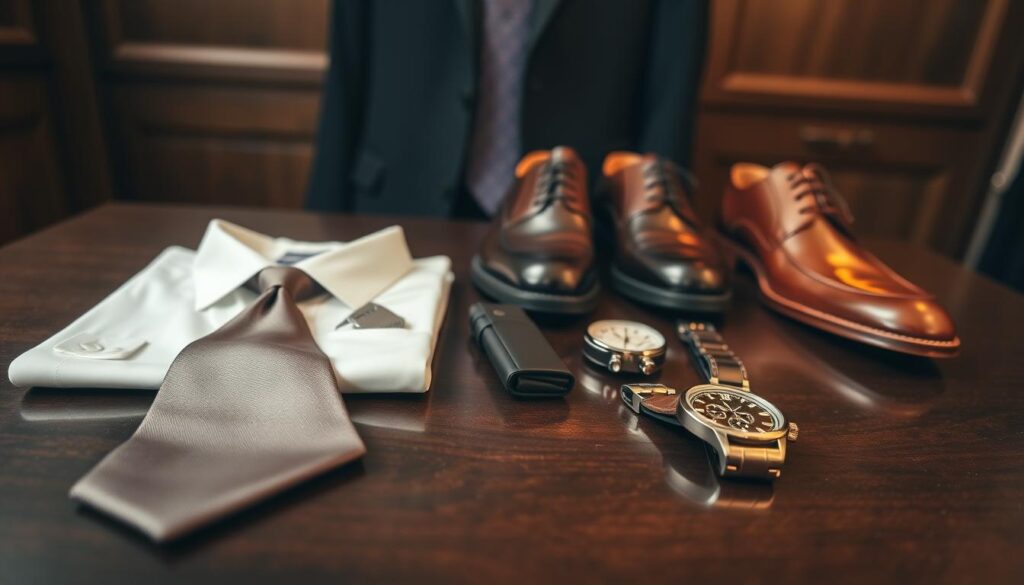
Beyond the basic suit construction lies the art of accessorizing, where personal style truly shines. The right combinations elevate your ensemble from ordinary to exceptional.
Selecting the Right Shirt, Tie, and Cuff Details
Your dress shirt serves as the foundation of your entire look. For formal occasions, crisp white or light blue shirts create traditional pairings. Ensure the collar fits snugly without discomfort.
Sleeves should extend to the wrist, allowing about half an inch of cuff to peek from your jacket. This subtle detail adds refinement to your appearance. When wearing patterned suits, choose solid shirts for visual balance.
The perfect tie complements both your suit and shirt. Tie width should match your lapel width for proper proportion. The tip should end at your waistband or belt buckle.
Elevating Your Look with Pocket Squares and Watches
Pocket squares add sophistication to any suit ensemble. They should coordinate with your outfit but don’t need to match your tie exactly. Folding styles range from classic presidential to casual puff folds.
A quality watch serves as a refined finishing touch. Choose sleek, understated timepieces that complement rather than overpower your look. For formal events, cufflinks add subtle personality.
Remember the principle of restraint with accessories. Less is more when creating a polished aesthetic. Select two to three key pieces maximum for a clean, professional appearance.
Choosing High-Quality Fabrics, Colors, and Patterns
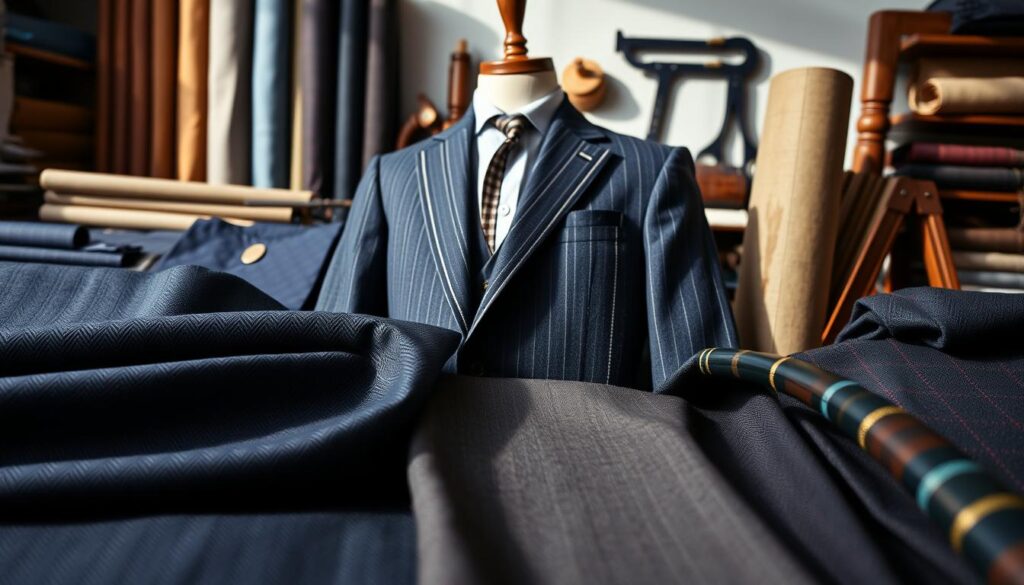
Your suit’s fabric and color palette form the visual foundation of your entire ensemble. Material selection dramatically impacts both appearance and functionality. The right fabric affects comfort, breathability, and how your garment drapes over time.
Seasonal Fabric Selection and Material Benefits
Wool remains the gold standard for suit materials. This natural fiber offers exceptional breathability and durability. A medium-weight wool jacket works beautifully across seasons.
Seasonal changes demand different fabric choices. Wool-linen blends provide lightweight comfort for spring and summer. Flannel offers warmth during fall and winter months.
Pure linen or cotton blends suit tropical climates where maximum breathability is essential. Avoid synthetic blends that may look cheap and wear poorly. Investing in quality natural materials pays dividends in longevity.
| Season | Recommended Fabric | Key Benefits |
|---|---|---|
| Spring/Summer | Wool-Linen Blend | Lightweight, breathable comfort |
| Fall/Winter | Flannel Wool | Warmth, rich texture |
| Tropical/Hot Climate | Linen or Cotton Blend | Maximum breathability |
Impact of Color Choices and Pattern Subtleties
Color psychology plays a significant role in professional appearance. Navy, charcoal, and black form the timeless trio for business settings. These darker colors conceal perspiration while projecting authority.
Medium gray offers approachability for less formal contexts. Brown adds warmth and personality without sacrificing elegance. Your color selection creates the base for coordinating shirts and accessories.
Pattern selection requires thoughtful consideration. Solid suits remain the professional standard. Pinstripes add subtle visual interest while elongating your figure.
Windowpane checks introduce personality but lean casual. Reserve bolder patterns for creative environments. The right combination creates a polished look that enhances your professional presence.
Mastering Suit Etiquette and Coordinating Your Look

Elevating your suit from good to great requires a keen understanding of traditional etiquette and harmonious accessory pairing. These final touches demonstrate true attention to detail and respect for the occasion.
Buttoning, Cuff Length, and Jacket Etiquette
Jacket buttoning follows a simple rule. On a two-button style, always fasten the top button and leave the bottom one undone. For a three-button jacket, button only the middle, or optionally the middle and top.
This tradition dates back to King Edward VII. Remember to unbutton your jacket when sitting to prevent fabric strain. An ideal jacket length covers your rear and ends just below the hip.
Your shirt sleeve should extend about half an inch beyond the jacket cuff. This small detail signals a proper fit and adds a touch of sophistication.
Matching Shoes, Belts, and Accessory Finishes
Shoes and belts are fundamental to a cohesive look. The rule is straightforward: match your leather belt to your leather shoes in both color and finish.
Polished black shoes demand a black belt. Brown shoes require a similar brown tone. This coordination creates visual harmony from head to toe.
Your sock choice is also key. Match socks to your trousers, not your shoes. Choose dark shades like navy or charcoal for formal business settings.
| Shoe Type | Belt Color | Ideal Setting |
|---|---|---|
| Black Oxford | Black | Formal Business |
| Brown Derby | Brown | Business Casual |
| Burgundy Loafer | Burgundy/Brown | Smart-Casual |
Ensure all leather accessories share a similar quality level. Finally, remember to remove any temporary stitching from pockets and vents after purchase for a clean finish.
Conclusion
The ultimate goal of suit styling is achieving a state where the rules serve your confidence, not restrict it. You now possess the essential tips for fit, fabric, and coordination that create a powerful professional look.
Remember that quality suits and thoughtful details communicate respect. This attention to your appearance directly influences how others perceive you in various settings.
Wearing a suit with this knowledge transforms the experience. It becomes an expression of self-assurance. Your personality shines through a polished presentation.
You are equipped to wear a suit with the quiet confidence of someone who understands the art behind the appearance. This mastery separates good dressing from truly exceptional style.
FAQ
How do I know if my suit jacket fits correctly in the shoulders?
What is the rule for buttoning my suit jacket?
How much shirt cuff should show below my jacket sleeve?
What’s the best way to coordinate my belt and shoes?
Are pocket squares necessary, and how should I fold one?
What are the most versatile suit colors to start with?
How should suit pants (trousers) fit?

Adam Peter is a finance, travel, and automotive writer with over a decade of experience. He creates clear, practical content to help readers manage their money, explore the world with confidence, and make informed decisions about cars and travel gear. His work blends expert insight with real-world usefulness.