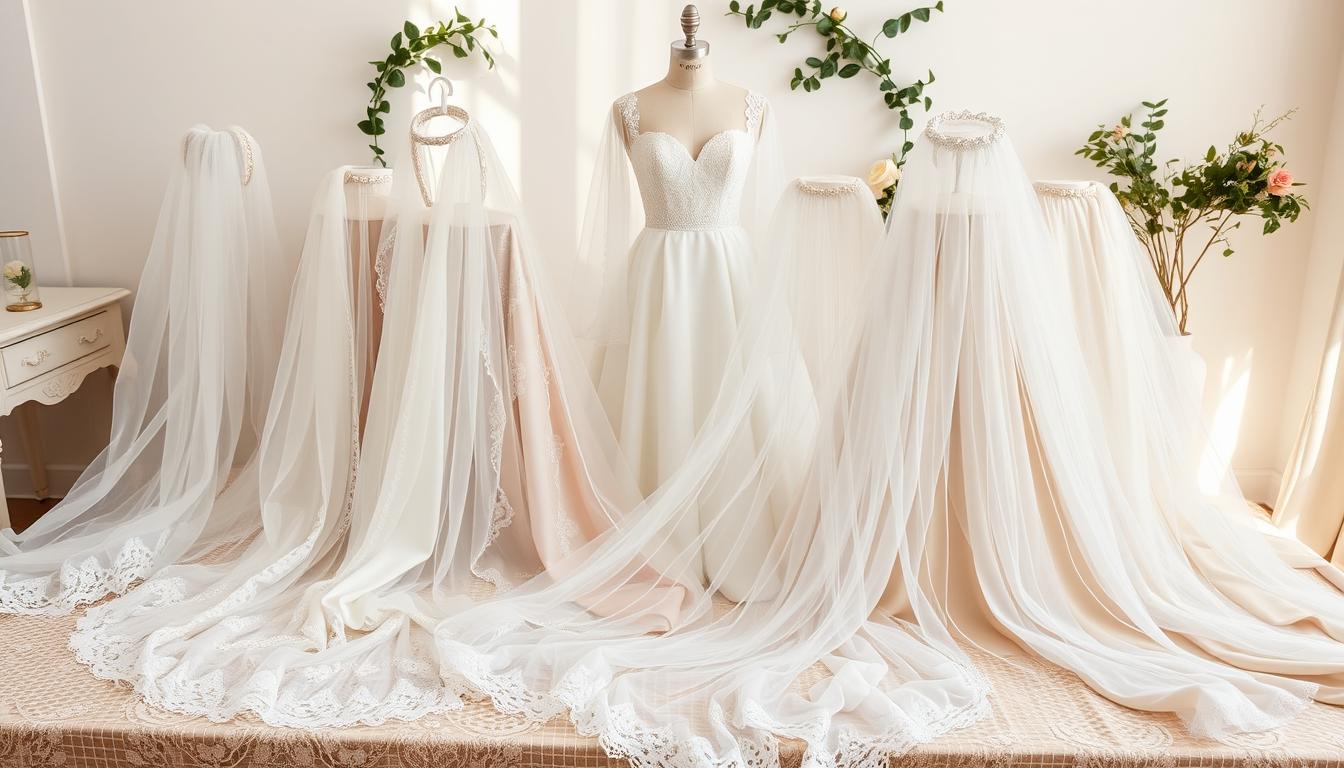
Discover How to Style a Wedding Veil for a Perfect Look
Did you know that over 65% of modern brides choose to incorporate a veil into their ensemble? This stunning accessory is far more than just fabric; it’s a powerful symbol of elegance and tradition.
Welcome to your ultimate resource for mastering this essential element of your bridal look. Your headpiece is one of the most visible and meaningful parts of your entire outfit. Getting its placement just right is crucial for creating that magical, picture-perfect moment.
We understand that wearing this traditional piece might feel a bit intimidating, especially if it’s your first time. But with the proper techniques, you can achieve a flawless appearance that stays secure from your ceremony through your final dance.
This comprehensive guide will walk you through everything. You’ll learn about different traditions and master specific placement methods for various hairstyles. Our goal is to ensure you feel confident and incredibly beautiful.
Whether your locks are swept up, flowing down, or styled in a lovely half-updo, there’s an ideal way to complement your chosen ‘do and gown. We’ve gathered expert advice from professional hairstylists and proven securing tips.
You’ll also discover how to avoid common mistakes. By the end of this article, you’ll have all the knowledge needed to work with your stylist or even practice placement yourself before the big day arrives.
Key Takeaways
- Your headpiece is a highly visible and symbolic part of your overall ensemble.
- Correct placement enhances your chosen hairstyle and creates a flawless look.
- Proper techniques ensure the accessory stays secure throughout your entire celebration.
- This guide covers traditions and specific methods for different hairdos.
- Expert tips will help you avoid common placement errors.
- You can confidently collaborate with your stylist or practice on your own.
- There is a perfect styling method for every type of hairstyle and dress.
Understanding the Tradition and Importance of Veil Placement
The origins of bridal head coverings trace back to ancient Rome, where they symbolized protection and modesty. This rich history gives today’s choices deeper meaning beyond mere fashion.
Historical Insights into Wedding Veils
Ancient civilizations used these accessories for practical and symbolic reasons. They often represented purity and were part of arranged marriages where faces remained covered until after vows.
The “blusher” tradition created a romantic moment when lifted during the ceremony. This soft layer covering the face added mystery and anticipation to the procession.
Modern Trends and Symbolism
Contemporary brides now reinterpret this tradition with personal flair. Choices range from minimalist single-tier designs to dramatic cathedral-length options that make bold statements.
Today’s woman has complete freedom in her decision. She might choose a blusher, place the piece high or low, or select alternative accessories like flower crowns.
Understanding this symbolism helps create intentional choices that honor tradition while expressing unique personality. The moment of lifting or removal often marks a beautiful transition between life phases.
Choosing the Perfect Veil for Your Dress and Hairstyle
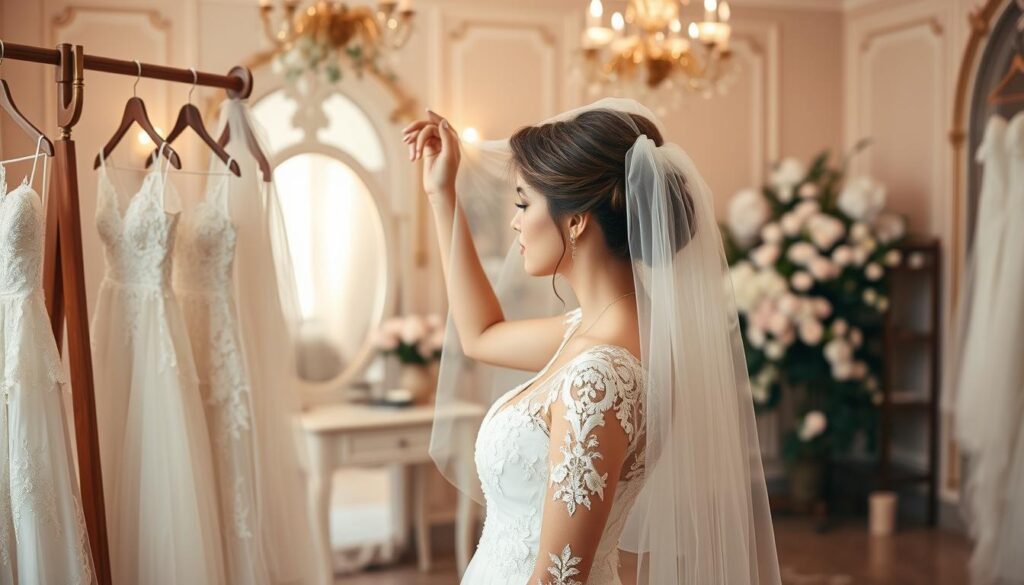
Your veil choice sets the tone for your entire wedding day look, making harmony with your gown essential. The right veil should enhance rather than compete with your ensemble. This careful selection process ensures everything works together beautifully.
Matching Dress Styles with Veil Lengths
Length dramatically impacts your overall bridal appearance. Birdcage veils create vintage charm for retro-inspired dresses. Fingertip-length options offer classic versatility for most silhouettes.
Cathedral veils provide dramatic elegance perfect for formal ceremonies. Ornate, heavily beaded gowns pair beautifully with simple, understated veils. Minimalist slip dresses can handle more detailed headpieces with lace edges.
Hairstyle Considerations for Optimal Veil Placement
Your hair style significantly influences veil selection. Updos provide the most secure foundation for heavier pieces. The gathered hair creates natural anchor points and concentrated texture.
Brides planning loose, flowing locks should opt for lightweight, single-tier veils. These won’t pull or create discomfort with less structural support. Half-up hairstyles offer the best of both worlds.
They provide enough crown support for secure placement while maintaining romantic, flowing hair. The perfect veil choice makes the styling process significantly easier.
Essential Tips on How to Style a Wedding Veil
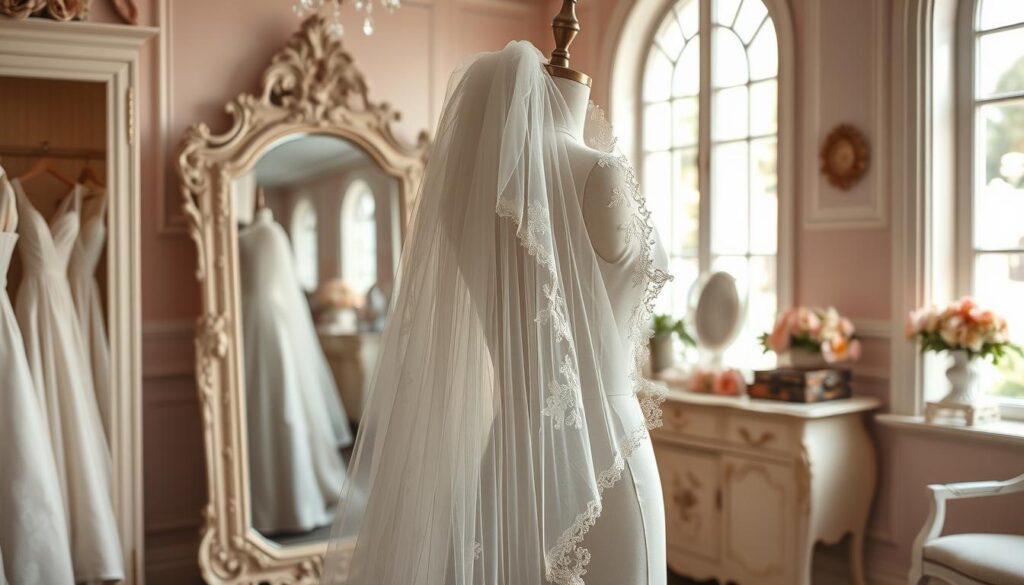
Proper veil styling techniques ensure your accessory remains secure while enhancing your chosen hairstyle. Expert placement creates that flawless, magazine-ready look every bride desires.
Begin by deciding between traditional and modern approaches. A blusher creates classic drama, while flowing styles offer contemporary elegance.
Step-by-Step Guide for Styling Your Veil
Section your hair based on your planned look. Determine the ideal placement point for optimal security and flow.
Leigh Hardges recommends the apex for blusher styles. Non-blusher options work beautifully about two inches behind this point.
| Placement Type | Best For | Visual Effect | Hairstyle Compatibility |
|---|---|---|---|
| High Placement | Blusher veils | Creates crown volume | Updos, half-up styles |
| Low Placement | Long flowing veils | Elongates silhouette | All hairstyles |
| Mid Placement | Versatile styles | Balanced appearance | Half-up, down styles |
Pro Tips from Top Wedding Hairstylists
Lucy Gedjeyan emphasizes that placement affects both security and visual impact. Higher positions add drama, while lower ones create elegance.
Book a hair trial with your actual headpiece. This pro tip lets you test different placements before your big day.
Professional hairstylists customize techniques for your specific hair type and veil weight. Practice ensures confidence when your wedding morning arrives.
Securing Your Veil: Tools and Techniques
The foundation of lasting placement lies in the proper use of basic hair tools combined with expert techniques. Most headpieces come with an attached comb, which serves as your primary securing tool. Understanding how to maximize its grip ensures stability throughout your celebration.
Using Bobby Pins, Combs, and Clips Effectively
Insert the comb with the curve facing downward, like a frown. This position helps the teeth grip into your hair instead of sliding out. Always use bobby pins that match your hair color exactly for invisible security.
For extra hold, place two pins in an X shape over the comb. Hairspray provides additional grip when applied before and after placement. Heavier pieces may require small hidden clips for support.
| Tool Type | Best Application | Security Level | Visibility |
|---|---|---|---|
| Standard Comb | Lightweight veils | Medium | Hidden |
| Bobby Pins | All veil types | High | Minimal |
| Hidden Clips | Heavy/layered veils | Maximum | Completely hidden |
Backing Techniques: Teasing and Backcombing for Extra Hold
Backcombing creates essential texture for the comb to grip, especially for fine or slippery hair. Lift the section where your accessory will sit. Use a fine-toothed comb to tease the underneath area.
Work in short strokes from mid-lengths toward the roots. Smooth the top layer over the teased section with a soft brush. This technique provides a strong foundation that keeps everything securely in place.
Creative Veil Styling Methods for Different Hairstyles
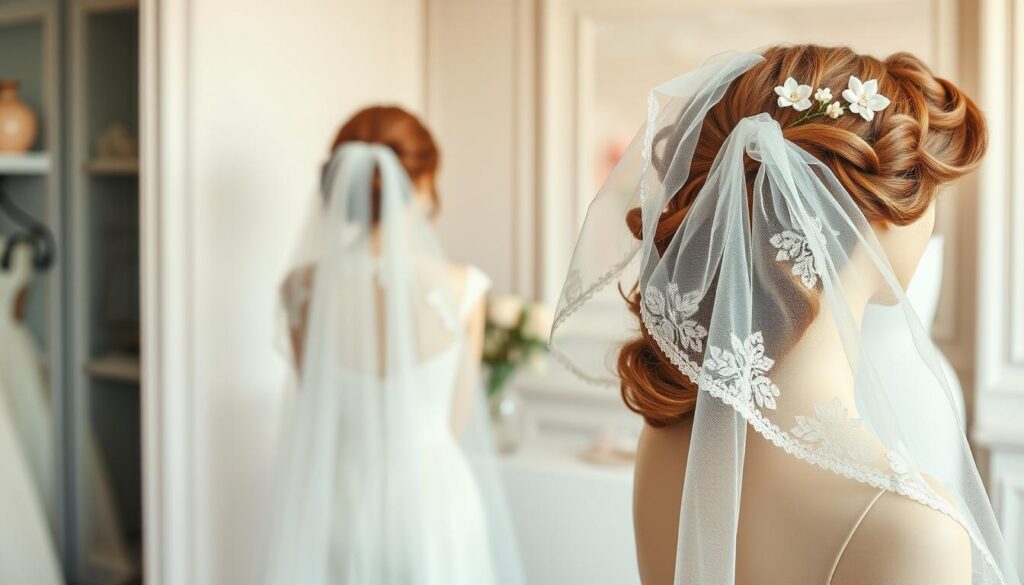
When it comes to securing your veil, half-up styles offer the ideal foundation. They provide the perfect balance of structure for security and romantic, flowing hair.
Celebrity hairstylist Lucy Gedjeyan recommends the crown as the best placement point. “The crown has the most support and will typically have the most concentrated product there, so it will really help anchor the comb of the veil.”
Techniques for Updos and Half-Up Styles
Updos create excellent anchor points throughout your hair. Whether you choose a low chignon or high bun, these styles offer versatile placement options.
For low buns or ponytails, position your accessory one to two inches above the style. This area has concentrated product for extra grip. The structured hairstyle below provides solid support.
High updos work beautifully with placement below the bun. This prevents adding unwanted height while creating an elegant silhouette. The occipital region offers natural security.
Coordinate with your hairstylist to ensure your headpiece complements your updo’s shape. This collaboration creates a harmonious look that stays secure all day.
Using Innovative Methods to Keep Your Veil in Place
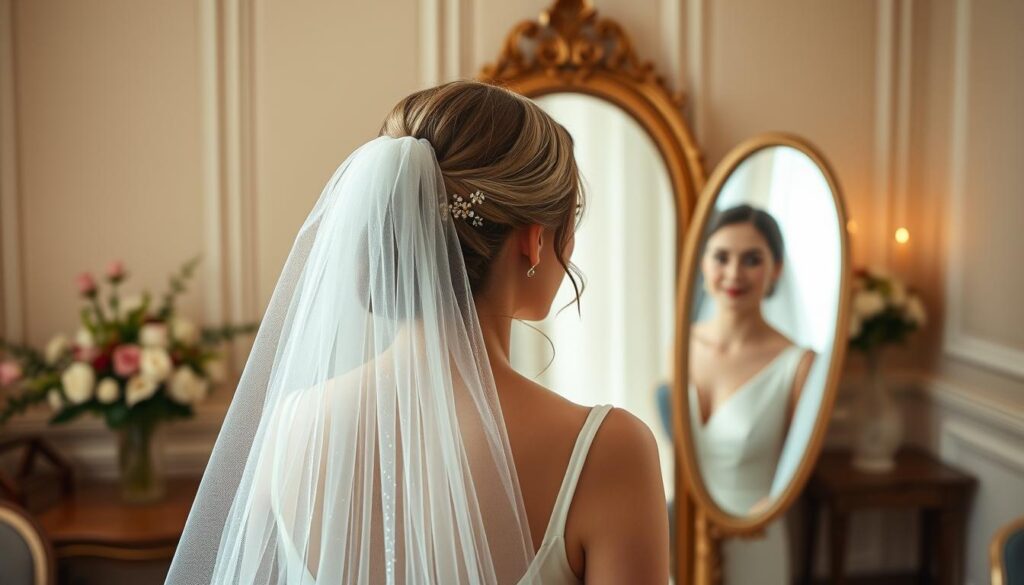
For brides with flowing locks, securing your headpiece requires clever techniques that create hidden structure. These methods provide the necessary grip while maintaining your beautiful, natural look.
Flowing hairstyles need special attention since smooth hair offers little natural texture for combs to hold. The right technique makes all the difference for stability.
The Hidden Ponytail and Braided Anchor Methods
The hidden ponytail method creates an invisible anchor point. Section away the top layer of your hair and create a small, tight ponytail at the crown.
Cover it completely with the top section before inserting the comb. This sturdy base provides exceptional grip without disrupting your aesthetic.
The braided anchor method offers maximum security for outdoor ceremonies or heavier pieces. Create a horizontal braid where you want your accessory to sit.
This technique distributes weight evenly across the braid rather than a single point. It acts like a natural comb that locks everything firmly in place.
Additional Secure Options for Down Hairstyles
The pin curl method involves creating two small, flat curls secured with bobby pins. Slide the comb directly into these structured curls for vintage-inspired security.
For simple effectiveness, try the bobby pin X method. Place two pins in an X formation with open ends facing downward.
Insert the comb into the gaps created by the crossed pins. This creates a strong foundation that prevents slipping.
The double ponytail method distributes weight more evenly. Create two mini ponytails on either side and insert the comb between them.
All these approaches work by building texture within smooth hair. They solve the common challenge of traditional combs needing more grip.
Maintaining Your Veil Throughout the Wedding Day
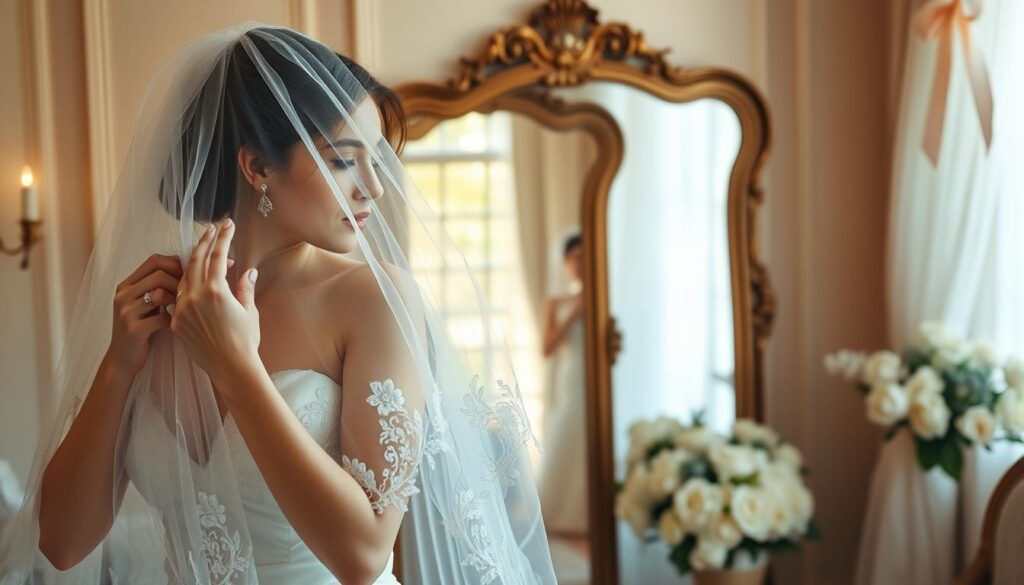
The true test of veil placement comes when you’re moving, dancing, and celebrating for hours. Keeping everything secure requires strategic planning and proper techniques.
Expert hairstylist Lucy Gedjeyan emphasizes foundation building. “My advice to maintain any look with a veil is to provide a great foundation through teasing and hair products—and in certain placements definitely the use of extra bobby pins.”
This approach offers stability while allowing easy removal later. Leigh Hardges agrees about product importance. “Lots of hair spray and well-placed pins are the way to win with wedding day hair.”
Practical Tips for Long-Lasting Security
Most brides remove their accessory after the ceremony for reception comfort. However, it must stay secure through photos and vows.
For all-day wear during dancing, consider sewing the piece into your hairstyle with clear thread. This provides ultimate security.
Practice your method during a hair trial before the big day. Test walking, sitting, and turning to ensure comfort.
Designate a helper who knows removal techniques. Your stylist can teach a bridesmaid how to remove it without disturbing your hair.
Carry an emergency kit with extra bobby pins and travel-size hairspray. These simple items ensure your look stays perfect from ceremony through reception.
Conclusion
Your journey to finding the perfect veil placement culminates in a look that feels uniquely yours on this special day. Mastering these techniques ensures you’ll feel confident and radiant as you walk down the aisle.
Whether you choose an elegant updo, romantic half-up style, or flowing locks, there’s an ideal method for your specific hairstyle. The right placement and securing approach make all the difference.
Working with a professional stylist who understands veil nuances is invaluable. They can execute flawless placement that stays secure through your entire ceremony and celebration.
Remember to schedule a hair trial with your actual headpiece. This practice ensures comfort and allows adjustments before your big day arrives.
You now have all the knowledge needed for a stunning bridal look. Embrace this beautiful tradition with confidence, knowing your veil will complement your ensemble perfectly.
FAQ
How do I choose the right veil for my hairstyle?
What is the best way to secure my veil so it stays put?
Can I wear my veil for the entire wedding day?
Where should the veil be placed on my head?
What tools do I need to style my wedding veil?
How can I add volume under my veil for a fuller look?

Adam Peter is a finance, travel, and automotive writer with over a decade of experience. He creates clear, practical content to help readers manage their money, explore the world with confidence, and make informed decisions about cars and travel gear. His work blends expert insight with real-world usefulness.