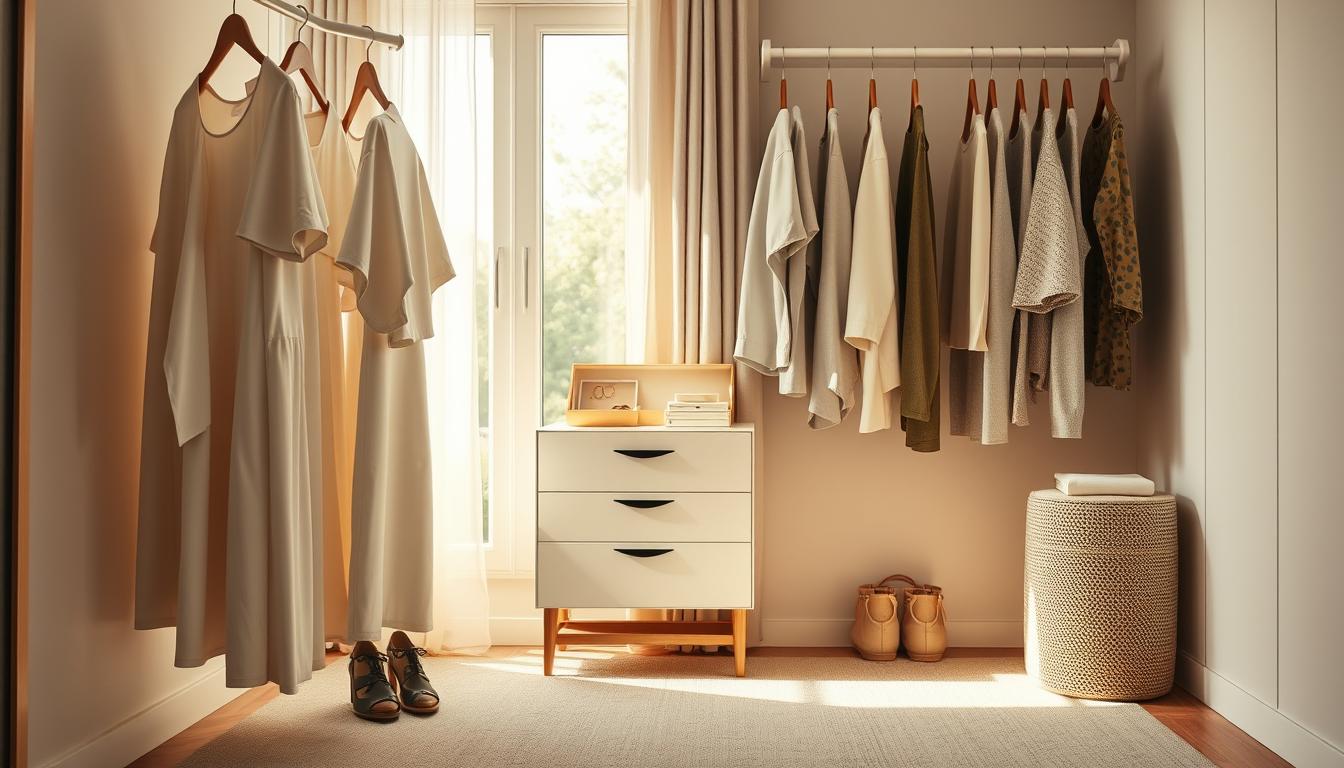
Minimalist Wardrobe for Women: Simplify Your Style with Ease
Did you know the average person spends 17 minutes each day deciding what to wear? That adds up to nearly 4 full days every year spent staring into your closet. This time drain affects countless individuals seeking efficiency in their daily routines.
A simplified approach to fashion isn’t about having fewer options. It’s about having better ones. This method focuses on curating versatile, high-quality pieces that truly reflect your authentic self. You’ll discover how intentional choices can transform your daily experience.
This guide walks you through practical steps to create a collection that works for real life. You’ll learn decluttering strategies and styling tips tailored to different body types and color preferences. The goal is to build a system that reduces decision fatigue while boosting confidence.
We’ll explore how this personalized approach adapts to various lifestyles and activities. You’ll gain actionable strategies from real experiences and expert advice. The result is a closet that saves time, money, and mental energy every single day.
Key Takeaways
- A simplified clothing collection reduces daily decision fatigue significantly
- This approach focuses on quality pieces that reflect personal style
- The method adapts to individual body types and color preferences
- Practical decluttering strategies make implementation achievable
- Intentional fashion choices save both time and financial resources
- The system works for various lifestyles and daily activities
- Confidence grows when you love every item in your closet
Introduction: Simplifying Your Style
The journey toward a simplified clothing collection often begins with a moment of realization about how much time we spend on fashion decisions. Many women face the daily challenge of choosing outfits from overflowing closets.
“Letting go of most of my wardrobe felt daunting at first, but it’s been one of the most freeing things I’ve ever done. With fewer, more intentional pieces, getting dressed has become something I actually look forward to—and it’s helped me discover a personal style that truly feels like me.”
This approach isn’t about following rigid rules or copying someone else’s look. It’s about finding what works for your unique lifestyle and preferences.
The common experience of having a full closet yet feeling like there’s nothing to wear highlights a fundamental issue. A curated collection addresses this by focusing on quality over quantity.
| Before Simplification | After Simplification | Key Benefits |
|---|---|---|
| Cluttered spaces | Organized selection | Reduced decision fatigue |
| Morning stress | Enjoyable routine | Time savings |
| Impulse purchases | Intentional choices | Financial efficiency |
| Style confusion | Clear identity | Increased confidence |
This guide provides a flexible roadmap for women at any stage of their journey. You can take your time and adjust the process to fit your comfort level.
The transformation leads to mornings filled with confidence rather than frustration. Each piece in your collection serves a purpose and brings joy.
Understanding the Minimalist Wardrobe Philosophy
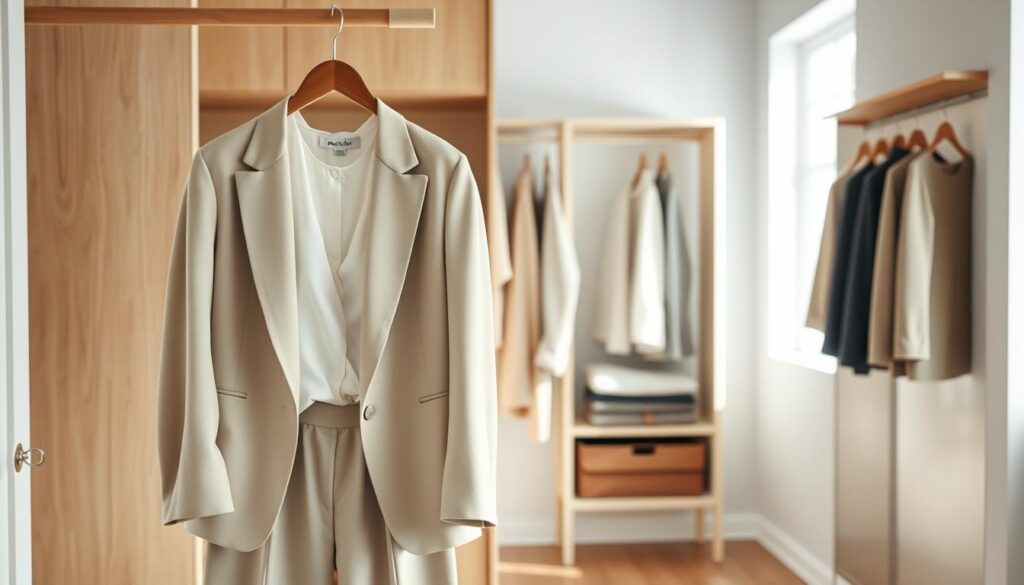
Understanding the difference between a minimalist wardrobe and a capsule wardrobe is the first step to simplifying your style effectively. A minimalist wardrobe refers to your entire, year-round collection of clothes. It contains only items you need, use, and truly love.
In contrast, a capsule wardrobe is a smaller, seasonal subset of this main collection. The pieces in a capsule are chosen to mix and match effortlessly.
The philosophy is rooted in intentionality. It’s about choosing quality over quantity. Every piece should serve a purpose and align with your values, including sustainability.
This approach encourages mindful consumption. It reduces waste and the environmental impact of fashion.
A common myth is that this style must be boring or restrictive. This is simply not true. Your collection can absolutely include colors, patterns, and statement pieces that reflect your personality.
The ultimate goal is freedom. Your wardrobe should work for you, not the other way around. It eliminates the chaos of too many choices.
| Minimalist Wardrobe | Capsule Wardrobe | Core Focus |
|---|---|---|
| Your entire clothing collection | A seasonal selection of items | Long-term simplicity |
| Focuses on year-round use | Designed for a specific time period | Adaptability and function |
| Mindful of overall impact | Maximizes outfit combinations | Intentional living |
Benefits of a Minimalist Wardrobe

When you intentionally reduce your clothing options, you unlock a cascade of positive lifestyle changes. The rewards extend far beyond just having an organized closet space.
Mornings become stress-free. You’ll spend less time staring at your wardrobe and more time confidently getting dressed. The paralysis of too many choices disappears completely.
Financial savings add up quickly. Buying fewer but better quality pieces means your money goes further. You invest in garments that last for years instead of seasons.
“The most surprising benefit was how creative I became with my outfits. With fewer pieces, I discovered combinations I’d never considered before.”
Environmental impact matters too. Conscious fashion choices reduce textile waste and conserve precious resources. Your simplified approach helps protect our planet.
| Daily Benefit | Long-Term Advantage | Overall Impact |
|---|---|---|
| Quick outfit decisions | Higher quality garments | Reduced decision fatigue |
| Less morning stress | Financial savings | Increased confidence |
| Creative styling | Sustainable practices | Environmental consciousness |
Your living space feels more open and peaceful. A clutter-free environment promotes mental clarity. Everything in your collection works together seamlessly.
The system creates natural flow in your daily routine. Each piece complements the others, making outfit creation almost effortless. You save money while looking your best every day.
Minimalist Wardrobe for Women: The Ultimate How-To Guide
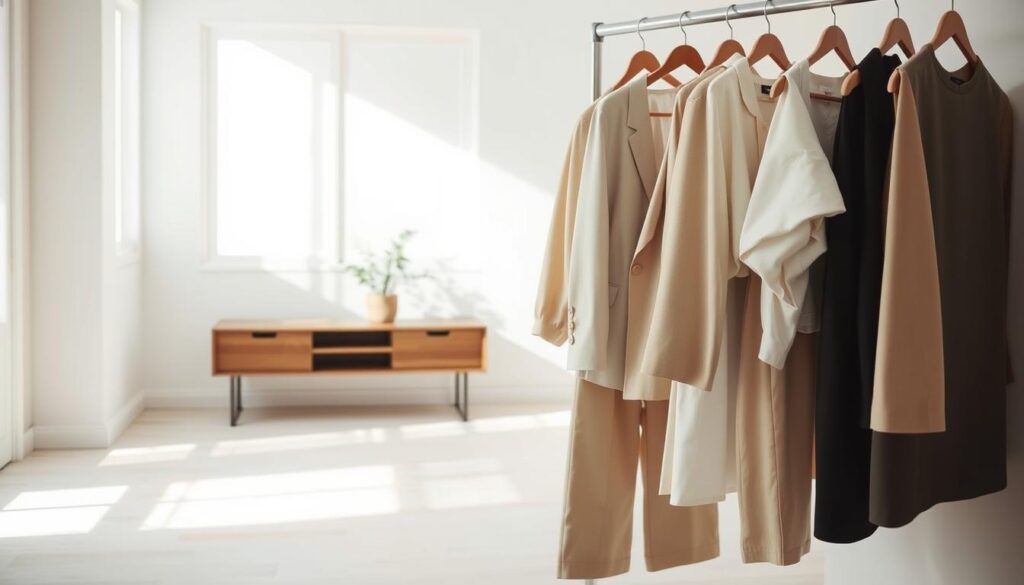
Building a simplified clothing system starts with choosing the right framework. This section provides practical methods to create your ideal collection.
Project 333 is a popular challenge. You select 33 items including clothes, shoes, and accessories. This approach lasts for three months.
The 30/30 Rule offers another great method. Choose 30 clothing pieces and 30 accessories. This creates balanced options while maintaining simplicity.
For a timeless approach, try the 70/30 Rule. Build your capsule wardrobe with 70% classic staples. The remaining 30% can be trend-driven pieces.
| Method | Core Concept | Ideal For |
|---|---|---|
| Project 333 | 33 total items for 3 months | Seasonal experimentation |
| 30/30 Rule | 30 clothing + 30 accessory pieces | Balanced variety seekers |
| 70/30 Rule | 70% staples + 30% trend items | Timeless style lovers |
There’s no perfect number of items for everyone. Most collections range from 30 to 60 pieces. Your ideal number depends on your lifestyle.
View these frameworks as starting points. Adapt any method to create your perfect capsule wardrobe. Experimentation helps you discover what works best.
Decluttering Your Closet and Wardrobe Audit

The most transformative part of creating a simplified clothing system begins with clearing out what no longer serves you. This essential first step might feel overwhelming, but it’s also incredibly liberating.
Assessing Your Needs and Lifestyle
Start by honestly evaluating your daily life. Consider your work environment, hobbies, and social commitments. Your local climate and seasonal changes matter too.
Think about what you naturally gravitate toward wearing. One source shares, “Over the last eight years, I’ve let go of over two-thirds of my clothes.” This shows meaningful change takes time.
Practical Steps to Declutter
Begin with pieces you haven’t worn in over two years. Exclude special occasion items. Remove damaged, worn-out, or ill-fitting clothes too.
Another source emphasizes, “Think about what your why is, decide on what your goal or goals are and what your timeline looks like.” You can remove items slowly or all at once.
Conduct a thorough audit of your wardrobe. Notice what you wear repeatedly versus what stays untouched. Your favorite clothes reveal your true style preferences.
Gather your most-loved pieces and place them front and center. These will form your collection’s foundation. They provide clues about what else to keep.
Address emotional attachments gently. Many hold onto clothes for sentimental reasons or “someday” thinking. It’s okay to take your time working through these feelings.
Donate quality items to friends or local shelters. Sell pieces through consignment or recycle textiles responsibly. Store sentimental items temporarily if needed.
Curating Your Capsule Wardrobe Essentials
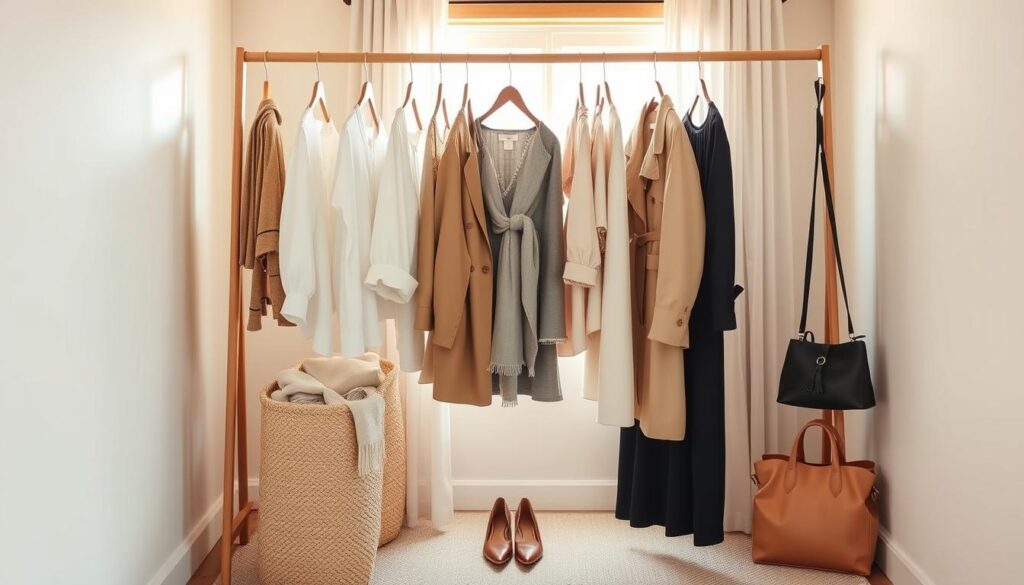
Creating your capsule wardrobe essentials marks the exciting moment when your vision becomes reality. This is where you carefully select versatile, high-quality pieces that form the backbone of your collection. Each item should work together seamlessly for maximum flexibility.
Tops, Bottoms, and Layering Pieces
Start with foundational tops like layering tanks and basic t-shirts in neutral tones. Consider adding one graphic tee for visual interest without overwhelming your capsule wardrobe.
Include versatile options like knit tanks and short-sleeve shirts that transition between seasons. Long-sleeve blouses work beautifully under sweaters or alone.
For bottoms, focus on quality jeans with minimal stretch for longevity. Neutral trousers and a staple skirt provide dressing options. Don’t forget comfortable shorts for summer months.
A black midi dress and casual linen dress offer effortless styling possibilities. These key pieces work for various occasions throughout the year.
Shoes, Accessories, and Outerwear
Footwear should include neutral sneakers, versatile flats, and boots for different seasons. A pair of nude heels completes formal outfits perfectly.
Outerwear essentials include a denim jacket, trench coat, and wool overcoat. These layers adapt to changing weather while maintaining style.
Accessories like a leather tote and cross-body bag add functionality. Simple jewelry and a quality belt polish any outfit in your capsule collection.
Each piece you select should serve multiple purposes. This approach ensures your capsule wardrobe remains functional and inspiring.
Tips for Building a Versatile and High-Quality Collection
The secret to effortless styling lies in building a cohesive collection where every item works harmoniously together. This approach maximizes your outfit possibilities while minimizing decision fatigue.
Investing in Timeless Pieces
Focus on quality over quantity when selecting your core pieces. Well-constructed garments last longer and maintain their appearance through years of wear. Examine construction details like strong seams and durable stitching.
Look for substantial fabric weight and natural fibers that withstand repeated washing. Quality zippers and buttons indicate thoughtful craftsmanship. These investments pay off in longevity and polished appearance.
Choose items that serve multiple functions in your daily life. A denim shirt can work as a top or lightweight layer. A simple dress transitions across seasons with different accessories.
Selecting Neutrals and Pops of Color
Build your foundation with neutral tones like black, white, navy, and beige. These colors create endless mixing possibilities. They form the backbone of a versatile collection.
Contrary to popular belief, your system doesn’t need to be monochromatic. Intentional pops of color express personality while maintaining cohesion. Patterns like stripes or florals add visual interest when chosen thoughtfully.
Consider your personal coloring when selecting both neutrals and accents. Choose hues that complement your skin tone and features. This ensures everything in your collection makes you look and feel your best.
Layer with intention by mixing different textures and fabrics. Combine knits with wovens or silk with denim. Varying lengths creates depth and variety from the same core pieces.
Personalized Style: Adapting Minimalism to Your Life
Rather than squeezing your life into someone else’s definition of simplicity, your clothing choices should expand to fit your reality. This approach celebrates what makes you unique instead of forcing conformity.
Your collection exists to serve your daily needs, not to meet external standards. Focus on functionality and purpose over rigid aesthetics.
Finding Your Signature Look
Develop your personal style by noticing what makes you feel confident. Identify recurring elements in your favorite outfits. These clues reveal your authentic preferences.
Consider your profession, hobbies, and whether you work from home or office. Your climate and social life matter too. Create boundaries that work for your body and lifestyle.
Many people fall into the trap of comparing their choices to others online. Remember that what works for someone else may not suit your circumstances.
| Traditional Approach | Personalized Approach | Key Difference |
|---|---|---|
| Follows prescribed rules | Creates personal guidelines | Individual expression |
| Focuses on aesthetics | Prioritizes functionality | Practical purpose |
| Limited color palette | Incorporates personal favorites | Authentic representation |
| One-size-fits-all | Adapts to life changes | Flexible system |
You can absolutely include patterns, bold colors, and statement pieces. The intentional way you curate matters more than the specific items. Regularly check if your collection still reflects who you are today.
Styling Your Minimalist Wardrobe for Any Occasion
The true magic of a simplified clothing system reveals itself when you discover how to style your favorite pieces for any situation. This approach transforms getting dressed from a daily chore into a creative expression.
Mixing and Matching Outfits
Embrace the freedom of repeating outfits you love. Create signature formulas like “jeans + white tee + blazer” that work reliably. These go-to combinations eliminate morning stress.
Start with one core piece and build multiple outfits around it. This demonstrates the incredible versatility already present in your collection. Try unexpected pairings to discover new favorites.
Your curated selection makes mixing almost foolproof. When everything coordinates, you can’t create a “bad” outfit. This builds confidence in your daily choices.
Accessorizing with Intention
Thoughtfully chosen accessories transform basic outfits dramatically. A black dress becomes casual with sneakers or elegant with heels. The same core pieces work for different occasions.
Keep accessories minimal but impactful. A classic belt defines your waist, while simple jewelry adds polish. These touches take an outfit from day to night effortlessly.
Maintaining and Updating Your Minimalist Closet
Maintaining your simplified clothing system requires consistent habits that become second nature over time. This ongoing process ensures your collection stays functional and inspiring.
Think of your closet as a living system that needs regular attention. Seasonal check-ins help you stay organized and intentional.
Regular Wardrobe Audits
Conduct audits every few months. Assess what you’ve worn frequently versus untouched items. This practice reveals your true preferences.
Take photos of your organized space before shopping. Visual references help identify duplicates and gaps. They prevent unnecessary purchases.
Mindful Shopping Practices
Always shop with a specific list after thorough research. Read reviews and compare options carefully. This approach saves time and money.
Establish a maximum number of clothing pieces that works for your lifestyle. A “one in, one out” policy maintains balance. Track purchases against a budget.
Keep a wishlist for potential future items. If something stays on your list for months, it’s likely a genuine need rather than an impulse.
| Maintenance Habit | Frequency | Key Benefit |
|---|---|---|
| Wardrobe audit | Seasonally | Prevents clutter buildup |
| Inventory photos | Before shopping | Visual organization aid |
| Mindful purchasing | Always | Financial awareness |
| Clothing care | After each wear | Extends garment life |
Proper care extends your favorite clothes‘ lifespan. Air garments out between wears instead of washing frequently. Avoid dryer heat that weakens fabrics.
Your system should feel sustainable rather than restrictive. Adjust your approach if maintenance becomes stressful. The goal is lasting simplicity.
Overcoming Challenges in the Minimalist Transition
The path to a simpler closet isn’t always a straight line; it’s common to face hurdles along the way. Many people feel a mix of excitement and resistance when they start this process. It’s completely normal to encounter obstacles.
Give yourself grace and know this is a journey, not a race. You can remove items slowly or all at once. Choose the pace that feels right for you.
Letting Go of Sentimental Attachments
Some clothes hold powerful memories. It can be tough to part with these things. There’s a big difference between admiring a style and actually wearing it yourself.
You might love the idea of a certain piece but never reach for it. This realization helps you make more honest choices about what to keep.
Budget and Emotional Considerations
Investing in quality pieces is a great idea, but it takes time. You don’t need to spend a lot of money all at once. Replace items gradually as your budget allows.
Try “experimenting with going without” before you buy. Wait a few weeks to see if you truly need something. This practice helps distinguish real needs from fleeting wants.
If you have a setback, don’t see it as failure. It’s simply information that helps you learn. Your personalized approach will evolve over time.
Real-Life Inspiration: Minimalist Wardrobe Success Stories
The proof that this approach works lies in the countless success stories from women who have embraced intentional dressing. These real-life examples demonstrate how transformative this lifestyle can be.
“Over the last eight years, I’ve let go of over two-thirds of my clothes. Building a smaller, more versatile collection completely changed the way I get dressed. It’s easier, more enjoyable, and has helped me finally refine my style.”
“As a reformed shopaholic who once transformed my entire guest bedroom into a walk-in closet, I’ve seen firsthand how this approach can reduce decision fatigue. It saves time and money while creating a sense of calm and clarity in your daily life.”
A Sneak Peek into a Curated Closet
What does a successful system actually look like? It features uniform hangers and organized categories. Everything remains visible and accessible rather than crammed and chaotic.
These women structure their spaces thoughtfully. They organize by color and keep shoes visible. Off-season items get stored separately to maintain clarity.
The day-to-day reality brings confidence and joy. Opening your closet each morning feels refreshing rather than overwhelming. You know everything fits and flatters perfectly.
Success doesn’t look the same for everyone. Some people thrive with 30 pieces while others need 60. The key is finding what works for your individual life and personality.
Conclusion
At its core, this approach to fashion is about creating space for what truly matters in your life. The journey toward intentional dressing focuses on quality pieces that reflect your authentic personal style.
This way of organizing your closet isn’t about strict rules or deprivation. It’s about making your wardrobe work for you. The system saves time and reduces daily stress.
Remember this is an ongoing process, not a final destination. Your clothing collection will evolve as your life changes. Start with small things like a closet audit or paying attention to what you actually wear.
The goal isn’t perfection but creating a system that makes you feel confident. While the transition can challenge some people, the benefits make it worthwhile. You’ll gain mental clarity and financial savings.
Embrace this journey with patience and self-compassion. There’s no single “right” way to build your ideal collection. By taking control of your clothing choices, you’re reclaiming your time for the things that matter most.
FAQ
What is a capsule wardrobe?
How many pieces should be in my capsule collection?
Can I still follow trends with a minimalist closet?
How do I start building my collection?
What are the best colors for a versatile closet?
Is a minimalist approach expensive?
How do I deal with sentimental items I can’t part with?

Adam Peter is a finance, travel, and automotive writer with over a decade of experience. He creates clear, practical content to help readers manage their money, explore the world with confidence, and make informed decisions about cars and travel gear. His work blends expert insight with real-world usefulness.