Discover the Best Airplane Seat Hacks for Comfort
“By failing to prepare, you are preparing to fail.” Benjamin Franklin’s famous words ring especially true for air travel. A journey can feel like an endurance test before it even begins.
Cramped spaces and long hours challenge many people. It turns the excitement of going somewhere new into a stressful ordeal. But it doesn’t have to be this way.
While you can’t control everything on a plane, you can control your comfort. This guide shares proven strategies from frequent flyers and crew members. They are simple, actionable, and they really work.
We’ll cover everything from smart pre-flight moves to in-flight comfort secrets. Get ready to transform your next trip from the inside out. Your future self will thank you.
Key Takeaways
- Your comfort on a flight is something you can actively improve.
- Expert advice from travelers and crew provides reliable, tested tips.
- Small, thoughtful preparations make a huge difference in your experience.
- These strategies are effective for any airline or seat class.
- Focusing on comfort can make travel time feel shorter and more enjoyable.
- The right approach turns a challenging journey into a pleasant part of your trip.
Introduction to Airplane Comfort and Hacks
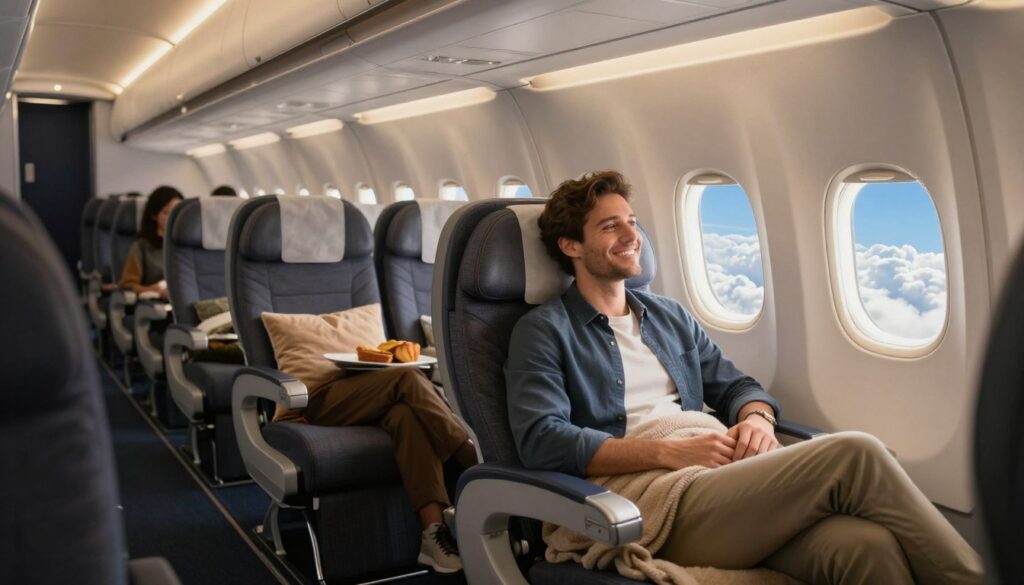
The journey to your destination shouldn’t leave you drained before you arrive. Hours in a confined cabin can impact your physical health and mental focus. This toll affects not just the flight itself, but also your first days exploring.
Common challenges include cramped seating and very dry air. Limited movement options and sharing space with strangers add stress. These things combine to make travel feel exhausting.
Research shows economy seat pitch has shrunk over time. This makes finding a comfortable way to sit more challenging. Yet, you can take control with smart tips and preparation.
Effective strategies fall into key categories. Think about pre-flight choices, smart seat selection, helpful gear, and in-flight habits. They won’t magically upgrade your class, but they make a lot of difference.
| Common Challenge | Physical Impact | Mental Impact | Proactive Step |
|---|---|---|---|
| Small Seat Space | Back stiffness, sore legs | Feeling trapped, irritability | Use a lumbar cushion, choose aisle seat |
| Dry Cabin Air | Dehydration, dry skin | Fatigue, lack of focus | Drink water, use nasal spray |
| Limited Movement | Swelling, poor circulation | Restlessness, boredom | Set a timer to stand and stretch |
| Noise & Crowds | Headaches, tension | Anxiety, inability to relax | Use noise-canceling headphones |
Viewing these hacks as an investment pays off. Your comfort during transit directly boosts your enjoyment at the destination. A better flight experience is within reach.
Pre-Flight Preparations and Body Care

The secret to avoiding travel aches isn’t found in your seat; it’s in your pre-flight routine. What you do at home sets the stage for your entire trip. This groundwork protects your body and mind.
Sleep is your first shield. Aim for seven hours of rest before your flight. This builds resilience against delays and cabin stress. A well-rested body handles challenges much better.
Next, prepare your muscles. Simple moves like glute bridges and calf stretches are key. They prevent stiffness and pain from long periods of sitting. Doing them before you leave is a smart way to care for yourself.
Dry cabin air pulls moisture from you. Start hydrating well before you reach the airport. Drink plenty of water in the 24 hours before your trip. This fights off fatigue and headaches.
Make sure your pre-flight time includes these steps. Even busy travelers can build this quick routine. Your comfort on the airplane truly begins the day before.
Selecting the Perfect Airplane Seat
Not all seats are created equal when it comes to in-flight comfort. Your choice is a major factor in how you feel during the journey. A smart selection can provide more space and support.
Window vs. Aisle vs. Middle: Pros and Cons
Each spot in the row serves different needs. The window offers a wall for head support. This is ideal for sleeping or if you have back concerns.
The aisle gives you easy access to stretch your legs. Frequent flyers often pick it for this reason. Just be ready to stand up for neighbors.
The middle is the least popular for obvious reasons. Try to avoid it if you can. If stuck there, ask a gate agent politely for a possible move.
| Seat Type | Best For | Key Advantage | Consideration |
|---|---|---|---|
| Window | Sleepers, back support | Wall for pillow placement | Harder to get out |
| Aisle | Legroom seekers | Easy to stand and move | Disturbed by passing traffic |
| Middle | When no other choice | Often between companions | No direct access or view |
Airline Policies and Advance Seat Booking Tips
Legroom varies by carrier. JetBlue leads with about 34 inches of space. Alaska, Southwest, and Hawaiian offer around 32 inches.
Some airlines have helpful policies. Southwest, for example, provides complimentary extra seats for larger passengers. They even reimburse advance purchases.
Always request a seatbelt extender during boarding. It’s the easiest time for the crew. Check the airline’s website early to secure your preferred spot.
Best Airplane Seat Hacks for Maximum Comfort
Simple interactions and movement patterns can dramatically improve your cabin experience. What you do during the flight itself makes a lot of difference in how you feel.
Start with a friendly greeting to your neighbors. This simple way to connect makes it easier to address any space issues later if needed.
Make sure to stroll the aisle every two to three hours. This movement prevents stiffness and helps your body feel better. It’s a smart idea when you’re flying long distances.
Bring a small massage ball in your carry-on bag. Place it against the seat back to ease shoulder pain. You can also use it under your feet to promote circulation.
Don’t wait to address discomfort. Stretch right away if you feel a kink. Quick exercises at your seat can provide immediate relief.
At the gate, politely ask staff about empty middle seats. Say, “If there’s anywhere with more space, I’d love to be there.” This one question might score you a whole row.
Wear comfortable, layered clothing for your travel. Athleisure works well because it adapts to changing cabin temperatures. Choose pieces that can serve multiple purposes.
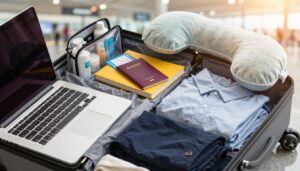
Pack essentials in your personal item, just in case. Include anything you can’t go a day without. These tips ensure you’re prepared for any situation on the plane.
Travel Accessories for Ultimate Back and Neck Support
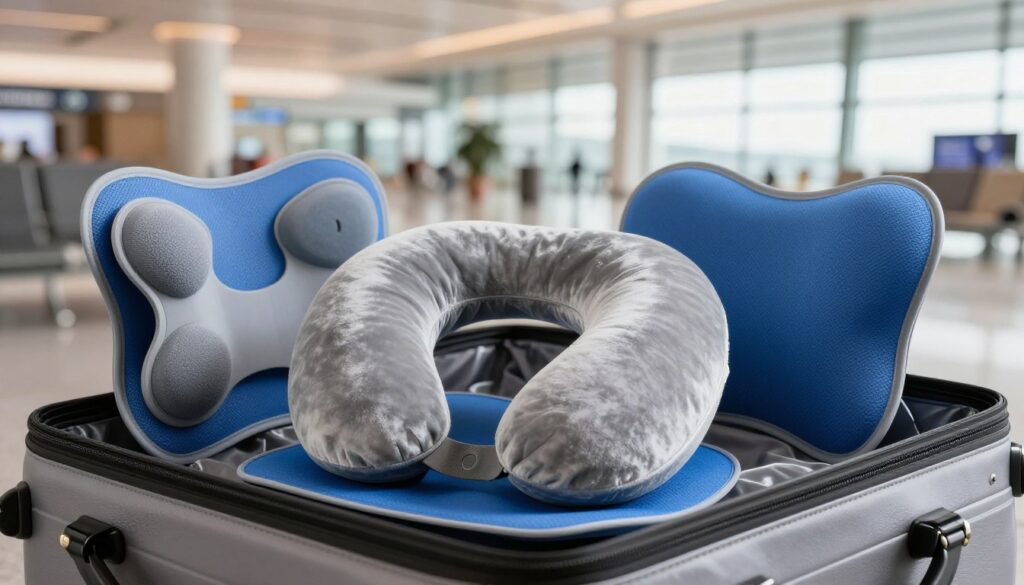
The right travel accessories can turn a stiff, uncomfortable journey into a much more pleasant experience. Proper support for your spine and neck is a game-changer for long flights.
Airplane seats often lack good lumbar support, causing slouching and strain. A dedicated travel lumbar pillow can maintain your spine’s natural curve.
Lumbar Pillows, Seat Cushions, and Memory Foam Options
Look for lumbar pillows with adjustable straps to secure them in place. Ventilated cushioning and gel-infused memory foam offer cool, personalized support.
For your seat, orthopedists recommend U-shaped cushions made from 100% memory foam. This design relieves pressure on the tailbone and hips. A non-slip bottom keeps it from sliding during the flight.
Shorter travelers benefit from a leg hammock that attaches to the tray table. It elevates your feet, improving circulation and easing lower back tension. For flights over six hours, compression socks are a smart addition to combat swelling.
Neck Pillows and Ergonomic Designs for Superior Support
Research shows neck support pillows, combined with light stretches, effectively reduce pain. Memory foam is ideal because it molds to your unique shape.
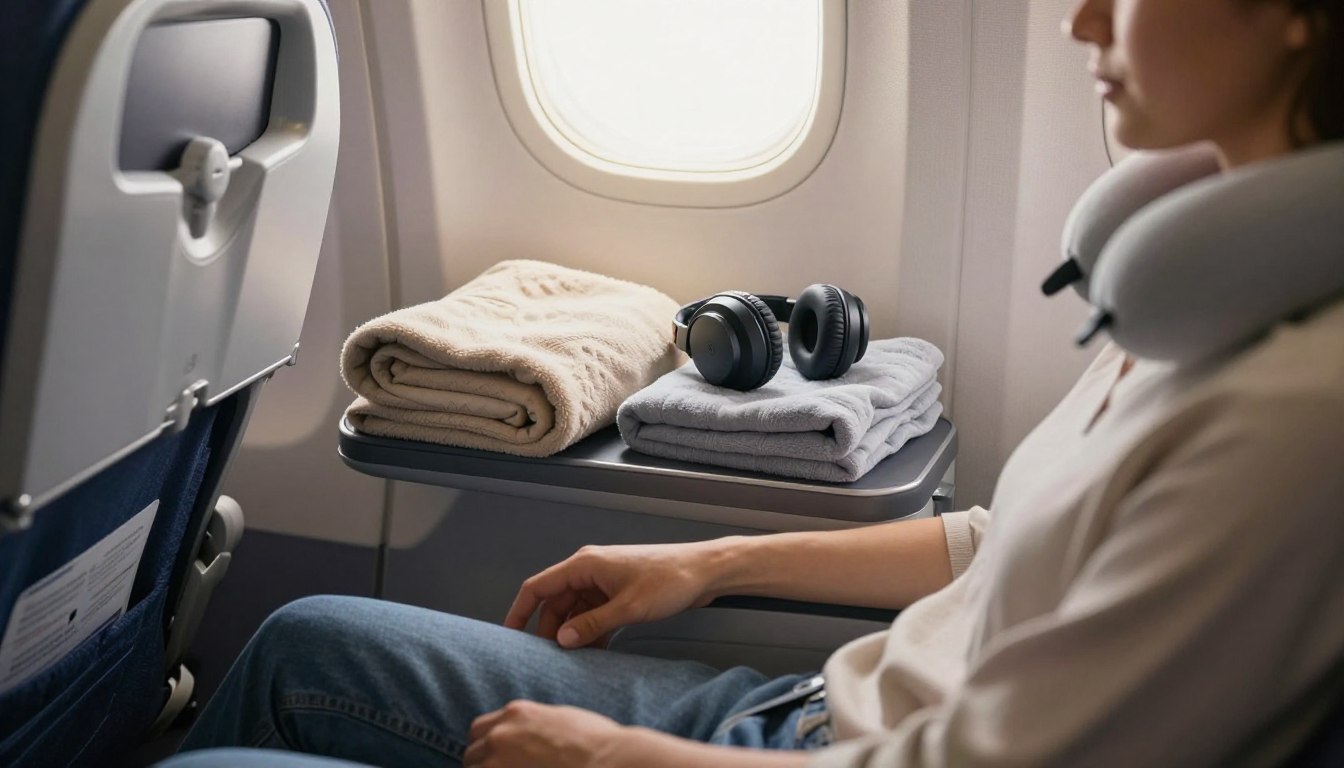
U-shaped designs with raised sides cradle both your head and neck. Features like temperature-adjusting fabrics and compact carrying cases make them practical. Frequent flyers often praise options like the Cabeau pillow for making in-flight naps much easier.
These travel accessories are a small investment for a major boost in comfort. They address the core physical challenges of cabin travel.
Pro Tips for Enhanced In-Flight Sleep and Relaxation
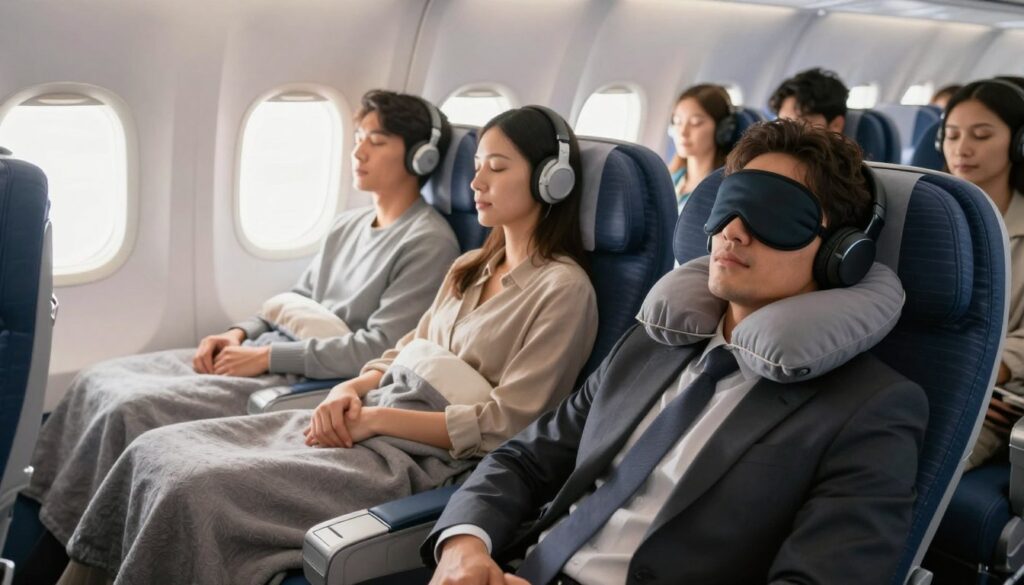
Transforming the noisy cabin into a personal sleep sanctuary is possible with a few key items. Start by setting your watch to your destination’s time zone when you board. This simple trick helps you decide the best time to rest.
Align your meals and light exposure with this new schedule. A 2017 study found eating according to your destination time speeds up adjustment. Avoiding food when it’s nighttime there can also help your body adapt faster.
Building a Personal Sleep Hygiene Amenity Kit
Create a business-class inspired kit for economy comfort. This personalized collection is your secret weapon against cabin disturbances.
Your essential sleep hygiene kit should include:
- Earplugs or headphones: Options like EarPlanes regulate cabin pressure and lessen ear pain. Noise-canceling models limit sleep-interrupting stimuli.
- A high-quality eye mask: This blocks shifting cabin lights and prevents waking when window shades open.
- Natural relaxants: Rubbing lavender essential oil on your temples fosters calmness. For shifting circadian rhythms, melatonin supplements can help, but always consult your doctor first about timing and dosage.
- Topical muscle soothers: Magnesium spray or creams like MagniLife relax muscles and ease restless legs. Innovative foot pads can provide relief for hours.
- A soothing drink: Skip caffeine and alcohol, as they dehydrate and disrupt sleep. Herbal tea is a much better choice for relaxation.
Staying hydrated is fundamental. Dehydration makes you tired, causes headaches, and worsens jet lag. Long flights are especially drying.
Dress in comfortable layers for easy temperature control. Compression socks and travel slippers reduce foot pressure. An oversized scarf doubles as a perfect impromptu blanket.
Finally, take time to “get ready for bed.” Change into cozy clothes and do a simplified skincare routine. This signals to your body it’s time to wind down and wake up refreshed.
Conclusion
The key to in-flight comfort lies in taking control of the factors within your reach. Combining smart pre-flight prep with thoughtful seat selection and in-flight habits creates a better experience on any airline.
Even a few of these tips can improve the way you feel upon arrival. Your comfort on the plane directly impacts your trip. After landing, gentle movement helps banish cramps and back pain.
Travel experts recommend light exercise to help your body recover from hours of sitting. Start with strategies that address your specific needs when you’re flying.
Finding your ideal combination is a personal journey over time. Taking charge transforms airplane travel from something to endure into a manageable, comfortable part of your adventure.
FAQ
What’s the best way to avoid getting stuck in a middle seat?
Are window or aisle seats better for a long journey?
What is the single most helpful item for back support on a plane?
How can I sleep better in an economy class seat?
Are there any easy stretches I can do on a flight?
What should I look for in a good travel neck pillow?

Eduard Kingly is a travel and lifestyle content creator with a focus on personal development and education. He combines firsthand travel experiences with research-driven insights to guide readers in discovering new places, building better habits, and pursuing meaningful learning.