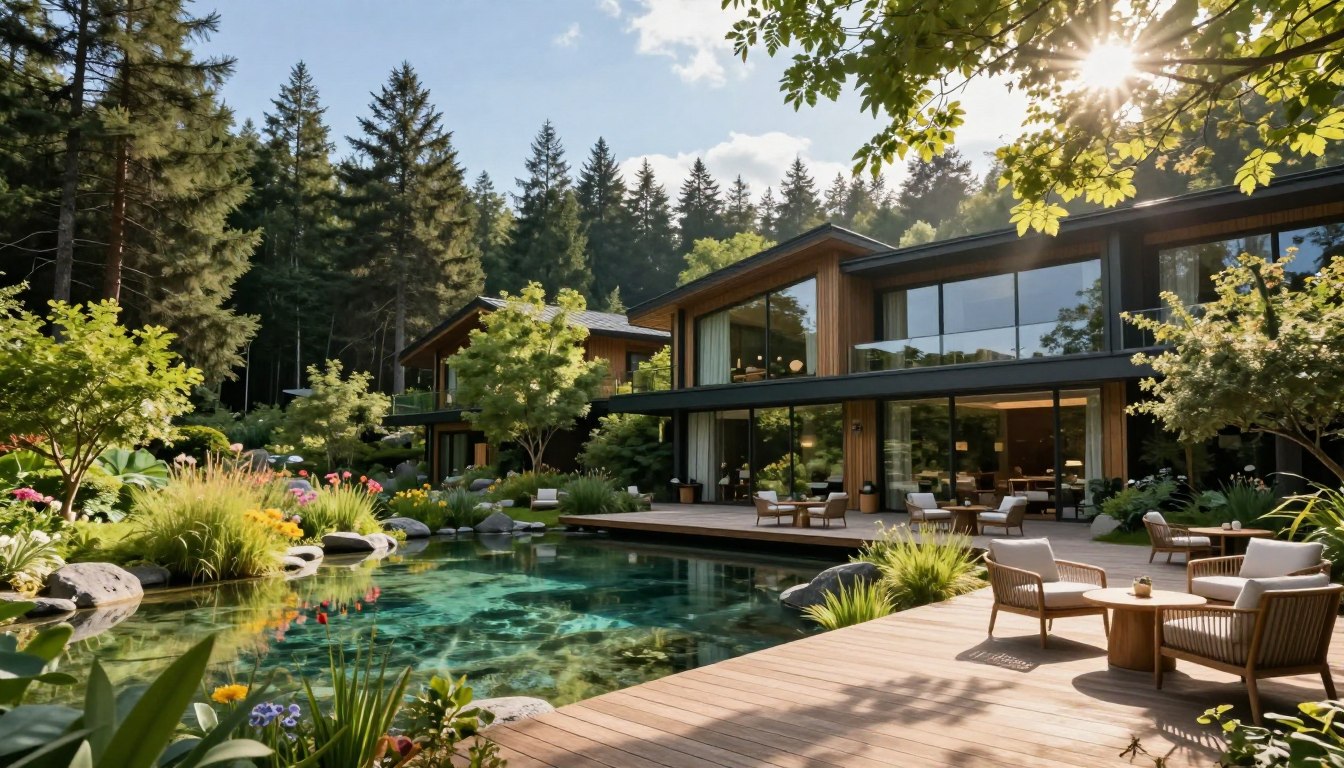
Best Eco-Friendly Hotels Around the World
Explorer Robert Swan once said, “The greatest threat to our planet is the belief that someone else will save it.” This powerful idea is reshaping how we explore. Today’s discerning traveler seeks more than just a place to sleep.
They seek connection and responsibility. The modern hospitality industry is rising to meet this demand. It proves that opulence and environmental stewardship are not mutually exclusive.
A truly green hotel is defined by action. It uses innovative building designs and renewable energy. It commits to zero-waste operations and meaningful support for local communities.
This movement offers transformative journeys. Imagine waking up in a mountain retreat powered by the sun. Or dining in a jungle lodge that actively protects endangered wildlife.
These properties are found across the globe. They turn travel into a force for good. You can enjoy unparalleled luxury while knowing your stay helps preserve our planet’s precious nature.
Key Takeaways
- Modern luxury travel is evolving to seamlessly blend high-end comfort with genuine environmental responsibility.
- A truly sustainable hotel utilizes concrete practices like renewable energy, water recycling, and zero-waste initiatives.
- Your choice of accommodation can directly support the protection of local ecosystems and cultural heritage.
- These transformative experiences are available in diverse settings, from tropical islands to alpine forests.
- The industry is being reshaped by travelers who demand that their stays contribute positively to the planet.
Introduction to Eco-Friendly Hospitality
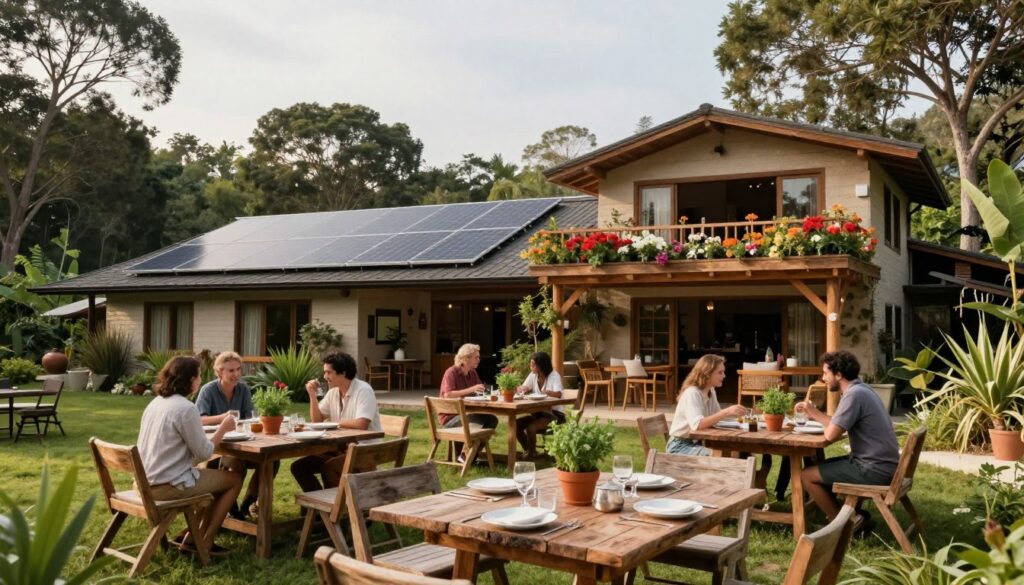
Imagine a hotel where every detail, from the building materials to the breakfast ingredients, tells a story of care for the planet. This is the new standard in hospitality.
Environmental responsibility is now at the heart of the design philosophy for leading properties. It’s a comprehensive approach that goes far beyond simple towel reuse programs.
Defining Eco-Friendly Travel and Accommodation
True sustainable travel minimizes environmental impact while supporting local communities. Modern hotels achieve this through innovative practices.
They build with reclaimed materials and plant on-site gardens. Grey water recycling systems and the elimination of single-use plastics are common.
The goal is a zero-waste operation. This holistic model also includes sourcing food locally and employing community members.
The Importance of Sustainable Practices in Tourism
These practices are essential. They protect natural habitats and cultural heritage for future generations.
Your choice of accommodation is a powerful way to vote for a better world. It turns travel into a force for positive change.
Staying at a green property makes you part of a larger movement. Your temporary home away from home can enrich your experience and protect the destination.
Best Eco-Friendly Hotels Around the World
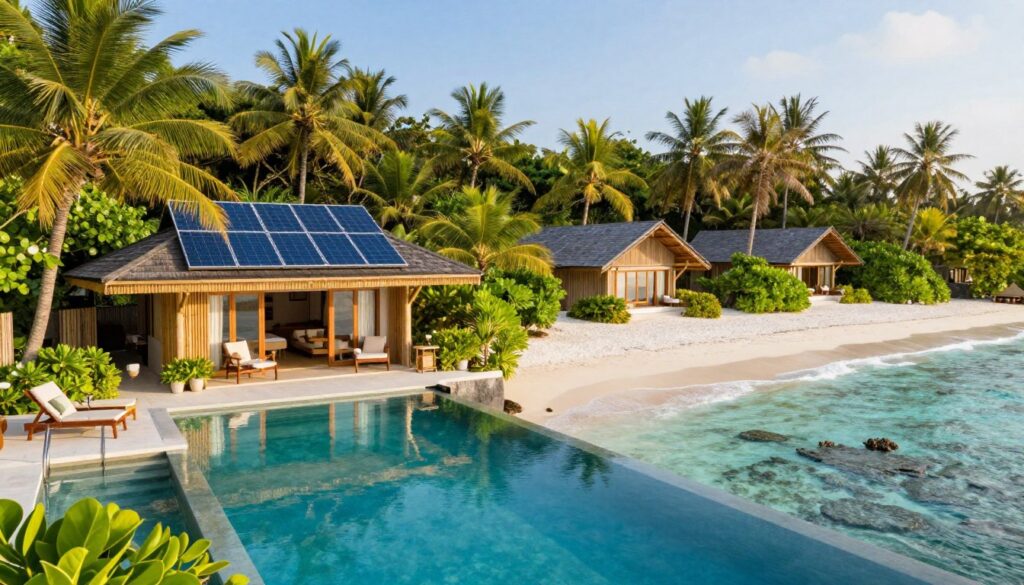
From remote private islands to lush jungle retreats, a new wave of sustainable accommodations is redefining luxury travel. Our carefully curated list highlights exceptional properties across six continents.
These places offer unforgettable experiences while protecting their natural settings. You can find them from the beaches of French Polynesia to the jungles of Sri Lanka.
Global Trends in Sustainable Accommodations
Today’s eco-conscious hotels range from intimate boutiques to expansive resorts. A perfect example is The Kip, a small four-room lodge in Sri Lanka nestled in the jungle.
Contrast that with a property like COMO Laucala Island in Fiji. It features 25 private villas and is 86% self-sustained.
Island destinations are leading this movement. Private island properties demonstrate how isolated locations can become models of self-sufficiency and conservation.
Many top hotels are transformed historic estates or old plantations. They honor their heritage while embracing modern environmental practices.
Approaches vary widely. Some lodges, like Adrère Amellal in Egypt, operate completely off-grid. Others use cutting-edge technology like deep seawater cooling.
Every property on this list shares a genuine commitment to minimizing its footprint. Your stay supports this important global trend.
Innovative Eco-Conscious Architecture & Design
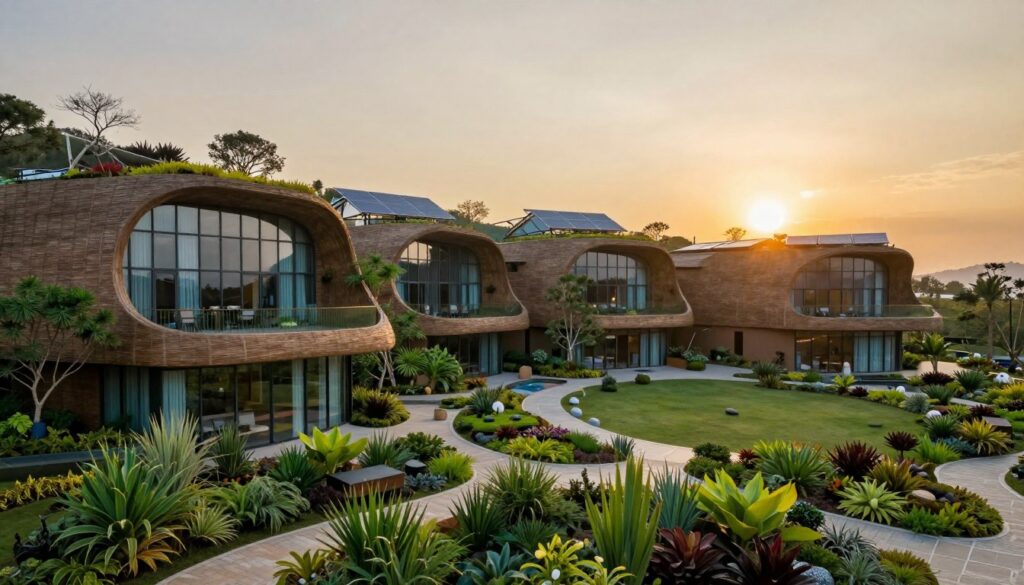
True integration with nature begins long before a guest arrives, rooted in the very blueprint of a property. Visionary architecture turns a stay into an immersive dialogue with the landscape.
This philosophy shapes everything from the structure’s form to the origin of its walls. The result is a hotel that feels like a natural extension of its place.
Utilizing Sustainable Materials and Locally Sourced Elements
The most authentic design stories are written with local materials. Fogo Island Inn in Canada showcases timber from sustainable local forests.
In Indonesia, Bawah Reserve used bamboo and stone. Azulik in Mexico features hand-built villas from local wood.
This approach revives traditional skills. It often benefits the nearby village by employing local craftsmen.
Energy Efficiency and Natural Building Techniques
Smart building uses nature’s logic to save energy. Tierra Patagonia’s layout uses the sun for heating and cooling.
This eliminates the need for air-conditioning. Whitepod’s geodesic domes in Switzerland use 30% less energy than standard buildings.
Construction itself is gentle. Landscapers replant removed vegetation. Jetties are designed with divers to protect coral.
Structures are built around existing trees and rock formations. The building becomes a guest in the environment, not its master.
| Property | Location | Key Material/Technique | Design Innovation |
|---|---|---|---|
| Tierra Patagonia | Chile | Local stone, fossil-inspired form | Passive solar layout eliminates A/C |
| Bawah Reserve | Indonesia | Bamboo, local stone | Built without machinery; reef-protecting jetty |
| Whitepod | Switzerland | Geodesic dome framework | Uses 30% less energy & materials |
| Azulik | Mexico | Local wood, treehouse style | No A/C, Wi-Fi, or electric light; jungle-integrated paths |
| Fogo Island Inn | Canada | Sustainably sourced local wood | Floor-to-ceiling windows for natural light & heat |
This thoughtful design creates stunning spaces with a minimal footprint. It proves luxury and responsibility are built from the same materials.
Unique Sustainable Practices from Leading Hotels
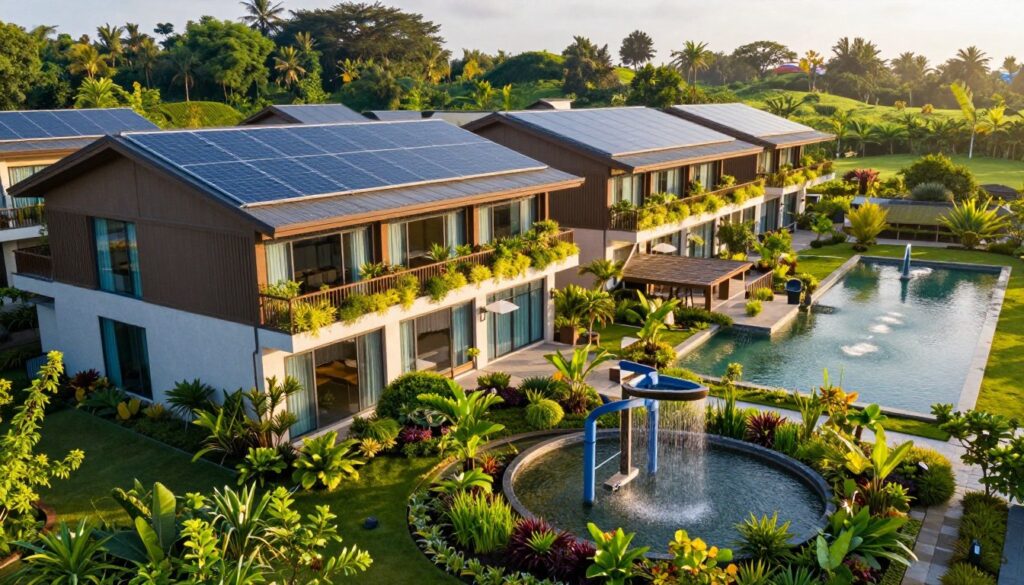
Water conservation and waste reduction form the operational heartbeat of the world’s leading environmentally responsible properties.
They deploy smart systems to protect local ecosystems. This commitment turns every stay into a lesson in resourcefulness.
Water Conservation and Waste Reduction Initiatives
Island hotels face acute freshwater challenges. Bawah Reserve in Indonesia collects rainwater and runs an onsite desalination plant.
Song Saa Private Island treats 100% of its wastewater. The cleaned water irrigates landscapes, and organic waste becomes fertilizer.
Eliminating plastic is a major goal. Many places use refillable glass bottles and bulk dispensers.
This significantly cuts plastic pollution. Comprehensive recycling and composting programs aim for zero waste.
Lodges within a national park or reserve play a special role. Feynan Ecolodge operates in Jordan’s Dana Biosphere Reserve.
Binsar Wildlife Sanctuary in India is a protected national park. These properties fund vital wildlife protection efforts.
Even meal service gets an overhaul. Pacuare Lodge in Costa Rica uses pre-ordering to avoid buffet waste.
Onsite gardens supply kitchens, and surplus food enriches the soil. Every drop of water and every scrap of material is valued.
Luxurious Yet Environmentally Responsible Experiences

A new standard of travel emerges where every gourmet meal and serene villa space tells a story of local stewardship. This is where high luxury meets deep respect for the land.
The experience is crafted through design and daily rituals. It connects you intimately to the place you are visiting.
Sustainable Dining and Organic, Locally Sourced Produce
The heart of this experience is often on the plate. Menus are built around hyper-local, organic produce.
Chefs create dishes that celebrate the region. This food has a minimal carbon footprint and maximum flavor.
Many properties grow their own ingredients. COMO Laucala Island in Fiji is 86% self-sustained from its 240-acre farm.
At Jamaica’s GoldenEye, beachfront villas serve organic local ingredients. The living spaces flow outdoors to stunning views.
| Property | Location | Culinary Focus | Design & Living Feature |
|---|---|---|---|
| COMO Laucala Island | Fiji | Farm-to-table from 240-acre onsite farm | Villas built with local rain trees; self-sufficient operation |
| The Pig at Combe | United Kingdom | Menu from three kitchen gardens | Upcycled furniture; rustic-chic aesthetic |
| GoldenEye | Jamaica | Organic, locally sourced ingredients | Beach huts with outdoor showers and dining |
This approach transforms a meal into a meaningful connection. Your dining experience supports nearby farmers and preserves culinary heritage.
Outdoor living areas and private terraces enhance the connection. You enjoy the freshest food in a setting that celebrates nature’s beauty.
Guest Experiences and Practical Sustainable Travel Tips
Your journey toward a more mindful vacation starts with the choices you make before you even pack your bags. The most enriching stays are those where you become an active part of the property’s mission.
How to Maximize Your Eco-Friendly Stay
Begin by researching a property’s sustainability policy before booking. Ask specific questions about their practices. This ensures your values align.
Once there, embrace the unique way of living. This might mean outdoor showers or dining by candlelight. These features connect you deeply to the environment.
Participate in immersive experiences. For example, Bali Eco Stay offers hikes through cacao plantations. Gal Oya Lodge introduces guests to indigenous Vedda communities.
Other properties provide amazing activities. Fogo Island Inn has whale watching and pottery making. GoldenEye offers sailing and coffee plantation trips.
Make your temporary home a force for good. Decline daily linen changes and use refillable water bottles. Support local businesses during your travel.
These actions transform your trip into a positive exchange. You return home with unforgettable memories and a lighter footprint.
In-Depth Look at Global Eco-Initiatives in Hotel Design
Beyond beautiful design, the true impact of a green property is measured by its active contributions to conservation and community. Leading lodges are now powering their operations with innovation and heart.
Solar Energy, Recycling, and Wildlife Conservation Efforts
Advanced solar energy systems are a cornerstone. Svart in Norway aims to be energy-positive. Remote camps like Tsermang in Ladakh rely entirely on solar panels.
These efforts extend to protecting local wildlife. Properties near a national park, like Grand Oak Manor in India, fund protection programs. Others, like Saffire Freycinet, regenerate native forests.
Black Sheep Inn in Ecuador shows how a lodge can lead regional efforts. It introduced community recycling. Its zero-waste policy protects the surrounding landscape.
Community Engagement and Social Responsibility Programs
True sustainability uplifts local community life. Forsyth Lodge in India sources from nearby farmers. It employs staff from surrounding villages.
Some property initiatives are transformative. Gal Oya Lodge hired former poachers. These staff members now work as park guardians, protecting wildlife.
This holistic approach proves that environmental care and social welfare are inseparable. It creates a lasting positive impact for both the property and its home.
Planning and Booking Your Eco-Friendly Getaway
Finding accommodations that align with your environmental values begins with asking the right questions. Your pre-booking research is a powerful tool for supporting genuine sustainability.
Look beyond marketing claims. Investigate the concrete practices that define a property’s commitment.
Questions to Ask Before Booking an Eco-Friendly Hotel
Start by inquiring about energy and water conservation. Ask if they use renewable sources like solar power.
Check their waste reduction systems. Do they have recycling and composting programs?
Understand their community engagement. How do they employ and support local people?
Verify any green certifications. Read their detailed sustainability policy online.
Tips for Finding Locally Sourced and Sustainable Options
Research the property’s food sourcing. A strong indicator is an on-site garden or local farmer partnerships.
Examine the building’s architecture. Places built with local or reclaimed materials show deeper commitment.
For a beach destination, check their plastic policy and coral protection efforts.
A remote lodge often has strong credentials, as its business depends on preserving nature.
Consider location accessibility. A place reachable by public transport lowers your carbon footprint.
The way a hotel treats its staff reflects its overall values. Fair wages and local employment matter.
Booking directly through the property’s website can offer better insight into their green initiatives.
| Aspect to Verify | Key Question | Sustainable Indicator |
|---|---|---|
| Energy & Water | What renewable sources are used? | Solar panels, rainwater harvesting |
| Food Sourcing | Is produce locally sourced? | On-site garden, farmer partnerships |
| Building Materials | What is the property’s architecture made from? | Local, reclaimed, or natural materials |
| Community Impact | How does the place support locals? | Employs community, fair wages |
| Waste Management | What is the recycling policy? | Zero-waste goal, compost systems |
Conclusion
The future of travel is being rewritten by places that put the planet first. These properties offer unparalleled comfort while fostering deep connections with their surroundings.
Choosing where you stay is one of the most powerful decisions a traveler can make. It directly supports conservation and protects the natural world.
At the heart of this movement is a genuine commitment to place. It honors local traditions and preserves nature for generations to come.
Your next adventure can be both luxurious and responsible. The Best Eco-Friendly Hotels Around the World show that true hospitality thrives in harmony with the environment.
FAQ
What does “eco-friendly” mean for a hotel or lodge?
Can a luxury stay also be sustainable?
How do I know if a hotel’s conservation efforts are genuine?
What are some common sustainable design features?
How can I travel more sustainably when booking a trip?

Adam Peter is a finance, travel, and automotive writer with over a decade of experience. He creates clear, practical content to help readers manage their money, explore the world with confidence, and make informed decisions about cars and travel gear. His work blends expert insight with real-world usefulness.