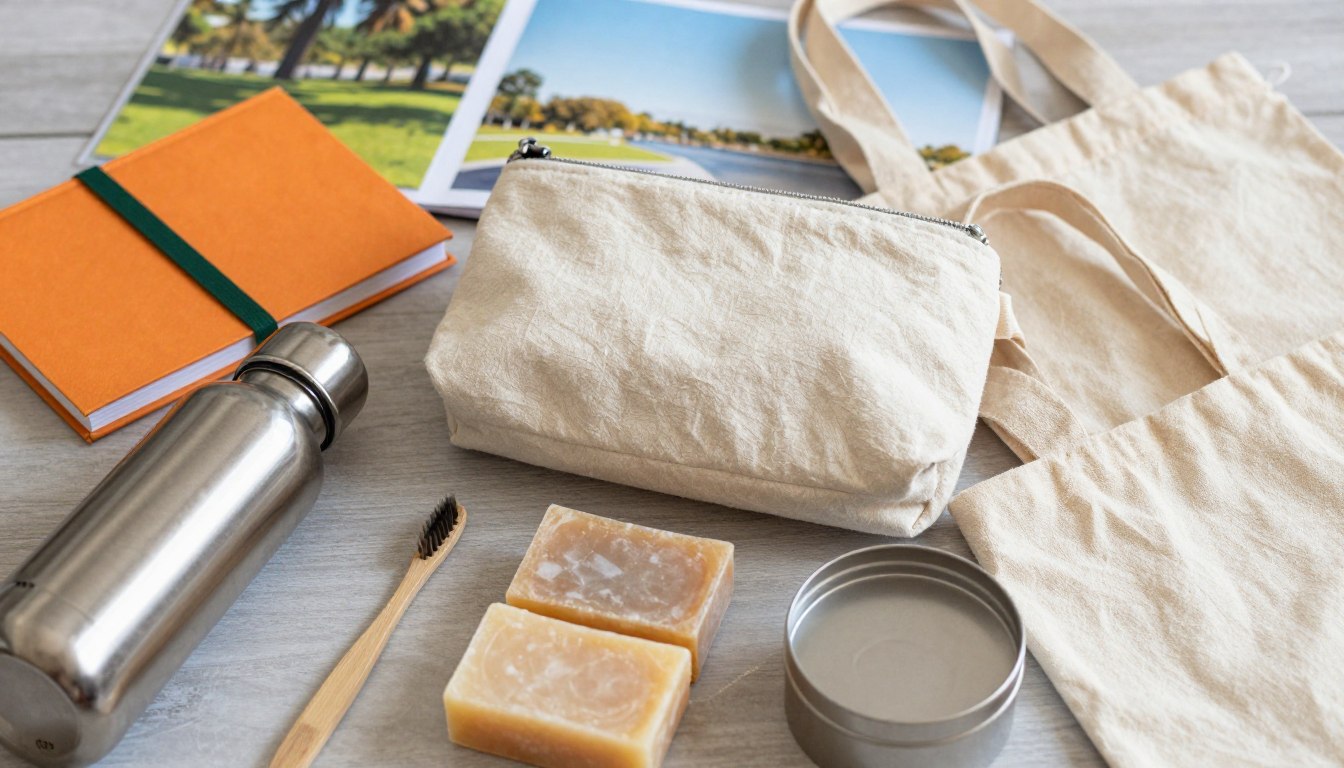
How to Pack a Zero-Waste Travel Kit
“We don’t need a handful of people doing zero waste perfectly. We need millions of people doing it imperfectly.” – Anne Marie Bonneau. This quote captures the spirit of sustainable travel perfectly.
More adventurers are choosing to reduce their environmental footprint. They do this by preparing a simple collection of reusable items. This approach directly cuts down on single-use plastic and other waste.
The best part? You don’t need to buy expensive gear. Look around your home first. A clean mason jar works great as a water bottle. An old t-shirt can become a produce bag.
Many public libraries offer free sewing machine access. This makes DIY repairs and projects easy. Being prepared with reusables actually saves you time and money on the road.
This guide will show you how to build a practical system. It works for any budget or trip style. Let’s begin with the core principles.
Key Takeaways
- A zero-waste travel kit is a personalized set of reusable items that replace single-use disposables.
- Adopting this practice significantly reduces plastic pollution and overall waste generated during trips.
- Building your kit is affordable and often requires items you already own at home.
- Simple DIY skills and community resources, like library workshops, can help you create what you need.
- A well-considered kit enhances convenience, saving you from searching for supplies while traveling.
- Starting small and improving over time is more effective than aiming for perfection immediately.
- This approach is accessible to every traveler, regardless of their budget or experience level.
Why Choose a Zero Waste Travel Kit?
The data on travel-related waste is eye-opening, revealing a clear opportunity for individual action to make a massive difference. In the U.S. alone, about 2.3 million people fly each day. Each traveler might use five disposable items like bottles or cups.
This habit creates over 11 million pieces of trash every single day. Bringing your own reusable bottle is one simple thing you can do.
Environmental and Personal Benefits
Disposable plastic is a long-term problem. A bottle can take 450 to 1,000 years to break down. Choosing reusables keeps this waste out of landfills and oceans.
Your health benefits too. Studies show bottled water often contains microplastics. Tap water in a clean bottle is a safer choice.
You also save a lot of money. You avoid buying drinks in single-use plastic containers constantly.
Reducing Single-Use Waste on the Road
While we can’t control everything about a trip, we can control our trash. This is a powerful thing. If half of all flyers used a reusable bottle, billions of single-use plastic items would be avoided yearly.
Your small choice joins a larger movement. It makes tourism more responsible and less harmful.
How to Pack a Zero-Waste Travel Kit
Your journey towards waste-free adventures starts right in your kitchen drawers. Before buying anything, take inventory of what you already own. A simple set of cutlery, a durable container, and a reusable bag form the core of your kit.
Gathering Essential Reusable Items
Look through your kitchen and camping gear. Forks, spoons, knives, and jars can be repurposed for travel. These items replace disposable ones during meals on the go.
An old mason jar works as a drink or food container. A cloth napkin can wrap utensils. This approach saves money and reduces waste immediately.
DIY Sewing and Upcycling Tips for Your Kit
Transform worn-out linens and clothing into useful gear. An old flannel sheet becomes “unpaper” towels with finished edges. Worn jeans can be sewn into sturdy produce bags.
Many public libraries offer free sewing machine access. You can learn to sew a straight line and create utensil rolls or snack bags from fabric scraps. Upcycling gives old materials new life in your travel kit.
Spotlight on Essential Zero Waste Kit Items
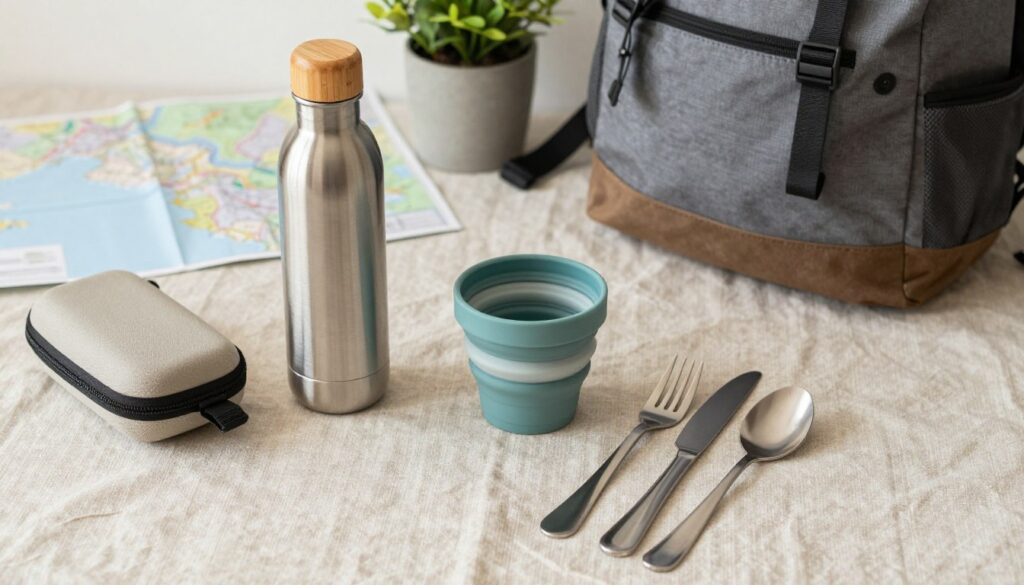
The heart of any sustainable travel system lies in versatile, reusable gear. Selecting the right core items eliminates the need for countless disposables.
This focus creates a simple, effective routine for any journey.
Reusable Drinkware and Utensils
Your water bottle is the most used item. Collapsible silicone options save crucial space when empty.
They roll up small in a purse. Insulated steel bottles serve hot coffee or cold water equally well.
Some clever designs even unscrew to become a cup. A simple mason jar is a fantastic budget bottle.
| Type | Best For | Key Feature |
|---|---|---|
| Collapsible Silicone Bottle | Day hikes, purse carry | Rolls up; zero space when empty |
| Insulated Steel Bottle | Hot drinks, all-day temp control | Dual-purpose for coffee and water |
| Mason Jar | Budget-friendly, multi-use | Works as a container and drinkware |
Always carry a fork, spoon, knife, and chopsticks. A metal straw completes the set.
Clean your bottle with white vinegar or natural tablets. This keeps it fresh for every refill.
Multi-Purpose Containers and Bags
For meals, use collapsible containers. They hold snacks or restaurant leftovers neatly.
Lunch boxes with separate compartments are great for sauces and sides. Cloth produce bags have many uses.
They carry bulk foods, bread, and even spin greens dry. These products replace plastic bags completely.
This approach turns shopping and dining into waste-free activities.
Building a Functional and Compact Travel Kit
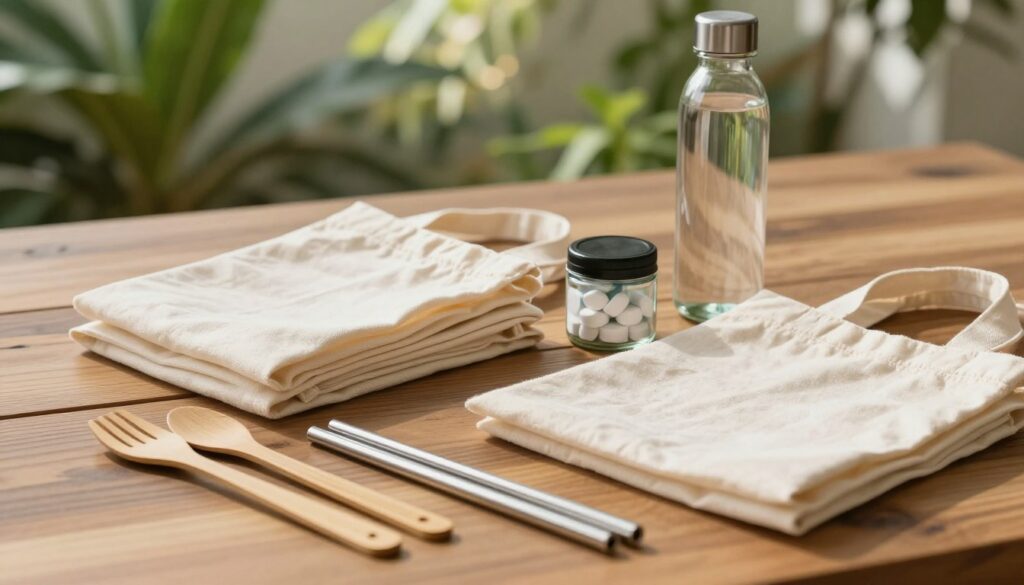
Your zero-waste efforts succeed when your gear is organized and within reach. The goal is a grab-and-go system. Keep your packed kit by the door, ready for any outing.
Organizing Tools and Cutlery
Your main satchel holds everything together. A simple cloth shopping tote or a camping stuff sack works perfectly. For a custom solution, sew a bag from old jeans with built-in pockets.
This approach maximizes space and keeps items sorted. Jackie Nuñez, the “urban backpacker,” always has her kit on hand. Her habit shows how simple readiness makes the way of life effortless.
| Bag Type | Best For | Key Feature |
|---|---|---|
| Cloth Tote | Daily errands, market trips | Lightweight, folds flat |
| Camping Stuff Sack | Hiking, outdoor adventures | Durable, water-resistant |
| Custom Sewn Bag | Perfect organization, unique style | Built-in pockets for specific items |
For your knife and other cutlery, consider a sewn utensil roll. It keeps everything secure and clean. A simpler way is to wrap items in a clean cloth napkin.
Your container for snacks or leftovers should fit neatly inside. A compact, always-ready system means you will use it for every trip, big or small.
Maximizing Your Zero Waste Travel Experience
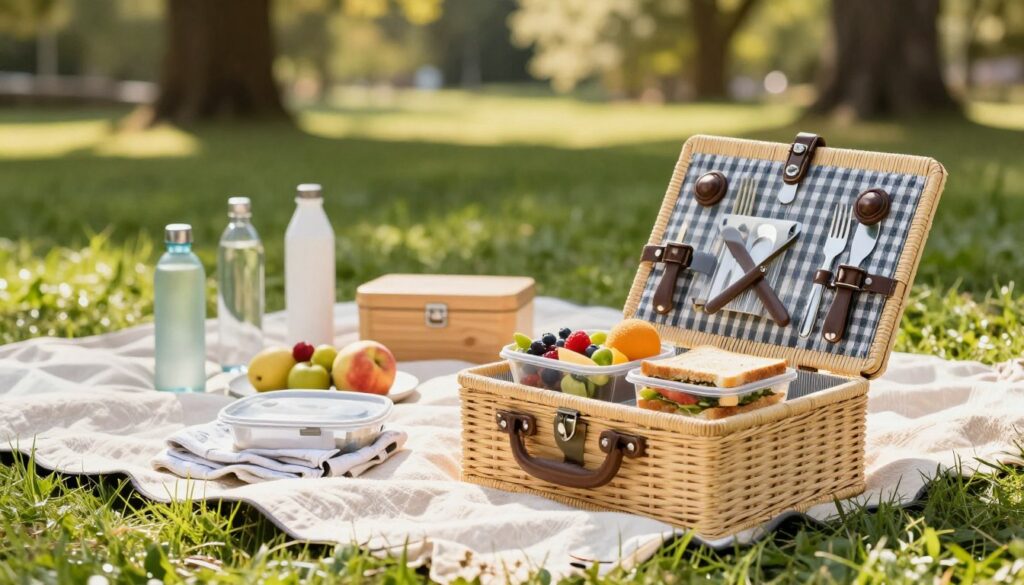
The true test of your sustainable travel habits happens during the journey itself. Applying your prepared kit in real situations turns intention into action. This phase covers meals, lodging, and daily choices.
Smart Packing for On-the-Go Dining
Pack your first travel meals in reusable, sealable containers. This clever move cleans out your fridge before you leave. It also saves money and reduces food waste right away.
You get better snacks and meal options at the airport. For restaurant visits, try this slick strategy. Order your food to dine-in so it’s served on washable dishes.
Then, simply transfer it to your own container and walk out. You enjoy takeout without any disposable packaging. When ordering to-go, communicate your goal politely.
Say, “I’m trying to reduce single-use plastic waste. Would you please wrap my sandwich in paper, no bag, and skip extras?” Most staff will happily comply.
| Travel Scenario | Smart Zero-Waste Strategy | Direct Benefit |
|---|---|---|
| Airport & Travel Day | Pack meals from home in your containers | Saves money, eliminates packaging |
| Restaurant Meals | Order dine-in, then transfer to your container | Avoids all disposable plates and wraps |
| Hotel Stay | Bring your own toiletries, decline housekeeping | Cuts plastic waste, conserves energy |
| Grocery Shopping | Use your cloth produce and shopping bags | Completely replaces plastic bags |
Select hotels with strong sustainability policies. Many major chains now eliminate single-use plastic toiletries. Always pack your own shampoo and soap.
Decline daily housekeeping to save water and energy. Hang towels to air dry. Ignore those free plastic water bottles in your room. In any case, your prepared kit gives you control over your trip‘s impact.
Advanced Zero Waste Travel Tips
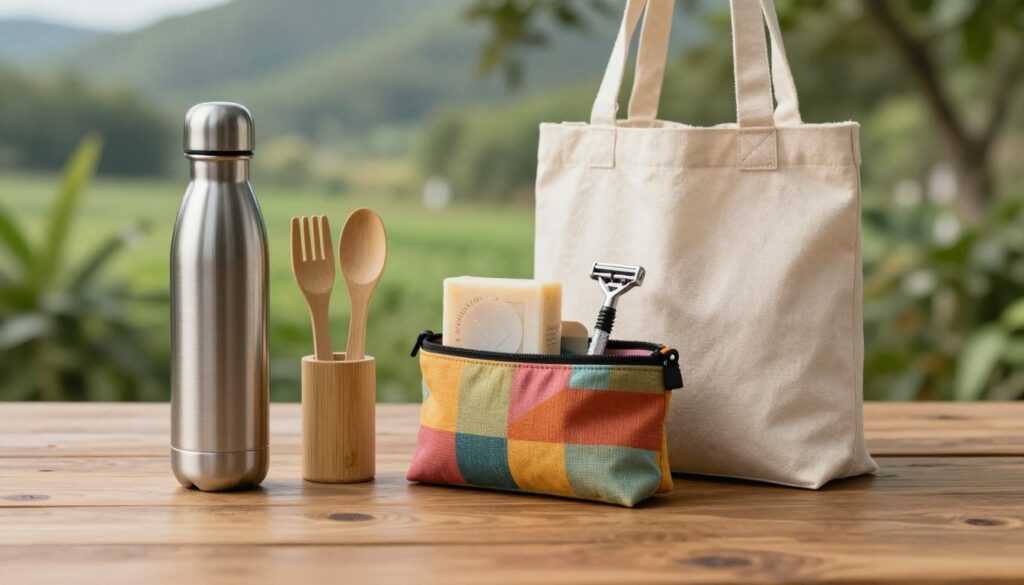
A little bit of foresight can transform potential trash into treasure during your explorations. This part of your journey covers smart strategies for spontaneous situations and expanding your system.
Tackling Unexpected Waste Challenges
Be ready for delightful surprises. You might find fruit listed on a community map or leftover food at an event.
Having a produce bag on hand lets you carry home the bounty. At one gathering, a large bowl of bread was saved from the waste stream this way.
Public restrooms are another common travel challenge. Carry a small hand towel to dry your hands.
This simple move eliminates the need for paper towels. It follows the sensible custom common in Japan.
Additional Kits for Car, Bike, and Leisure
Create a secondary kit for your car or bike basket. Since these items cost very little, it’s an easy side project.
Use upcycled materials for your backup sets. This preparation means you’re always equipped to refuse plastic.
Building these habits is a process. Many people developed their routines over years, not weeks.
The goal is consistent progress, not instant perfection. Every small choice on this side adds up to a big impact.
Conclusion
Over time, the small act of grabbing your prepared kit becomes as automatic as locking your door. You will not only cut down on waste, but you’ll also enjoy the superior feel of lasting items over flimsy, single-use plastic.
This is a gradual shift. One dedicated traveler, after fifteen years of practice, now creates just one small bag of trash every two months. Start with a water bottle or a container from home.
Your individual choice joins millions of others, creating a massive positive impact. Zero-waste travel is accessible, saves money, and is about consistent progress. Build your way to better journeys, one reusable piece at a time.
FAQ
What are the biggest benefits of using a zero waste travel kit?
What’s the first step in assembling my kit?
How do I handle situations where I might create waste, like at a coffee shop?
Which items are considered absolute essentials for a beginner’s kit?
Can I really maintain a zero waste lifestyle on a long trip?

Eduard Kingly is a travel and lifestyle content creator with a focus on personal development and education. He combines firsthand travel experiences with research-driven insights to guide readers in discovering new places, building better habits, and pursuing meaningful learning.