How to Work Remotely While Traveling
Mark Twain once said, “Twenty years from now you will be more disappointed by the things you didn’t do than by the ones you did do.” This spirit of adventure now fuels a modern revolution in how we think about our careers and our lives.
Welcome to your guide on blending a professional path with a passion for exploration. Your office no longer needs four walls. It can be a beach cafe, a mountain retreat, or a bustling foreign city.
The shift to location-independent work has changed everything. Since it became mainstream, more people are realizing their laptop is a ticket to the world. But doing it successfully takes a good plan.
This guide is packed with actionable advice. We’ll cover assessing if this life suits you, essential gear, finding reliable Wi-Fi, smart budgeting, and handling legal details. We’ll also tackle staying productive across time zones.
Whether you dream of a two-week travel experiment, a month-long escape, or a full-time digital nomad journey, the strategies here will help. We offer a friendly, honest look at both the incredible freedom and the real challenges.
Our goal is to help you make informed choices for your own remote work adventure. Let’s get started.
Key Takeaways
- The modern professional can successfully combine a career with a passion for exploring new places.
- Location-independent work opens doors to experiencing different cultures and communities without sacrificing income.
- Successful blending of work and travel requires careful planning around connectivity, scheduling, and logistics.
- This lifestyle is adaptable, suitable for short working vacations or long-term digital nomad journeys.
- Understanding both the benefits and the potential challenges is crucial for making it sustainable.
- Practical advice on gear, budgeting, and legal considerations forms the foundation of a smooth experience.
- Maintaining productivity and a professional routine is key, regardless of your changing surroundings.
Understanding the Digital Nomad Lifestyle
Not all who work from the road follow the same path. Most fall into two groups.
Some seek a better life in a new place. They want weekend comforts and local routines. Others aim to see the world, moving constantly.
Lifestyle Benefits and Opportunities
This way of living offers fantastic opportunities. You skip the daily commute. Your office view changes whenever you choose.
You can pursue hobbies in amazing locations. There’s also a big financial perk. Earning from a high-income country while spending in a lower-cost one stretches your budget.
You can travel off-season for lower prices and fewer crowds. Staying longer lets you connect with local people, unlike a quick tourist trip.
| Focus | Primary Goal | Key Advantage |
|---|---|---|
| Lifestyle Relocation | Improved daily life in a new location | Easier work-life balance, local immersion |
| Active Exploration | Seeing and experiencing many places | Maximum freedom, constant new experiences |
| Common to Both | Location-independent career | Escape routine, cost arbitrage, schedule control |
Common Challenges and Considerations
This life isn’t all perfect sunsets. You often need your employer’s okay. Being out of sight can sometimes mean out of mind for promotions.
Self-discipline is a must. When a beautiful beach is calling, focusing on work is hard. Managing your time between tasks and exploration is a constant juggle.
Practical things like finding reliable internet are a big deal. Travel costs add up. Legal and tax rules get complex across borders.
It can be tough to feel like you’re on holiday. Work is always there. Moving a lot can lead to burnout. Keeping close relationships takes extra effort.
Is Remote Work for Travel Right for You?
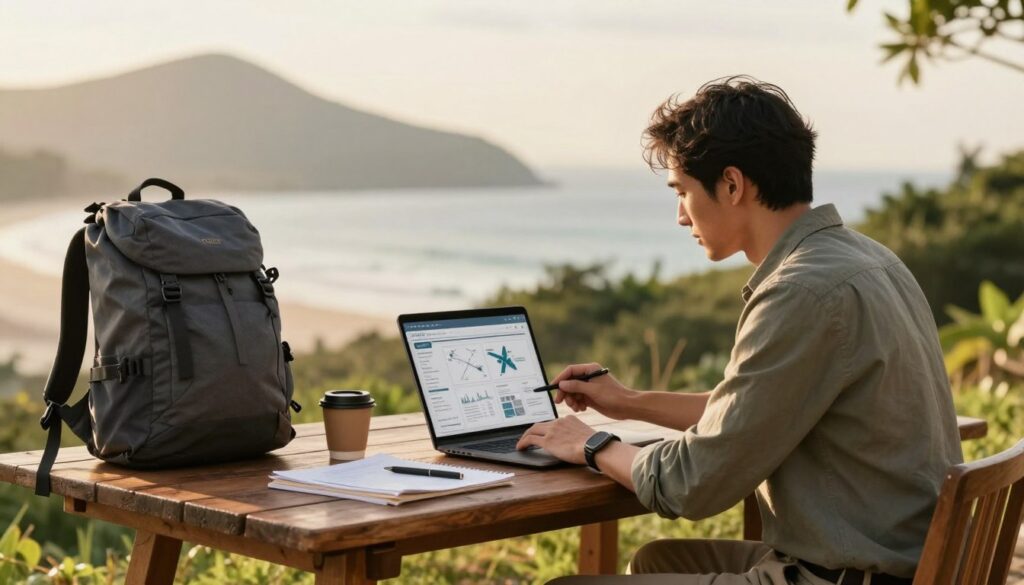
The dream of combining a career with exploration is enticing, but is it the right fit for you? An honest self-assessment is your most important first step.
Assessing Your Work and Travel Priorities
Consider this reality. A one-month dedicated travel break often provides richer experience than six months of working on the road. Why? Without a job to log into, you can embrace spontaneity and go truly off-grid.
Active sightseeing trips clash with a 9-to-5 schedule. The best adventures happen when travel is your only focus. If ticking off bucket list items is your main goal, blending it with remote work requires major compromise.
American work culture rarely supports long sabbaticals. For many, the digital nomad way is the only practical thing. It’s an imperfect solution, but it allows more exploration than staying put.
| Approach | Primary Focus | Key Requirement | Best For |
|---|---|---|---|
| Dedicated Travel Break | Pure exploration & immersion | Freedom from work obligations | Deep, spontaneous adventures |
| Working While Traveling | Balancing career with location change | Reliable WiFi & a stable routine | Lifestyle relocation & longer stays |
Ask yourself: is your motivation lifestyle-focused or travel-focused? Living comfortably in a new place for a time is much easier to manage than constant sightseeing.
Evaluate your job flexibility, finances, and personal discipline. Making an informed choice now prevents burnout later and shapes a more sustainable life on the road.
Expert Tips: How to Work Remotely While Traveling
The collective wisdom of those who’ve been living this life for over a decade offers a treasure trove of practical advice. Learning from their experience can help you avoid common mistakes.
Advice from Seasoned Digital Nomads
Many people have been working remotely since it was a novelty. The global nomad community shares hard-earned tips. Success comes from learning both from errors and from each other.
Key Strategies for Seamless Integration
Integrating work and travel smoothly relies on a few core ways of operating. Veteran digital nomads swear by these tips.
Plan ahead for peace of mind. Book your accommodation and transport at least a month early. This reduces stress so you can focus when it’s time to work.
Always have a backup plan. Research co-working spaces and cafes with good WiFi before you arrive. Connectivity issues are inevitable.
Schedule intentional “off time.” Don’t go out exploring every single night. Planned rest prevents burnout and keeps your trip enjoyable.
Communicate proactively with your team. Be available during core hours, attend meetings, and deliver tasks on time. Transparency builds trust.
Leverage the right tools. People rely on apps like Slack, Trello, and Toggl for communication, project management, and tracking. These things streamline your workflow.
Setting Up the Perfect Mobile Workspace
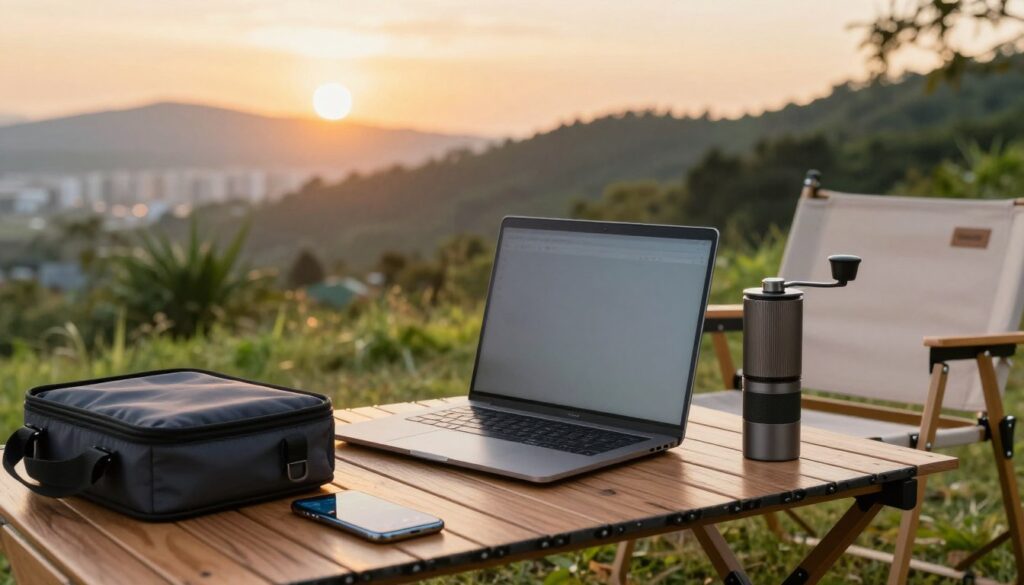
A reliable mobile setup turns any location into a productive professional environment. Your gear and connectivity choices make or break your experience. This space must function as a true office, no matter where you are.
Essential Gear and Equipment
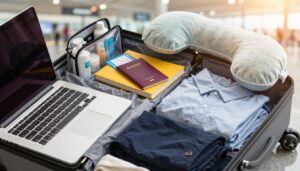
Start with a dependable laptop as your primary tool. Build a complete equipment list for comfort and efficiency.
A travel router is a powerhouse. It can tether devices, run a secure VPN, and act as a WiFi repeater. This expands weak signals to balconies or gardens.
Carry a portable SSD hard drive. This lets you access files without constant cloud reliance. A foldable laptop stand improves ergonomics at any desk.
Don’t forget a universal travel adaptor with charging ports. A quality power bank offers a lot of flexibility. You can work for hours from cafes or airports.
Optimizing Connectivity on the Road
Stable internet is non-negotiable for successful remote working. Always verify your accommodation’s connection before booking.
Read recent reviews mentioning WiFi. Run a speed test upon arrival. Have a backup plan ready.
Purchase a local cellular data plan as insurance. Know how to set up a mobile hotspot from your phone. Consider a dedicated portable hotspot device.
Your travel router can also boost a weak signal. A small investment in these tools prevents major stress. It keeps your mobile office running smoothly from any place.
Managing Work-Life Balance on the Road
Your brain has a funny way of switching to vacation mode the moment you step off the plane in a new city. This shift makes it tough to resist temptations. You might eat out every day and pack your schedule due to FOMO.
Beautiful, sunny weather creates a stark contrast. Working eight hours indoors feels incompatible with 30-degree Celsius bliss outside. Finding focus is a real challenge.
Creating a Consistent Routine
A solid routine is your anchor. Start your work during morning hours when you’re freshest. Protect time for meals and short walks.
Be realistic about evening activities. Trying to do a lot leads to quick exhaustion. The key is intentional planning.
| Aspect | Unbalanced Approach | Balanced Strategy |
|---|---|---|
| Daily Schedule | Working 8 hours, then 8 hours of activities, plus logistics | Protected work blocks, limited evening plans, dedicated rest |
| Activity Planning | Trying to see everything due to FOMO | Prioritizing 2-3 key experiences per week |
| Self-Care | Eating out every day, skipping exercise | Cooking some meals, scheduled walks or gym sessions |
Overcoming Travel Burnout
Burnout is a common thing. A cautionary tale comes from Sevilla. Someone tried a full 40-hour work week while seeing flamenco shows and nightlife.
They slept less than six hours a day. The following week required a major slowdown. That’s not a sustainable way to live.
Schedule genuine “off time.” Plan days with no ambitious tasks. Relax at a cafe or just catch up on sleep.
This balance protects your well-being. It lets you enjoy both your professional life and the travel experience long-term.
Navigating Legal and Logistical Challenges

Before you pack your bags, a clear understanding of visas, company policies, and digital footprints is crucial.
Not every employer is set up for international work. Legal and HR complexities often create unofficial “grey zones.” Your direct manager might be fine with your plans, but official policy could be unclear.
Understanding Visas and Work Permits
A common solution is transitioning to a freelance contractor for your company. This shifts tax and legal compliance to you. The business simply pays your invoices, separating their obligations from your location.
If operating without explicit permission, concealing your location is key. Every internet connection has a traceable IP address. During a video call, a background glimpse of palm trees once caused major trouble.
Using a VPN service is a technical necessity. Public options hide your location but may be detected. Private solutions can make it appear you are logging in from your home.
| Visa Approach | Common Practice | Key Consideration |
|---|---|---|
| Tourist Visa | Used by a majority for short-term stays | Legal status for work is often disputed |
| Digital Nomad Visa | Offered by many countries for longer stays | Allows legal remote work, often without local tax |
Many destinations now offer specific digital nomad visas. These incentivize longer stays, often for a year. Even unpaid activities like housesitting can be classified as “work” by border officials.
Understanding these rules protects your job and your freedom to explore. It’s the foundation for a sustainable life on the road.
Budgeting and Cost-Saving Strategies for Remote Travelers
A common pitfall for new remote travelers is treating their trip like a permanent vacation. Eating out every day and booking luxury hotels can make expenses exceed your income.
This approach is financially unsustainable. Adopting a budget mindset is essential for long-term success.
Choosing Affordable Destinations
Your choice of location has a huge impact. Skip expensive cities like Paris or New York.
Consider destinations like Da Nang, Cape Town, or Mexico City. Your earnings stretch much further there.
Use sites like Nomads.com and Numbeo to compare the cost of living. This research helps you pick affordable places.
Smart Financial and Accommodation Planning
Reduce overhead at home by subletting your apartment. This can cover your mortgage or even fund your travels.
Stay in one place for a month or longer. Long-term rentals often offer discounts of 20-30%.
Housesitting is another brilliant strategy. Platforms like Trusted Housesitters charge about $99 per year.
You stay in homes for free in exchange for simple tasks. Remember, this counts as “work” for visa purposes.
Travel during off-season periods. You’ll find cheaper flights and accommodations. Avoid tourist high season for major savings.
With careful planning, your overall cost of living can be lower than staying at home. This makes your remote work trip sustainable for a long time.
Staying Connected: Tools and Technology for Remote Work
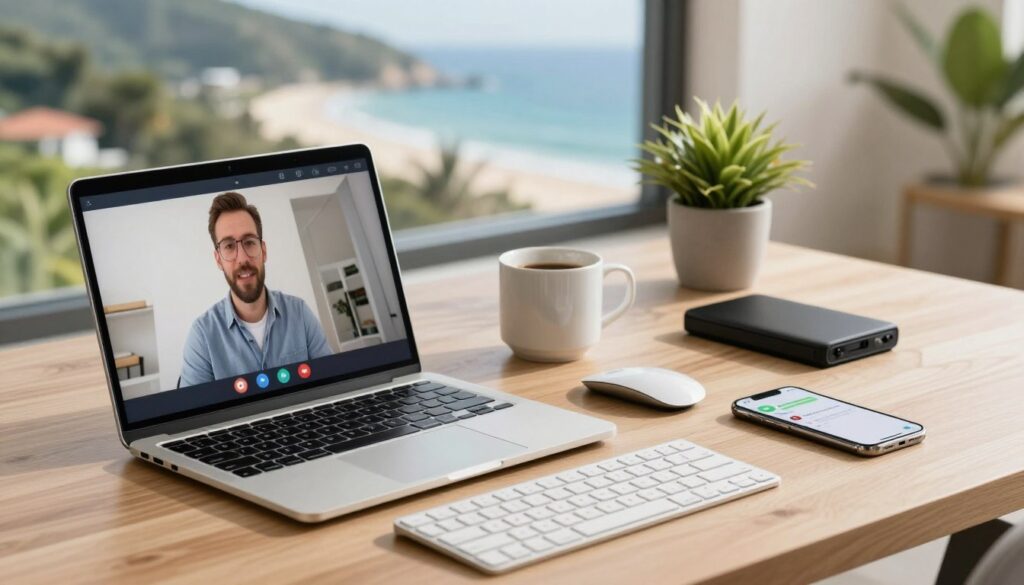
Your professional success on the road hinges on two simple yet critical components: a dependable laptop and rock-solid internet. This mobile office is flexible, but finding reliable access requires proactive planning.
Always contact hotels or Airbnb hosts before booking. Ask specific questions about connection speed. Even after vetting, connections can be temperamental.
Imagine your first working day in Granada with no internet. A café promised “extremely fast” service, but your laptop went offline repeatedly. The staff couldn’t help. This is why researching backup co-working space in advance is crucial.
Secure VPN Solutions and Internet Reliability
A Virtual Private Network (VPN) is essential for security and privacy. It encrypts your data on public WiFi. It also masks your location for your company.
Public services like NordVPN offer basic encryption. Private solutions, such as KeepYourHomeIP, make it appear you are logging in from your home office. This satisfies strict IT policies.
| VPN Type | Primary Function | Best For |
|---|---|---|
| Public VPN Service | Basic encryption & location masking | General security on public networks |
| Private VPN Solution | Appears as a home network connection | Meeting specific company security requirements |
| Essential Practice | Always use a VPN on public WiFi | Protecting sensitive business information |
Recommended Apps and Digital Tools
Start each day with core productivity tools. Slack is a lifeline for team communication. It organizes chats into channels and enables video conferences.
Trello manages your to-do list and project workflow. Google Calendar integrates tasks into your schedule. For tracking work hours, Toggl is invaluable.
Additional apps boost efficiency. Grammarly checks writing. Hemingway App helps with long-form content. Toby organizes browser tabs.
Remember to understand your company‘s IT policies regarding public WiFi. Handling confidential data outside the traditional office requires caution. These tools make working from anywhere not just possible, but productive.
Maintaining Productivity While Exploring New Destinations
To truly experience a place and meet your professional goals, you must grant yourself the gift of time. Jumping cities every few days is a sure path to burnout. You simply cannot do a full day‘s work and see everything in 48 hours.
Embrace slow travel. It is the only sustainable way to blend exploration with a career.
Time Management on the Move
Constantly moving creates logistical chaos. It steals time from both your job and your adventures. A six to seven-day minimum stay per location is crucial.
This schedule lets you establish a routine. You can complete your work and still explore properly. Longer stays also bring financial perks.
Many short-term rentals offer automatic discounts. Weekly stays often save 5-20%. Monthly bookings can be even cheaper.
| Approach | Impact on Work | Impact on Experience | Overall Sustainability |
|---|---|---|---|
| Fast Travel (2-3 days) | Constant catch-up, low focus | Superficial, exhausting | Very Low |
| Slow Travel (7+ days) | Stable routine, high productivity | Deeper immersion, time to relax | Very High |
Balancing Sightseeing with Deadlines
Protect your core working hours. Use mornings for your most demanding tasks. This strategy frees up afternoons and evenings for activities.
Weekends are perfect for bigger excursions. Plan your leisure activities around local realities. Many museums close on Mondays.
Attractions may shut earlier than you expect. Make sure to check open times and weather forecasts in advance.
Finish important things ahead of looming deadlines. Completing projects early prevents last-minute stress. It also lets you say “yes” to spontaneous fun without guilt.
Leveraging Coworking Spaces and Local Networks

A beautiful but poorly connected location can turn your dream trip into a logistical nightmare. For professionals, choosing the right destinations is critical. Factors like ultra-reliable internet and good healthcare matter more than for tourists.
I learned this in Sucre, Bolivia. The internet was like a dial-up modem. Uploading files or joining video calls was impossible. I had to quickly leave for Argentina.
Specialized sites like Nomadlist help you research. You can filter places by internet speed, cost, safety, and community size. This prevents professional embarrassment.
Popular digital nomad hubs around the world are great starting points. They include Medellin, Bangkok, Chiang Mai, Canggu, and Mexico city. These places have proven infrastructure.
Finding Remote-Friendly Locations
Coworking spaces are game-changers. They offer a reliable office and a social hub. You meet fellow remote workers and local people.
Conversations often lead to dinner plans or insider tips about the city. This combats loneliness and helps you feel at home.
One memorable space is The Dojo in Bali. Its open floor plan is filled with lush tropical plants. It reminds you that your office view is extraordinary.
| Destination Type | Internet Reliability | Workspace Availability | Long-Stay Value | Local Community |
|---|---|---|---|---|
| Tourist-Friendly | Variable, often public WiFi | Limited to cafes/hotels | Expensive, short-term rates | Mostly other tourists |
| Remote-Work-Friendly | High-speed, fiber options common | Multiple coworking spaces | Discounted monthly rentals | Thriving digital nomad network |
Adapting to Cultural and Climate Changes
When you trade a static desk for a global workspace, every destination becomes a classroom in local living. This lifestyle lets you travel in a fundamentally different way. Instead of rushing through landmarks, you can establish a “mini-life” in one place for weeks or months.
Consider non-obvious spots you’d skip on a regular trip. Spend a month in Genoa to understand Italy deeper than a three-day Venice visit. Try a small Greek village or a surf beach in Indonesia.
Adjusting Your Routine for Local Contexts
Constantly moving location every few days drains energy. It hurts both your working output and enjoyment. Slowing down is a superior strategy.
Staying in one city for a week or longer lets you build a routine. You gain time to befriend local people and learn customs. Discover hidden gems that tourists miss.
You can also chase better weather. Imagine six sunny weeks in Spain while your hometown is cold and rainy. This escape boosts your mood and productivity.
Your office view transforms daily life. Work from a cave-house porch overlooking the Alhambra. Or from a sea-view terrace with wild parrots. These experiences reshape your view of the world.
Plan your activities around local rhythms. Protect morning time for focused tasks. Use afternoons for exploration. This balance lets you truly adapt and thrive.
Conclusion
Ultimately, the goal is not just to see the world, but to let those experiences meaningfully enhance your daily life and work. You don’t have to choose between a great career and your passion for exploration.
Travel teaches you to handle new situations. You gain a fresh perspective. The people you meet become unforgettable teachers. This experience is too valuable to miss.
Yes, this way of living has challenges. Discipline and planning are key. The strategies in this guide provide practical solutions. The effort is absolutely worth it.
Professionally, sharing your remote work journey builds positive word-of-mouth for your company. It’s a powerful job perk. You can visit amazing destinations throughout the year with a steady income.
Take the time to prepare well. Then, embrace the incredible opportunity to work and travel. Your future self will thank you.
FAQ
What exactly is a digital nomad lifestyle?
How do I know if working remotely while traveling is a good fit for me?
What’s the single most important tip for a new remote traveler?
What gear is absolutely essential for a mobile office?
How can I prevent burnout when my “office” is always changing?
Do I need a special visa to work remotely from another country?
What are some smart budgeting strategies for long-term travel?
Which tools are vital for staying connected and secure?
How do I stay productive when there’s so much to see and do?
Are coworking spaces worth the cost?
How do I adapt to major time zone or cultural changes?

Sharon Molly is a content creator in lifestyle, fashion, and travel, delivering style-savvy advice and destination insights to inspire confident living. With a background in digital media, she combines aesthetics with practical guidance for modern women on the go.