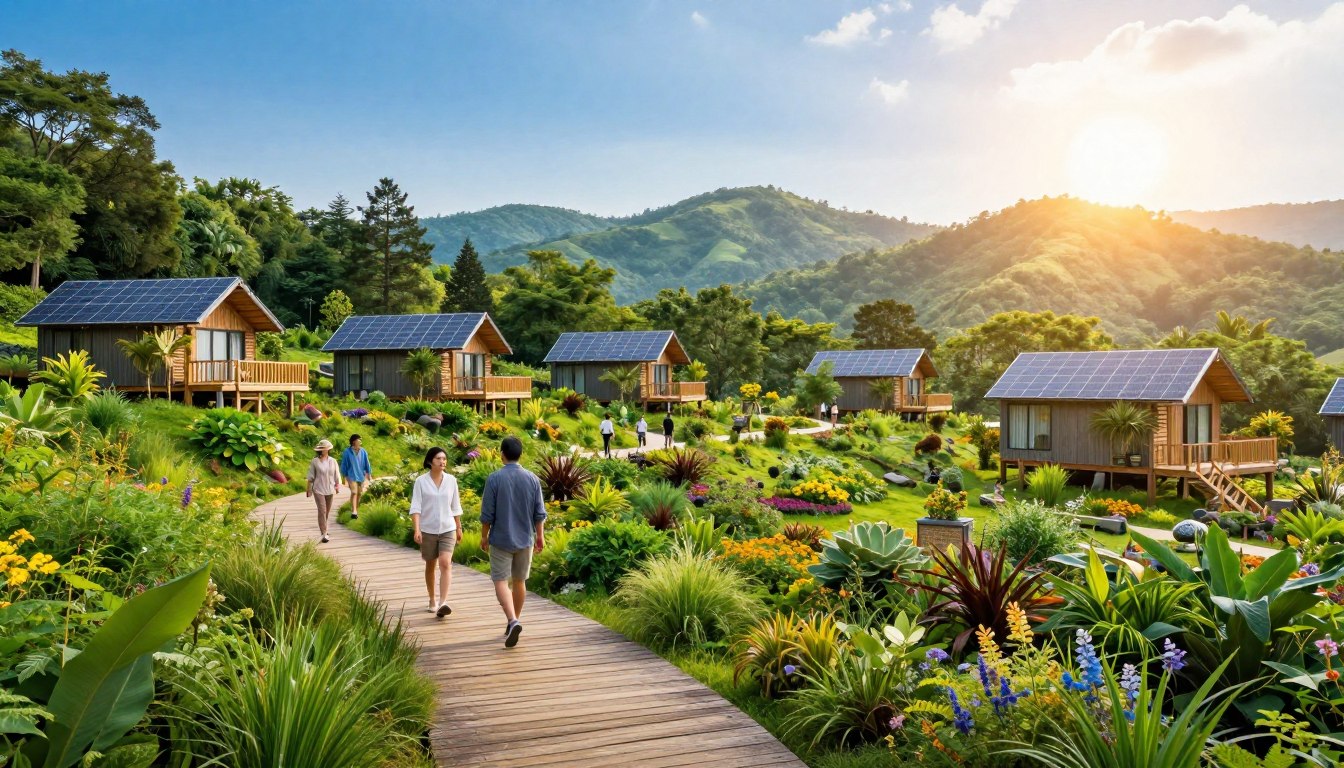
Sustainable Travel Destinations
John Muir once said, “In every walk with nature one receives far more than he seeks.” This idea captures the heart of a movement that’s changing how we see the world.
Welcome to a new way of exploring. It’s about visiting incredible places while making sure they stay incredible for others. This approach connects your journey directly to environmental care and community support.
More people now seek trips that leave a positive mark. Choosing where to go is a powerful decision. Your adventure can help protect natural wonders and honor local cultures.
This guide is here to help. We’ll show you amazing locations that lead the way in responsible tourism. You’ll get practical tips to plan a trip that feels good from start to finish.
Remember, no trip is perfectly carbon-neutral. The goal is progress, not perfection. Making informed, mindful choices enriches your experience and helps the planet.
Get ready to discover how your next getaway can be both unforgettable and kind to the world. Let’s explore how to connect more deeply with the places you visit.
Key Takeaways
- Conscious exploration focuses on protecting the environment and supporting local communities.
- Your choice of location is a powerful tool for positive change.
- Eco-friendly journeys offer richer, more meaningful experiences.
- Planning with purpose is more rewarding than aiming for perfection.
- This guide will highlight top spots and practical tips for responsible trips.
- Mindful tourism helps preserve cultural heritage and natural beauty.
- Every traveler can make a significant difference through informed decisions.
Introduction to Sustainable Travel and Responsible Tourism
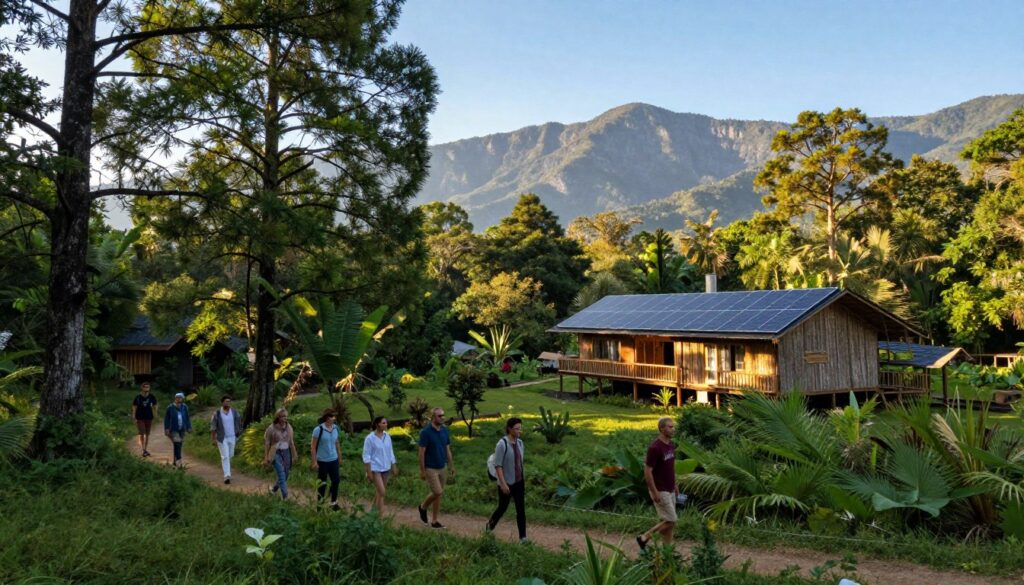
Tourism’s impact on the planet and its people has never been more scrutinized, sparking a shift towards more responsible practices. This movement is about making mindful choices that benefit both the environment and the local communities you visit.
Why Sustainability Matters in Tourism
The industry leaves a significant footprint. It affects habitats and uses many resources. Carbon emissions from transit are a major concern.
Visitors also influence communities. Tourism can create jobs and support economies. Yet, overcrowding can strain infrastructure and culture.
Finding a balance is key. Responsible stewardship ensures places remain vibrant. The goal is to support conservation and cultural respect.
The Evolution from Eco-Tourism to Regenerative Travel
The idea has grown. Early eco-tourism focused on low-impact nature trips. Modern sustainable tourism adds social and economic factors.
Now, regenerative travel aims to actively improve a place. It helps restore ecosystems and enrich local communities. Your visit can contribute to positive change.
The industry is adapting. The GDS-Index updated its criteria in 2024. It added 12 new measures for regenerative practices and climate action.
These efforts are working. Over nine years, average destination sustainability performance rose 23%. Top spots saw a 44% increase.
| Aspect | Eco-Tourism | Sustainable Tourism | Regenerative Travel |
|---|---|---|---|
| Primary Focus | Minimal environmental impact in nature | Balancing social, economic, and environmental needs | Actively improving and restoring destinations |
| Community Role | Often limited | Direct support and inclusion | Enrichment and co-creation |
| Environmental Goal | Do no harm | Minimize harm | Net-positive contribution |
| Industry Example | Guided wildlife watching | Hotels with waste reduction programs | Trips that fund reforestation projects |
While perfect sustainable travel is a journey, every mindful choice helps. Supporting local businesses and reducing waste are great starts.
Sustainable Travel Destinations

The 2024 GDS-Index rankings reveal a global map of cities leading the charge in responsible tourism. This list highlights forty destinations with exceptional commitment. They balance visitor growth with environmental stewardship and community health.
Top Global Eco-Conscious Spots
Helsinki claimed first place globally this year. Gothenburg moved to second, with Copenhagen securing third. These cities show deep dedication to sustainability criteria.
New entries like Limerick and Quebec City joined the list. Reykjavik also made a welcome return. This spread shows these practices are reaching diverse places worldwide.
Regional Highlights from the GDS-Index
In Asia Pacific, Singapore and Sydney emerged as leaders. Their efforts reflect the region’s growing focus.
Bordeaux topped Central and Southern Europe. Zurich climbed the ranks, and Paris entered at fifth. North America saw Victoria overtake Montreal.
Social responsibility is now a key pillar. Destinations that involve local communities score higher. Strategic initiatives are making a real impact.
Exploring Unique Eco-Friendly Experiences
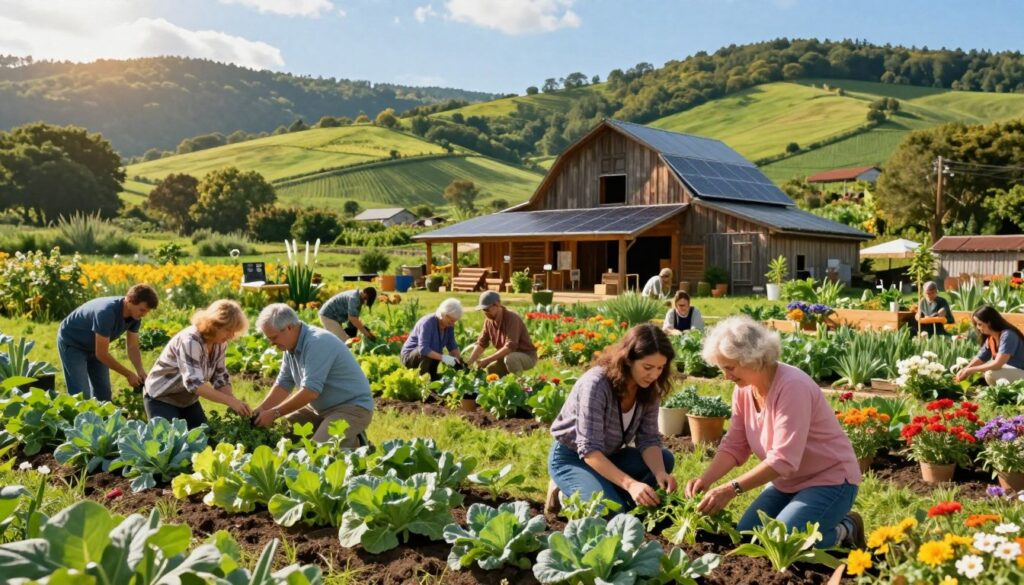
Beyond typical sightseeing lies a world of immersive adventures that actively heal the planet. These experiences connect visitors directly with conservation work and cultural heritage.
Supporting Local Communities and Wildlife Conservation
In Costa Rica, Rancho Margot is an off-grid paradise. Guests explore hiking trails and natural hot springs. They can also volunteer for wildlife and nature initiatives.
New Zealand offers a different experience. Whale Watch Kaikoura runs Māori-owned tours. This support local community jobs and teaches Indigenous ocean connection.
Deep in Bolivia’s Amazon, the Quechua-Tacano community runs Chalalán Ecolodge. Its trails are home to stunning biodiversity. Proceeds fund vital health and education projects.
Romania’s Libearty Bear Sanctuary gives rescued bears a safe forest home. Guided tours educate the public. A volunteer program allows hands-on help.
| Type of Experience | Key Activities | Primary Benefit |
|---|---|---|
| Adventure & Learning | Hiking, touring sustainable practices | Funds wildlife initiatives |
| Marine & Cultural | Whale watching, cultural education | Supports local communities |
| Rainforest Immersion | Wildlife spotting on guided trails | Finances community projects |
| Wildlife Rehabilitation | Sanctuary tours, volunteer programs | Direct conservation support |
These activities create meaningful trips. They protect wildlife and empower local communities.
Planning Your Sustainable Journey

The most rewarding trips are built on a foundation of mindful planning and informed decisions. Good preparation minimizes your environmental impact and creates more opportunities to support the places you visit.
It turns a simple travel plan into a meaningful journey.
Tips for Eco-Friendly Travel Preparation
Start by researching your destination. Look into its local practices and environmental challenges. This knowledge helps you identify opportunities to contribute positively.
Pack with purpose. Bring a reusable water bottle and shopping bag. Choose biodegradable toiletries. Lighter luggage also helps lower carbon emissions from transit.
Think about your timing. Visiting during off-peak seasons can ease pressure on popular spots. This is crucial, as only 13% of top spots have studied their social carrying capacity.
Third-party certifications are a reliable way to verify a business’s commitment. They are becoming more common due to new regulations.
| Certification Type | What It Covers | How It Helps Travelers |
|---|---|---|
| Green Key | Hotels & venues: energy, water, waste management | Ensures stay meets high environmental standards |
| LEED Building | Construction & operations for low carbon footprint | Identifies accommodations with efficient design |
| GSTC Recognized | Tours & operators: holistic sustainability criteria | Confirms operator follows global best practices |
Booking Responsible Accommodations and Tours
Always look for those third-party seals when booking a place to stay. This shows a real commitment and shift toward accountability in tourism.
Choose tour companies that hire local guides and keep groups small. They should have clear rules for respecting wildlife and cultural sites.
Check for transparency. A decline in “greenhushing” means more places now share their efforts openly. Over 60% of leading destination reports include their sustainability performance.
This planning way isn’t complicated. It’s about asking questions and making choices that support the local environment and communities.
Innovative Practices in Sustainable Tourism>

The latest shift in mindful tourism isn’t about reducing harm—it’s about generating a net-positive impact for local nature and people. Leading destinations are now implementing creative initiatives that actively restore ecosystems.
Regenerative and Data-Driven Initiatives
New standards are pushing the industry forward. The 2024 GDS-Index added criteria for regenerative practices and climate action.
Destinations increasingly use data to track social and environmental indicators. This informed focus helps balance growth with conservation.
The performance gap between cities is narrowing. This shows commitment is spreading beyond top spots.
Leveraging Local Efforts for Environmental Stewardship
Community-led activities are vital for environmental stewardship. They protect wildlife and engage visitors in meaningful ways.
Norway’s Svart hotel is a groundbreaking example. It aims to be the world’s first energy-positive hotel.
Its design will generate 160% of its energy needs. This sets a new standard for low-carbon infrastructure.
Balancing Tourism Growth with Conservation Efforts
Managing visitor numbers is a critical challenge. Fewer than half of major cities have crisis plans for climate emergencies.
Even with strong efforts, 26 top destinations saw score declines last year. This was due to more demanding methodology.
Continuous innovation is essential. Protecting nature and supporting communities requires ongoing adaptation and investment.
Conclusion
From Norway’s dramatic landscapes to Fiji’s vibrant coral reefs, travelers now have incredible opportunities to explore responsibly. Your journey connects you with stunning nature and wildlife in a meaningful way.
These experiences enrich your visit. You might support a local community or learn about conservation efforts. This creates a deeper bond with each place.
The commitment to sustainable tourism is growing worldwide. More locations are improving their sustainability performance. Your choices as a visitor truly matter.
Every trip can make a positive difference. By picking spots with strong credentials, you help protect our planet’s beauty. You become a partner in preserving these amazing places.
Start planning your next mindful adventure today. Discover the world’s fjords, forests, and coasts. Your experience will be richer, knowing you’ve contributed to a better future.
FAQ
What exactly makes a trip eco-conscious?
How can I find and book responsible places to stay?
Are there specific activities that are better for the planet?
What is the GDS-Index and how can it help me plan?
How does my visit actually help local communities?
What is regenerative travel and how is it different?

Sharon Molly is a content creator in lifestyle, fashion, and travel, delivering style-savvy advice and destination insights to inspire confident living. With a background in digital media, she combines aesthetics with practical guidance for modern women on the go.